Stephan Grünewald, psychologist and head of market researcher Rheingold, on changing consumer habits after the Corona crisis, the long suffering of airlines - and the new desire for vacations at home.
The interview appeared in WirtschaftsWoche on May 4, 2020.
Mr. Grünewald, Germany is in the first easing phase after the shutdown. Do you expect consumers to go back to shopping like before?
The Corona Shutdown has taken us all mentally and physically. Now people are reclaiming freedom, but not immediately. Consumers are behaving more like sick patients after a severe infection. He is happy about the first rusk, drinks black tea or coke, and works his way back to reality step by step. This is also how the consumer will behave in the coming weeks.
So how has the previous time affected people's psyche?
People are confronted with a threat they cannot grasp. The virus is invisible, no one can run away from it. That creates feelings of powerlessness. That's why people have demonstrated their ability to act at home during the lockdown phase. Spring cleaning has been more intensive, hardware stores have been stormed. After all, they are places for personal armament. This is where people arm themselves with drills, hammers and nails to get projects done at home. It's a natural reaction to no longer feel powerless.
How long can a state of social distancing be sustained?
Quarantine is derived from the word quaranta, which means 40. This was already an important number in the Middle Ages, for example during the plague. Sick people were isolated for this length of time. Incidentally, the summer vacation is also based on this number. After six weeks, people need a new perspective. That's why it's good that people are now entering a new phase. The Corona app and the mask requirement also give a good sense of control.
Will consumer behavior change?
People want to do what they have been missing for weeks. First and foremost, they want to see their friends and relatives, then go back to the city centers.
Tui pauses its travel program until mid-May. Will Germans ever get back to their travel habits as they were in the days before the Corona crisis?
The Germans are the world's travel champions. Of course, they will want to travel again, but in a different way: this year, medium-haul and long-haul vacations are definitely out. I don't see a boom in long-haul travel in the long term. Instead, German vacation destinations will flourish.
Is the consumer behavior of Germans possibly even changing permanently?
People have had new experiences in social isolation, some of which will endure. For example, many have reconnected with former friends or revived forgotten hobbies. As a result, many take positive experiences with them - including newfound or rediscovered happiness in the garden, going for a walk or working at home. In the future, this will take up time budgets - and crowd out other leisure activities. People will go to the movies again, but not as often, having established Netflix as a domestic alternative.
Don't expect overcompensation for certain things that citizens have missed?
There is that, too. In restaurants, for example, I expect to see an overcompensation movement. People have fasted socially - and in that time have developed a ravenous appetite for socializing.
But where exactly do you expect sustainable different behavior patterns?
That will depend on how long people have to make sacrifices. In in-depth interviews, we notice: Many don't want the old world back one-to-one. Meeting example. Many say, 'I'm happy to work in the office again, but I don't want to go back to the old forty-hour week.' Older colleagues in particular have come to appreciate deceleration in the home office. They want to take that with them into their new lives. Younger people in particular will naturally want to party, play sports and crave contact. Soon they'll be flirting like hell. It will crackle again.
Which companies will benefit because Homo postcorona ticks a little differently?
Ikea will profit. The Swedes' image fits the times perfectly. Buying furniture at Ikea seems like a fountain of youth, like the antithesis of the martial oak wall unit that is supposed to last forever. Ikea makes furniture that is never perfect, but always gives buyers the right to start over. It's furniture for a phase of life. Ikea gives people the fresh start they want now. The car will also play a greater role again in the future.
Why?
Public transport will remain contaminated in the long term. The car, on the other hand, suggests not only optimal protection, but also security, privacy and flexible mobility.
But that would argue against a purchase premium, wouldn't it?
A purchase premium would increase the desire for a new car. But even without a purchase premium, people are going back to their cars.
Is urban congestion programmed?
We will have congestion, but not to the same extent. The home office experience is changing the world of work in the direction of more flexibility. In the past, workers might have been on-site at the office 90 percent of the time; in the future, it will be 60 percent. Commuter flows are breaking down.
And do fewer of them then get on the train?
The railroad will remain important as a kind of refuge. We are currently experiencing a dichotomy in the working world. Some people have less to do and are experiencing analog deceleration. The others are experiencing digital compression in their home offices. I expect this to continue. The train journey was already a stretching joint to relieve stress. Anyone traveling on the train on business could look out the window, drink coffee, flirt. That will regain relevance even after the Corona crisis.
And the plane?
The airplane will lose. There, people will lack the relaxation in the future when they are strapped in next to their unknown neighbor.
Isn't the mask requirement on planes enough to get air traffic moving again this year?
Air traffic within Germany will be drastically reduced. It won't come back in the long term either. People are more likely to switch to trains for fear of crowding. Only long distances such as Hamburg-Munich will be flown at high capacity. Air traffic will suffer for years under the impact of Corona.
Labor Minister Hubertus Heil calls for a right to home office. Will the home office become the new working standard?
Only time will tell. Corona will be with us until at least the end of the year. Companies will therefore have to come up with creative solutions - and create new standards in the process. At our company, for example, we have made a rule that two groups never mix with each other when they are in the office. What will be standard by the end of the year will not be able to be turned back. The home office will therefore become the norm.
Everyone is now pinning their hopes on a vaccine. Will it change everything?
As soon as Corona is controllable, of course, things will change again. For example, people will once again flock to the stadium with enthusiasm. But for other things, newly learned behaviors will endure: for example, flying or rediscovered hobbies.
The interview was conducted by Christian Schlesiger.
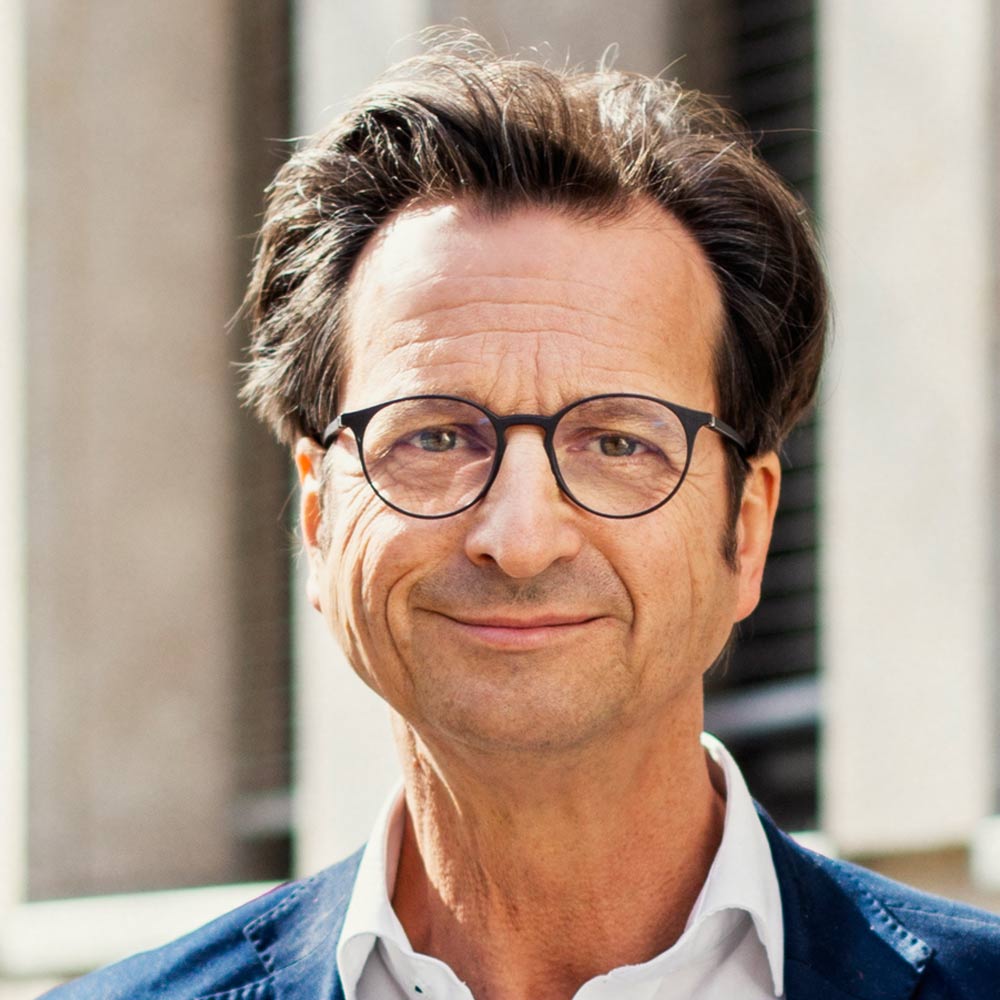
Cologne-based psychologist Stephan Grünewald is the founder of the market and media research institute rheingold. Grünewald became a bestselling author with his books "Deutschland auf der Couch" (2006) and "Die erschöpfte Gesellschaft" (2013) as well as "Wie tickt Deutschland" (2019).
Phone: +49 221-466 828 0
E-mail: gruenewald@rheingold-online.de