Hoarding purchases do not necessarily have anything to do with stockpiling, according to the market researcher. In an interview, Stephan Grünewald explains people's current behavior. The bestselling author and managing director of the Cologne-based market research institute rheingold looks with professional interest at how people's behavior is changing in the corona crisis.
The interview with Stephan Grünewald appeared in Handelsblatt on March 20, 2020.
The fact that they stormed the grocery stores and hardware stores like crazy had less to do with stockpiling. It's about proving to themselves that they still have control over their lives in the face of the invisible enemy Covid-19. For the moment, Germans still feel like they are in a collectively imposed early retirement in their quarantine or home office, the psychologist says. But soon this exit from the hamster wheel could encourage the development of creative ideas and lead to a surge in innovation in the economy.
Mr. Grünewald, I was stunned the last time I stood in front of almost empty shelves of white wall paint in a DIY store. As a psychologist, can you explain what's going on with consumers at the moment?
The basic problem is that we face an invisible threat in the form of the coronavirus. This creates a feeling of powerlessness in people that they are desperate to overcome.
And that's why they hoard wall paint, toilet paper and flour?
What we are observing in consumption at the moment are attempts to get out of powerlessness and demonstrate the ability to act through hoarding purchases. Those who lug large packages out of the store show that they are doing something.
Doesn't it also make sense to stockpile?
Yes, of course, but it's not primarily about stockpiling. This is shown in particular by purchases in the DIY store: building always has to do with the fact that I can produce something, just think of the Hornbach advertising. The pride in the project and the work that arises there is proof that people are still in a powerful situation.
"People want to overcome the feeling of powerlessness."
Stephan Grünewald in an interview with Handelsblatt
How long will this feeling last?
Basically, people are in a collectively imposed early retirement. There will now be different phases. In the first phase, people catch up on everything that's been left undone, repair the conservatory, tidy up the cellar, sort out the files, work in the garden. Phase two will come in two or three weeks. There are different strategies. Some escape into a daydream bubble, pass the time with series on Netflix or in echo chambers. On the surface, this creates a kind of calm, but in the long term it only brings more unrest and makes people susceptible to conspiracy theories.
What is the alternative?
The second strategy is to rediscover the lost excitement of everyday life, whether it's talking and playing together, hiking, or reading.
For a long time, there was a feeling that we were virtually invulnerable to permanent prosperity. Is that shaken now?
Yes, we have practically lived in a private Shire for years, and beyond it, the Gray Land, where dangers lurked, threatened us. Now we are experiencing that the Shire has broken into our Shire. This naturally leads to great uncertainty, because no one knows whether this is a temporary state or whether something fundamental is changing. We are experiencing an expulsion from paradise as we know it.
Germany has experienced crises before, including virus epidemics. Why is people's reaction so severe this time?
I can't say whether the reaction is dramatized or prudent; that's a medical question. But what I can say is that people are seeing a rigid reaction from politicians that they haven't seen for a long time. And that gives people the feeling that we really are in an emergency situation.
Is social media an amplifier of this uncertainty?
Social media has definitely helped excitement spread faster than the pathogen. This is evident in the hoarding purchases: People who see photos of cleared-out shelves run to the store because they're afraid they'll end up empty-handed themselves. The most absurd conspiracy theories and fake news are circulating in the networks, which makes people even more insecure.
How do we get out of this spiral?
Governments must now lead and show calm and sovereignty in their address to the population, and I think Health Minister Jens Spahn has done that quite well so far. Now we are once again seeing politicians who clearly rule the roost. That's new for many people - and could lead to renewed confidence in politics. Just like Gerhard Schröder in rubber boots during the Oder flood, who, like the biblical Noah, saved people from the flood - and ultimately won the federal election.
And we are experiencing this sense of community again today?
The situation is different now. We are dealing with an invisible enemy that is difficult to defend against collectively. At the moment, we are wavering somewhat between solidarity and suspicion, because everyone else could be a carrier of the virus.
Can't this crisis also release productive energies?
The collective pause for reflection we are now in also promotes creative forces. We are, after all, the land of ideas and patents, but ideas are not developed in turbo mode on a hamster wheel. We are changing quite abruptly from a mindless hustle and bustle to a contemplative hustle and bustle. This is also a salutary pause that can awaken creativity and generate new ideas on how we can transform our society and the economy.
But aren't people having experiences now that could shape their future consumer behavior?
Definitely that. People who are now shopping online for the first time may do so more often in the future. Children get their homework by e-mail, companies organize their processes in the home office - a crisis like this always leads to innovative impulses. We are experiencing a literal necessity: a need that makes us agile.
Can a positive side effect of the crisis then be a boost in the digitization of the economy?
At the very least, many companies and even consumers who were previously alienated by it are now forced to deal with it and give it a try. Supposedly self-evident things are being called into question. And that can make a big difference.
The interview was conducted by Florian Kolf.
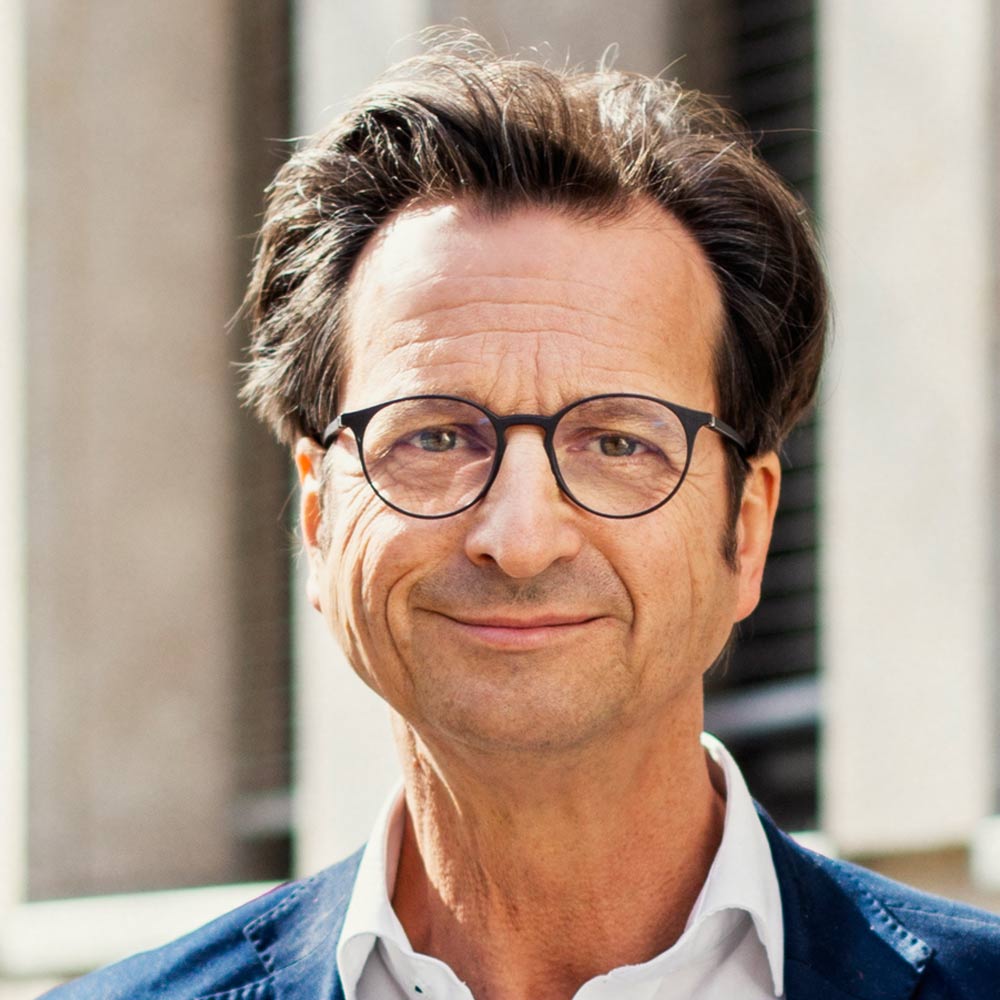
Cologne-based psychologist Stephan Grünewald is the founder of the market and media research institute rheingold. Grünewald became a bestselling author with his books "Deutschland auf der Couch" (2006) and "Die erschöpfte Gesellschaft" (2013) as well as "Wie tickt Deutschland" (2019).
Phone: +49 221-466 828 0
E-mail: gruenewald@rheingold-online.de