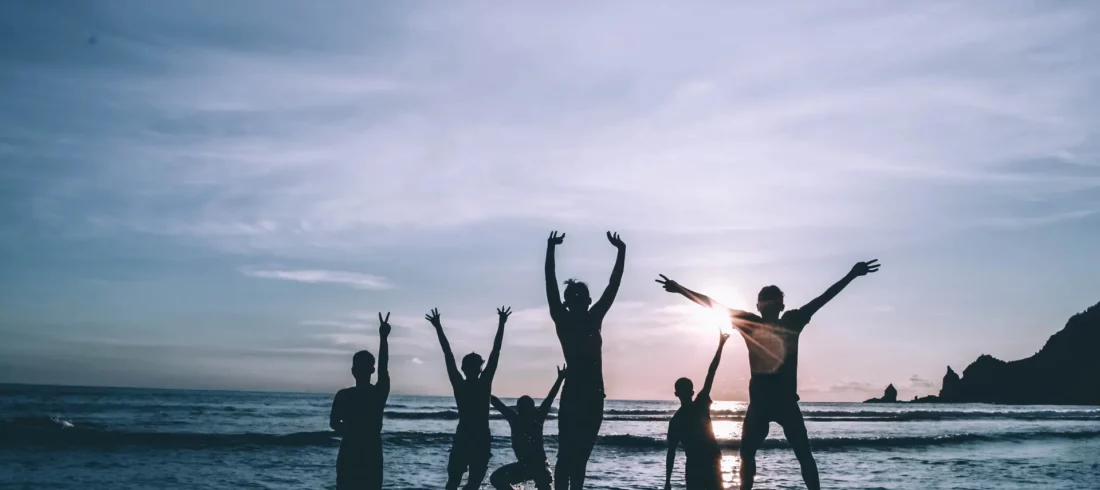
No distance and no mask - but beer and sangria in great quantities: It's not just at Ballermann on Mallorca that Germans are partying as if the Corona crisis were already over. Stephan Grünewald on the excesses of the corona crisis.
The interview with Stephan Grünewald appeared in FOCUS-online on October 10, 2020.
Mr. Grünewald, it was not only on Mallorca that Germans escalated at wild parties over the weekend. In Austria, Croatia and southern France, too, the distance and mask requirement were deliberately ignored. Is there a psychological explanation for the fact that so many behave like Corona hoodlums on vacation?
When we travel, we are literally looking for the long haul. Many spend the whole year with discipline and strictness of form. On vacation, they want to escape this confinement, they enjoy the sensuality and lightheartedness of the south and literally take off their shirts and inhibitions. When alcohol is added to the mix, it breaks down the ability to control, we liquefy in intoxication and want to embrace not just the next person, but the whole world.
This is exactly what happened in Mallorca. The excesses at Ballermann are no more exalted than usual - they just take place under different conditions. It was predictable that such scenes would occur after the travel restriction was lifted. We have been able to read this tendency for some time on the basis of our psychological in-depth interviews.
What do people tell you?
Many people currently feel a growing great longing for community, closeness and embrace. After all, we have all experienced a kind of social Lent in recent months. And as with normal fasting, the desire for cake, meat and gluttony is great after the deprivation. Not only young people feel a great desire for fraternization and brotherhood after the worst seems to be over. In Mallorca, therefore, some seek not only the bath in the Mediterranean Sea, but also in the crowd. It is not enough for everyone to stay at home or to spend the rule-abiding contemplative vacation at the North and Baltic Seas. Many want a party mood, to go steeply, to make one on it. Especially the youth.
Why are young people in particular escalating now?
The lockdown has sent young people into a kind of early retirement. All the restrictions, the enforced domesticity, the contemplative momentum of deceleration do not correspond to the lifestyle of youth. Youth is the time of exuberance and rebellion. Young people are all about experimenting with life, sexual experimentation, kissing, holding hands, long-distance travel and semesters abroad.
None of this was possible in the past few months. Young people were thus much more restricted in their tendencies to spread by the Corona crisis than older generations. What we are now experiencing is an abrupt self-liberation of parts of the youth, a new Corona exuberance, which is also understandable.
You speak of a kind of in-between world in which we live, which seems strangely slowed down and muted. How does that fit in with the raucous party frenzy at Ballermann?
We are just settling into this new in-between world; and that is not so easy. On the one hand, we can meet friends again, go shopping and travel. On the other hand, we are still living life with the handbrake on, because the threat of the virus is not going away. So now it's a matter of completely re-norming our everyday lives and finding rules of the game that regulate the tension between restriction and living it out.
This balancing happens sometimes also by crossing borders in one direction or another. When people party wildly on Mallorca, keeping no distance and doing without masks, they are putting the rules of our new world to the test according to Corona. So in a way, the current phase is like the children's game of "fisherman, how far am I allowed to travel": People are trying out how far they can go without flying out of the curve.
So the partygoers on Mallorca are testing their "Corona limits". But it's not child's play. After all, it's about the health of other tourists and the island's population.
Therefore, parental authority is also necessary. At the Ballermann or at the party places in Germany, law enforcement officers must ensure that the rules are observed, otherwise the rule becomes a farce. The new standardization of our everyday life is therefore exhausting for everyone. It is annoying and is associated with a great deal of anger and resentment. Some people are upset about those who ignore the rules and thus endanger our health. For others, it is precisely those who cling to what they see as an obsolete rule of masks and distance or who enforce compliance with the rules who are a thorn in the side. So we are all experiencing a certain productive disillusionment. Our new life after Corona is a difficult birth.
During the Corona crisis, we talked a lot about a new solidarity. Are we now threatened by a post-Corona divide in society?
The in-between world we are living in right now is waiting with a dilemma that affects all of us - not only the tourists on Mallorca, but all Germans. We have to cope with the fact that, on the one hand, we should continue to be careful not to endanger our health and that of others. But on the other hand, after the months of social distancing, many people finally want to feel closeness and intimacy again, they want to hug each other and experience themselves as a group. So we are experiencing the classic conflict between restriction and acting out, which is made extremely acute by the special situation.
This also increases the danger that fundamentalist camps will emerge in this situation. Some focus on full risk minimization and isolation, they walk around with masks on from morning to night and dramatize the corona danger. The others ignore, minimize or deny the danger, they celebrate themselves and excess at Ballermann and elsewhere and behave as if nothing had happened.
We now have to reconcile this area of tension. The great challenge is to find a sensible and healthy middle way between restriction and lust for life.
One controversial issue is the mandatory use of masks. There has been much discussion in recent weeks about the sense and nonsense of the mouth guard. What do people think of the "Corona mask"?
The mask is a memorial for the Germans, reminding us that Corona is not over yet. No one likes to wear it. Nevertheless, most overcome to protect themselves and especially others from the virus. At the same time, it patronizes us in the truest sense of the word: our lives are based on our breathing, eating and speaking. These basic functions of living and communicating are restricted by this "muzzle".
The much bigger problem is that the mask is in the process of becoming a classification, a sign of recognition for different social groups - according to the pattern: here the mask wearers and agents of fulfillment, there the non-wearers and the hasards. This not only provides fuel for the fire. The mask is also no longer seen as what it actually is: a protective device. Instead, the mouthguard serves as a coat of arms, as the flag of a faction in the new post-Corona world.
Proponents of mandatory masks argue that the mouthguards will help us prevent a second wave of the virus. Would Germans even be psychologically capable of participating in another lockdown?
The first lockdown worked comparatively well because there was collective solidarity in Germany against the virus. Everyone wanted to get out of their powerlessness - and it worked because society was united in what was being done to fight the virus.
We no longer have this unanimity. If a second lockdown were to become necessary - which I think is unlikely at the moment - it would have to be enforced under threat of draconian penalties. It would be a highly difficult undertaking - and a slap in the face especially for those who have always been severely restricted.
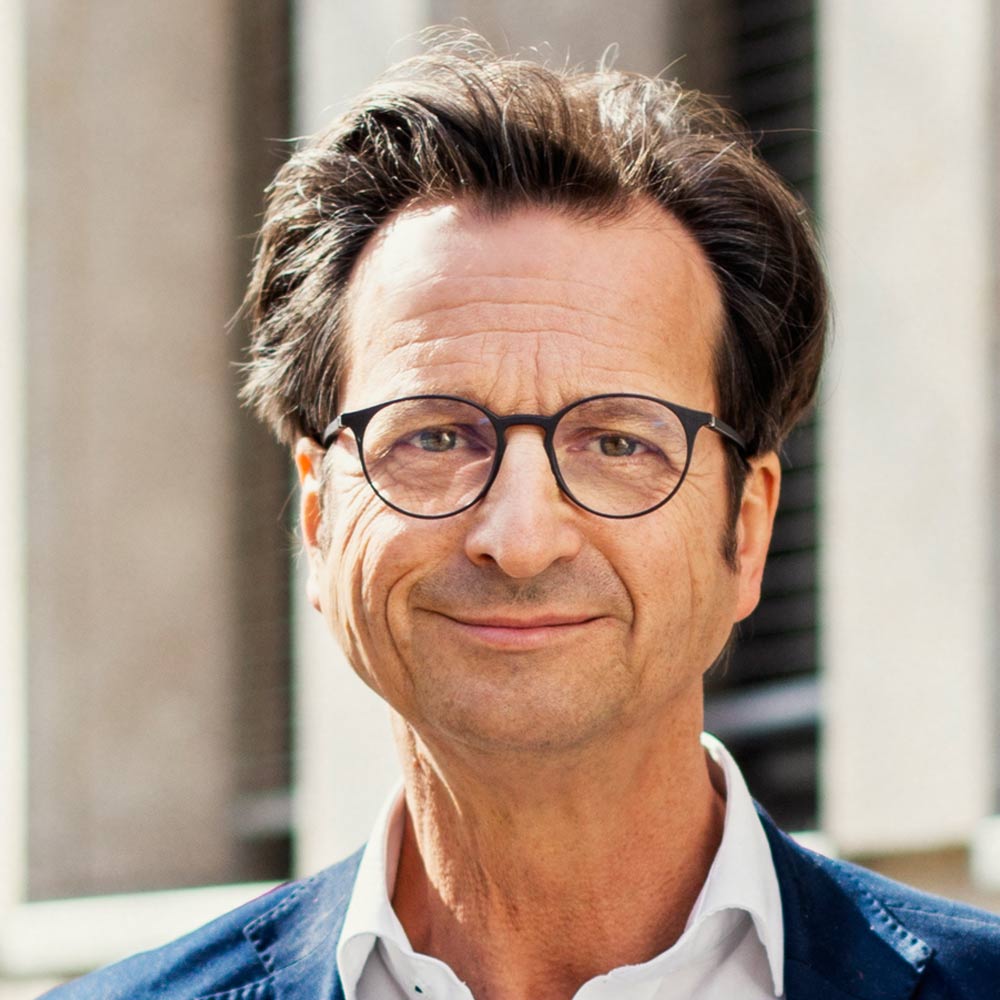
Cologne-based psychologist Stephan Grünewald is the founder of the market and media research institute rheingold. Grünewald became a bestselling author with his books "Deutschland auf der Couch" (2006) and "Die erschöpfte Gesellschaft" (2013) as well as "Wie tickt Deutschland" (2019).
Phone: +49 221-466 828 0
E-mail: gruenewald@rheingold-online.de