
The "we-feeling" is crumbling - and not just since Corona. But there are ways to restore social solidarity. Stephan Grünewald describes them in his column "Deutsche Zustände," which is published regularly in the Kölner Stadt-Anzeiger.
This column appeared in the Kölner Stadt-Anzeiger on January 9, 2021.
The word virus is associated, at least sonically, with a we-promise (we/us), which was also fulfilled at the beginning of the pandemic. People experienced Corona as a common fate. Initially, there was a great willingness to confront the virus in collective shoulder-to-shoulder and abandonment. But with the first lockdown in spring 2020, this solidarity was already crumbling again. Doubts arose as to whether the measures were not excessive or too lax. For the better-off part of the population, the lockdown was a chance to slow down, while the other part was plagued by existential worries or suffered from cramped conditions at home.
In addition, the obligation to wear a mask undermines the feeling of togetherness, because it triggers alienation rather than trust in the other person. The mask obscures the social facial expressions and reminds the other person more of bank robbers or biting dogs than of caring fellow human beings. Even in the ritual of greeting, we are currently becoming an elbow society. The social distance commandments are turning the culture of charity into a culture of (digital) long-distance relationships.
Finally, Corona also favors a retreat into private worlds of one's own and an increasing narrowing of vision. The global or even national perspective gives way to a regional focus and self-interest, and not only in the conflict over vaccine doses.
Corona reinforces existing community deficits
Corona is not the mother of all we-problems, however, but has reinforced community deficits that were already there before. This can be seen by looking at three important nuclei of the "we" feeling: the family, work and the media. The classic family in particular has been fragile for a long time. Today, we live in a patchwork world that is often characterized by children's fear that their own family, as a basic form of "we," could break apart at any time. The basic trust in a secure cohesion is often damaged. Media offers of bonding therefore often promise more security and availability than love relationships.
It is similar in the working world. Ideally, it creates social closeness among colleagues and common goals. But when only quarterly figures count and employees are treated as cost factors that can be outsourced at any time, trust and a sense of unity disappear. Everyone saves himself as he can. The home office also exacerbates isolation, since the gain in personal freedom is at the expense of the loss of community.
Finally, the media used to provide a collective beat and a common line of sight. Television in particular created a kind of campfire effect. On the Internet, the community space often becomes a space for self-reflection, in which users narcissistically revolve around their own interests or passions, and at best echo chambers of like-minded people are created.
Five ways to reopen the "we-feeling"
Also in the time after Corona, the "we" will remain an eternal challenge. Five paths can open up access to the "we" anew. Paradoxically, the starting point is a culture of dispute, because a "we" only arises in conflict. Controversy strengthens the "we" because it not only clarifies one's own position, but also makes differences visible. In this way, it opens up the possibility of understanding the other, but also of overcoming what divides us through compromise.
Secondly, the "we" needs mutual esteem, otherwise the dispute will not be conducive to peace, but will lead to offending and belittling. Sweeping devaluations of those who think differently may strengthen one's own ego or that of one's own social circle, but in the long run they lead to discord and division.
Thirdly, the "we" is fostered by collective goals and visions. It would be great if the unifying power of shared future perspectives and dreams could be felt not only during soccer World Cups, but also in the social challenges we will soon have to master.
Fourth, the "we" needs common rules and orders that constantly rebalance the scope between individual development and social compatibility. The unifying idea of justice is based on everyone abiding by the rules.
Finally, the We needs an extended "incest taboo". It is to prevent us from revolving only around ourselves or around topics and people who are kindred spirits to us. We are only capable of community if we overcome our narrow horizon of the already familiar and known and leave our comfort rooms. This was already the purpose of the apprenticeship and wandering years in earlier times. The confrontation with the foreign not only strengthens one's own equipment, but also educates one to tolerance and liberality.
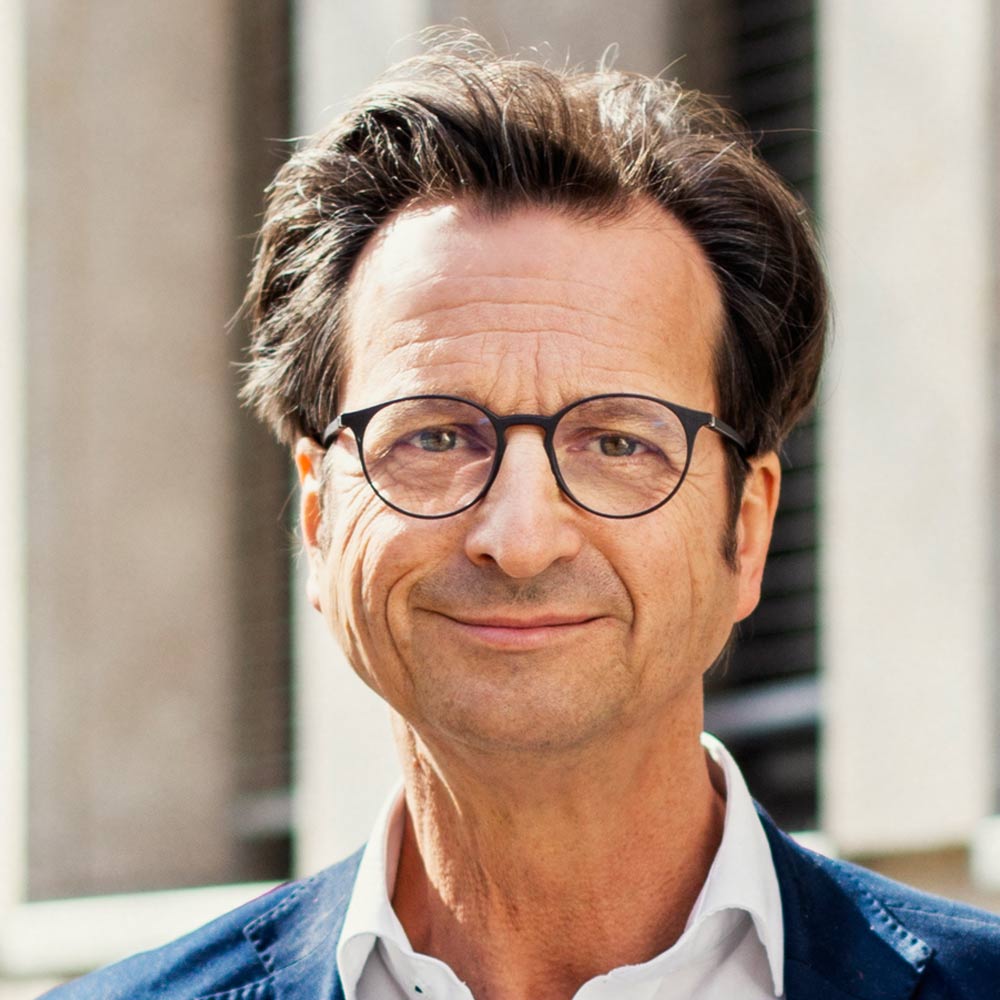
Cologne-based psychologist Stephan Grünewald is the founder of the market and media research institute rheingold. Grünewald became a bestselling author with his books "Deutschland auf der Couch" (2006) and "Die erschöpfte Gesellschaft" (2013) as well as "Wie tickt Deutschland" (2019).
Phone: +49 221-466 828 0
E-mail: gruenewald@rheingold-online.de