Germany's dithering in dealing with the pandemic is an expression of unconscious resistance, which is partly responsible for the fact that we have gambled away our pioneering role in pandemic control. An essay by Stephan Grünewald in the WELT.
This essay appeared in the World on March 1, 2021.
Many people currently experience everyday life in Germany as a seemingly endless repetitive loop. The corona virus greets us every day. Tunnel vision overshadows every ray of hope. Life drags on like chewing gum. And experts, citizens and some politicians wonder with astonished horror why so many sensible and reasonable measures are stubbornly not being implemented.
As a psychologist, I see the German handling of the pandemic, with its tendency toward inaction and procrastinating indecision, as a failure. Failures are an expression of unconscious resistance. They cannot be treated by rational arguments, but by an understanding of their psycho-logic. In analyzing hundreds of in-depth interviews we have conducted with people in Germany in recent weeks, I increasingly encounter inner contradictions, crude thought traps and latent hopes of redemption. These mental factors are partly responsible for the fact that Germany has gambled away its pioneering role in pandemic control since the summer.
Thus, a central psychological dilemma in dealing with the pandemic is that there are two completely divergent attitudes with which one can confront the virus. Passively, in the form of a lockdown and the resulting reduction in contact. Active in the form of the use of efficient and targeted prophylactic measures: Rapid tests, FFP2 masks, tracking/location systems, hygiene concepts, rapid response to outbreaks, consistent monitoring of the measures and sanctioning, but also strengthening the personal responsibility of each individual. Both attitudes have their justification. Ideally, they are intertwined and reinforce each other.
In Germany, however, the two attitudes seem to increasingly hinder and invalidate each other. The passive attitude is undermined by a claim to activity, the active attitude is slowed down by a habitus of passivity. The status quo is characterized by a holey passivity and a goal-inhibited activity. The second lockdown, and thus the return to passivity mode, thus occurred too late and too mildly. Citizens experienced partial curtailment, but unlike last spring, they did not have a quick sense of accomplishment. The thus necessary prolongation loops of the lockdown produced increasing attrition and corona corrosion. On the surface, people play by the rules, but behind the scenes, a shadowy everyday life emerges in which everyone establishes their gray areas and uses their loopholes. This holey passivity thus counteracts the goal of contact reduction.
The target inhibition of activity is particularly noticeable at the present time, when incidence is stabilizing and there is a growing desire for a formative transition to a controlled life with the virus. But this transition, in turn, requires that policymakers and citizens implement all available measures quickly and consistently. However, this is happening at best partially and too hesitantly. Analysis of our in-depth interviews identifies five reasons for this:
1. the glorification of sitting out, waiting and doing nothing
Many citizens feel that in the face of an invisible threat posed by the virus, all they can do is duck away and it is best to cease any active intervention. Ideally, one would put oneself and the entire country into a collective hibernation, which would only end when the virus is eradicated by external saving powers. With its praise of laziness ("We were like sloths and did nothing"), the federal government's commercial has ennobled the idle-wait-and-see attitude. Sections of the population have increasingly fallen into a bureaucratic rigidity of acquiescence. Their social activity beyond the private gray areas is often exhausted by denouncing even the Corona-unobjectionable activities of their fellow citizens.
2. innovative spirit and inventiveness as a fall from grace and the culprit of second wave
The first lockdown was more successful because people, fear-driven by a still immeasurable disaster scenario, reduced their contacts. Passivity was less spotty then, activity not yet so target-restrained, because the opening was creatively driven by many clever measures and the development of effective hygiene concepts. However, as the numbers rose in the fall, this German inventiveness was blanket discredited. Quote from the in-depth interviews: "The third wave is, after all, the receipt for the fact that we have relaxed again and opened bars, clubs or restaurants." But if clever measures and resourceful solutions appear to be a fall from grace, then Germany loses its vigorous creative power and its nimbus as the land of ideas and patents. The land of poets and thinkers threatens to become the land of poet-makers and lateral thinkers.
3. full hull mentality promises unassailability
If you try something, you make yourself vulnerable. Conversely, the blanket lockdown offers a kind of insurance protection similar to a broad-spectrum antibiotic. This attitude can make it difficult for politicians in a super election year to dare to take the risk of differentiated and targeted measures. After all, even a smart measure can open the door to recriminations should values rise. For many citizens, too, the desire for full coverage is currently topping the principle of personal responsibility. Many people describe their reluctance to use rapid tests themselves as if they were interfering with a state sovereignty.
4. arrangement with the "lockdown" way of life
Even during the first lockdown, I noticed in our studies that just under a third of the respondents did not suffer from the shutdown. Rather, they experienced it as a decelerated time, as a kind of sabbatical in which one can finally pursue things one loves. In the second lockdown, the division between people who see the lockdown as an existential threat or restriction to their circle of life and those who have settled comfortably into a small Corona-Biedermeier circle of life deepens. The latter sometimes have no interest in actively opening up, because the lockdown lifestyle relieves them of many of the impositions and challenges of modern life. Fewer contacts, less shopping, fewer obligations, less traveling also mean less alienation for them, less need for development and more legitimate self-reference.
5. fundamentalist claims of salvation à la Covid Zero
"I'm not restarting life until the virus is eliminated!" proclaims one subject in the in-depth interview. As a psychologist, I find it troubling when narratives of final victories reemerge during a crisis. It's true that they are fascinating right now as pipe dreams. In their claim to absoluteness, however, they lead to an obsessive war against the virus that, in my opinion, can never be completely won, or they cement a wait-and-see fatalistic attitude that ties the active and controlled opening of the circle of life to a condition that is hardly redeemable. The indecisive swaying between holey passivity and target-restrained activity creates the illusion of getting through the pandemic blamelessly, but leads to a vicious circle of unproductive endless discussions, constant blame-shifting and rigid camp-formations. The psychological and social collateral damage is growing, and at the same time the population is increasingly losing its orientation and trust in politics.
One way out seems to me to lie in a new determination with regard to a truly active stance. It is too late for a resolutely passive stance with a hard lockdown. People have been worn down by months of restriction, and the bursting energies of optimism of the approaching spring must be channeled. However, resolutely relying on efficient and targeted measures, and thus the use of hitherto little-used technological tools ranging from rapid testing to tracking systems, requires four aspects:
Strengthening the personal responsibility of citizens, also through politicians who do not hide behind a fully comprehensive claim, but appeal to Germany's creative and creative side. The creation of a clear and tangible target perspective with consistent and comprehensible step-by-step plans. The consistent monitoring of all measures. And if there are setbacks on this active path, education, fault tolerance and encouragement are more helpful than moralizing and pessimism.
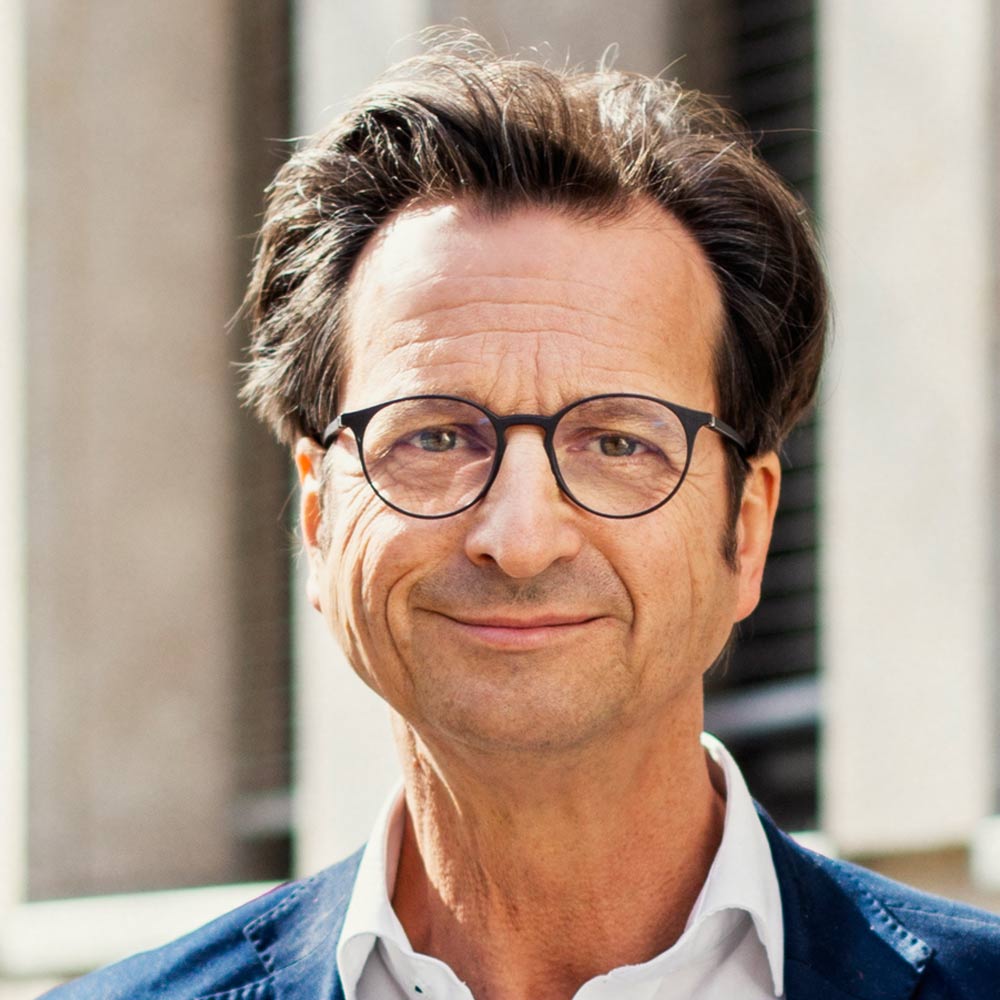
Cologne-based psychologist Stephan Grünewald is the founder of the market and media research institute rheingold. Grünewald became a bestselling author with his books "Deutschland auf der Couch" (2006) and "Die erschöpfte Gesellschaft" (2013) as well as "Wie tickt Deutschland" (2019).
Phone: +49 221-466 828 0
E-mail: gruenewald@rheingold-online.de