Psychological mechanisms lead to recognizably different behavior than in the first lockdown. The main reasons are the dwindling fear of becoming ill, the lack of a sense of achievement, and the rules that are experienced as non-transparent.
"A Corona routine has now taken hold among people, and at the same time they are worn down because their deprivations are not crowned with success," says Stephan Grünewald, head of rheingold and a member of the NRW state government's expert council. In addition, many citizens experience that public institutions are not able to consistently implement or monitor the measures that have been adopted.
A large number of citizens therefore want their government to be united, transparent, clear and consistent. "If you want to motivate people now, you have to provide both clear guard rails and, at the same time, a perspective for the future," says the psychologist.
We have a free webinar planned on this topic:
Summary of the investigations (January 2021)
1. many people are currently less afraid than during the first lockdown
The second lockdown will be experienced differently by many citizens than the first lockdown in spring 2020. Last year, many were under the spell of the horrific images from Bergamo and the uncertainty of what impact the new virus would have. The situation at that time was experienced as an adventurous emergency that evoked many fears and led to public and private life being largely shut down. Subjects reported that they took care to meet as few people as possible, that they constantly disinfected their hands, and that they panicked if the distance rule was not observed in the supermarket or elsewhere.
Today, for many people, corona is already part of their everyday reality and a corona routine has developed. People no longer experience their own fear as strongly as they did in the spring of 2020. Above all, the availability of vaccines, medications and the observation that severe episodes occur primarily among older citizens have a fear-reducing effect.
More social circulation and proximity
2. the way many people deal with the rules is more relaxed, social circulation is more pronounced
Most citizens do pay attention to the rules, they observe, but a more relaxed approach to them. "I don't pay meticulous attention to what I touch anymore, and I hardly ever disinfect my hands." "I also hug good friends again."
Many report that they no longer isolate themselves so much socially, but are once again cultivating their contacts more and meeting acquaintances or relatives. Many have staked out their circle of friends, but literally circle within their circles of friends.
Many citizens are also experiencing differences in shopping behavior. In the spring of 2020, people were anxious to get everything done in a weekly bulk purchase; now, daily shopping tourism promises to be a social or sensory highlight during the lockdown.
3. behavior of the population can be differentiated with regard to three groups: The overcautious, the rule-abiding with gray areas, and the carefree.
The overcautious have mostly had alarming Corona experiences (severe courses, deaths, etc.) in their social environment. They still inform themselves strongly about the current corona developments and describe that they act even more cautiously and restrict themselves even more than in the first lockdown.
The rule-followers insist that they adhere to the official commandments and prohibitions, but time and again they open up small gray areas for themselves. Especially in private or outdoors, they allow themselves individual interpretations of the rules and self-responsible degrees of freedom. They strongly distinguish themselves from the Corona deniers and take care not to make themselves vulnerable to attack. In secret, however, they establish a kind of shadowy everyday life that allows them to mitigate the deprivations and restrictions of the lockdown.
The carefree try to largely ignore the Corona danger and only abide by the rules in public spaces. Here you will find Corona deniers, people who tend to feel invulnerable, but also people who have resigned themselves after 10 months of Corona and no longer believe in the sense or effectiveness of further restriction.
4. self-efficacy and occasional everyday breakthroughs become mentally important in the shutdown everyday life
Most people can only endure the stagnant life in the lockdown by being active. For doing nothing and being lazy increases the powerlessness they experience in the face of the invisible and treacherous enemy Covid 19. For this reason, most of them work a lot, or they look for fields of activity in the home environment: They work, cook, bake, do puzzles, hike, bike, watch series on Netflix.
Above all, the daily walk is experienced as a collective swarming and creates both nature and social connectedness. Without these opportunities for action, many are afraid of literally going crazy in the shutdown. They therefore look forward to possible curfews with great apprehension.
After the long period of lockdown, citizens of all ages are also increasingly expressing the feeling that life is slipping through their fingers, that they are irretrievably missing out on their youth or the joys of old age. People are increasingly longing to break out again, to get together with others, to celebrate exuberantly or to travel carefree. Sometimes this longing is articulated in sporadic everyday breakthroughs such as private gatherings or small excursions.
The sense of achievement is missing
5. lack of experience of success promotes corona corrosion
People experience it as increasingly demoralizing that their restrictions do not seem to be crowned with success and do not lead to any noticeable reduction in the number of infections. While last spring the numbers went down very quickly and the weather increasingly improved - which was experienced as a heavenly commendation - people now feel they are in an endless loop in which the good news, such as the start of vaccination, is immediately overshadowed again by the bad news of virus mutations.
This is increasingly fueling a mood of resignation among the population. The belief that the pandemic will soon be overcome is increasingly fading, and the call for a long-term perspective in dealing with Corona is growing.
It is also experienced as corrosive to one's own discipline when others do not abide by the rules. This calls into question the sense of one's own renunciation; one feels like the fool. The desire for parental strictness, with which the measures are monitored and their non-compliance sanctioned, is frequently expressed. This external strictness also serves as one's own disciplinary aid.
6. expectations from politics: unity, transparency, plain speaking and consistency
Many policy measures are currently not experienced as comprehensible, coherent or consistent. In addition, many citizens experience that public institutions are not able to consistently implement or monitor the measures adopted. In general, citizens call for more unity, transparency, plain speaking and consistency in the direction of politics. However, the concrete demands made of policymakers differ among the various groups.
Instead of a repeatedly extended lockdown, the overcautious would like to see a broad but short-term shutdown of the country ("lock-lockdown") along the lines of "better an end with horror than horror without end."
The rule-followers with gray areas would like to see the existing rules first implemented and sanctioned consistently or replaced as soon as possible by differentiated and more targeted measures. The carefree would like to see the measures lifted quickly, also irrespective of the level of infection figures.
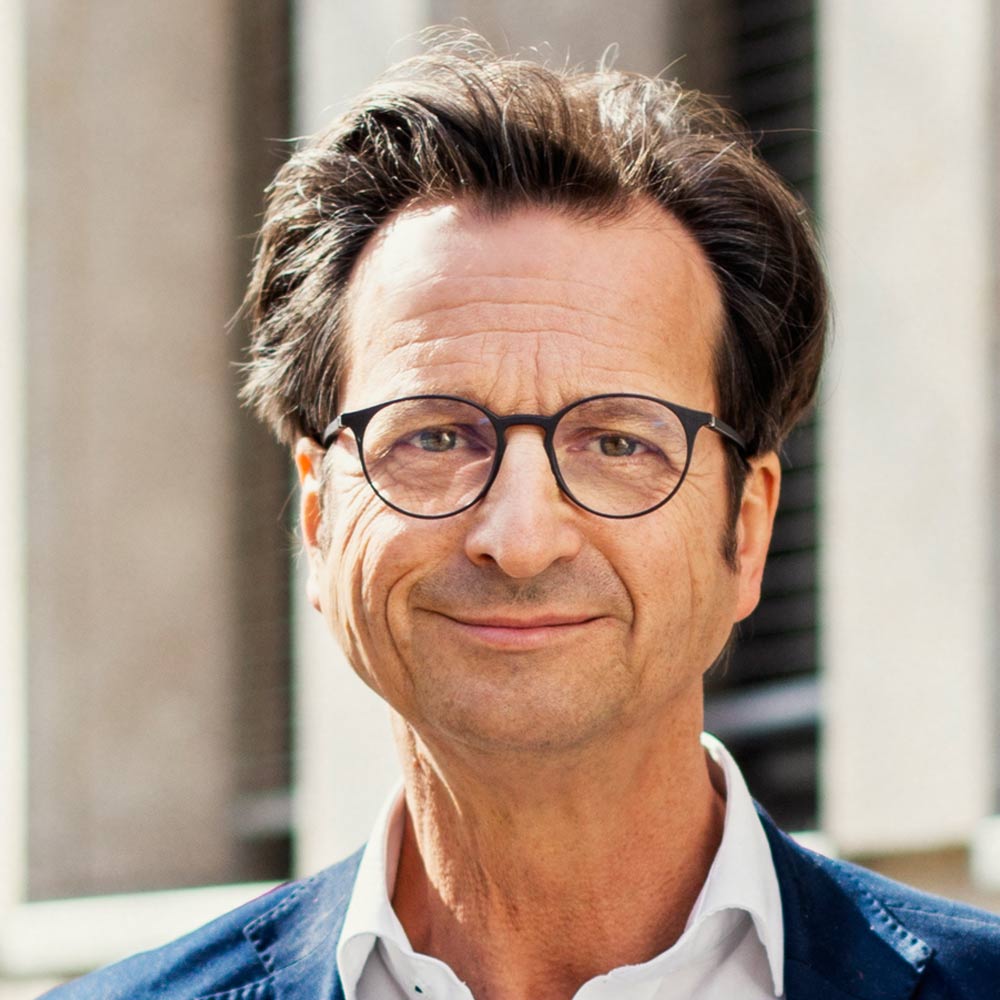
Cologne-based psychologist Stephan Grünewald is the founder of the market and media research institute rheingold. Grünewald became a bestselling author with his books "Deutschland auf der Couch" (2006) and "Die erschöpfte Gesellschaft" (2013) as well as "Wie tickt Deutschland" (2019).
Phone: +49 221-466 828 0
E-mail: gruenewald@rheingold-online.de