"Next year, there will be a ravenous appetite for any major event," Stephan Grünewald, managing director of market and media institute Rheingold, told Börsenblatt.
This interview appeared in Börsenblatt on March 12, 2020.
Corona-related, 2020 will be the year without trade shows. Will exhibitors and visitors possibly discover: It also works without?
For decades, we have been a society in a state of moving stagnation, resistant to change. What the financial crisis and Greta failed to do is now leading to a gradual shutdown of public life. The hoarding purchases we've seen in recent weeks also anticipate the temporary end of the hamster wheel. We are settling in - as if for an extended Christmas - for some family time. But Christmas can only be survived because seven days later is New Year's Eve and then the corks pop again. My prediction is that next year there will be just a ravenous appetite for any big event.
Business or experience? What should the mix be at a trade fair?
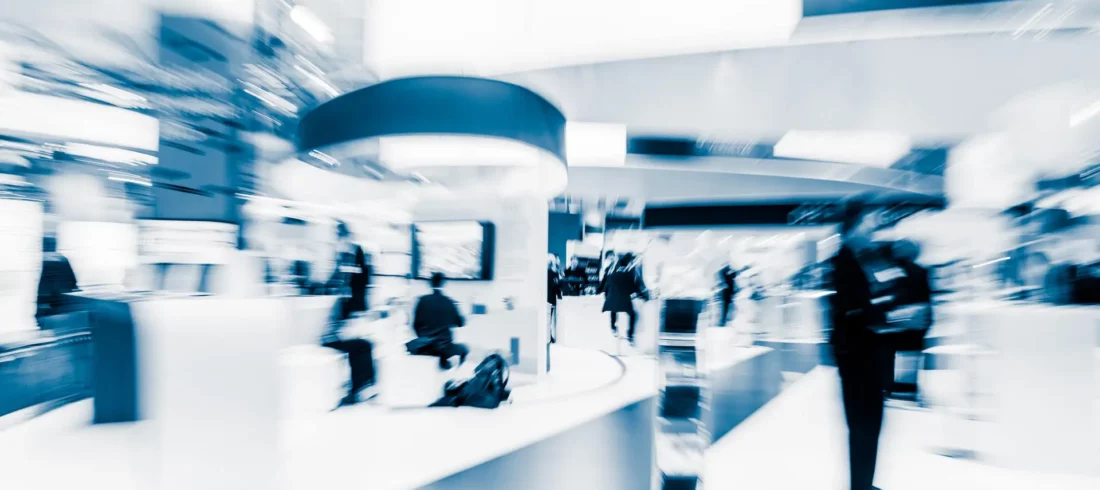
Most of the motives that a trade show fulfills are of an emotional nature. These include competition, confrontation with competitors in a confined space, the desire to show off and pride in showing off, experiencing community or exchange and closeness. The business side only comes into play in the transfer of goods and know-how.
The IAA is shrinking, the Cebit has been discontinued - is the trend perhaps toward smaller formats anyway?
These are natural corrective movements. The fair satisfies various needs. Whether and how this succeeds is not only determined by size. To satisfy the desire to show, for example, you need as large an audience as possible. Exchange and proximity, i.e. the quality of encounter, can be fulfilled just as well at smaller events. Experiencing community, the oceanic feeling of being absorbed into something larger, needs a certain size, but it can also tip over into a feeling of lostness and self-dissolution if the fair becomes too sprawling and stretches out over endless halls. I believe the Corona caesura will cause all trade show organizers to rethink their concepts.
After the cancellation of the Leipzig Book Fair, all kinds of substitute events sprang up in no time at all, virtually on the web, but also in real life at smaller venues. Exception or rule?
This seems to me to be a phenomenon of the book industry. Reading itself is a very autonomous, sometimes autistic process. But there is also another side, which can be observed at lit.Cologne, for example, which has managed to transform the intimacy of reading into the event of a major event. It's entirely possible that not only Netflix will boom in the next few months, but also that the book will become a means of consolation during the social Lent.
What can be replaced by digital trade shows, for which technology is becoming increasingly sophisticated? Motives such as the desire to show off and pride in showing off can also be satisfied on the web.
That will also happen. However, our studies in retail and with young readers show that the more time people spend in digital worlds in front of computers, smartphones, laptops et cetera, the greater their longing for analog life, for real encounters and experiences.
The interview was conducted by Sabine van Endert.
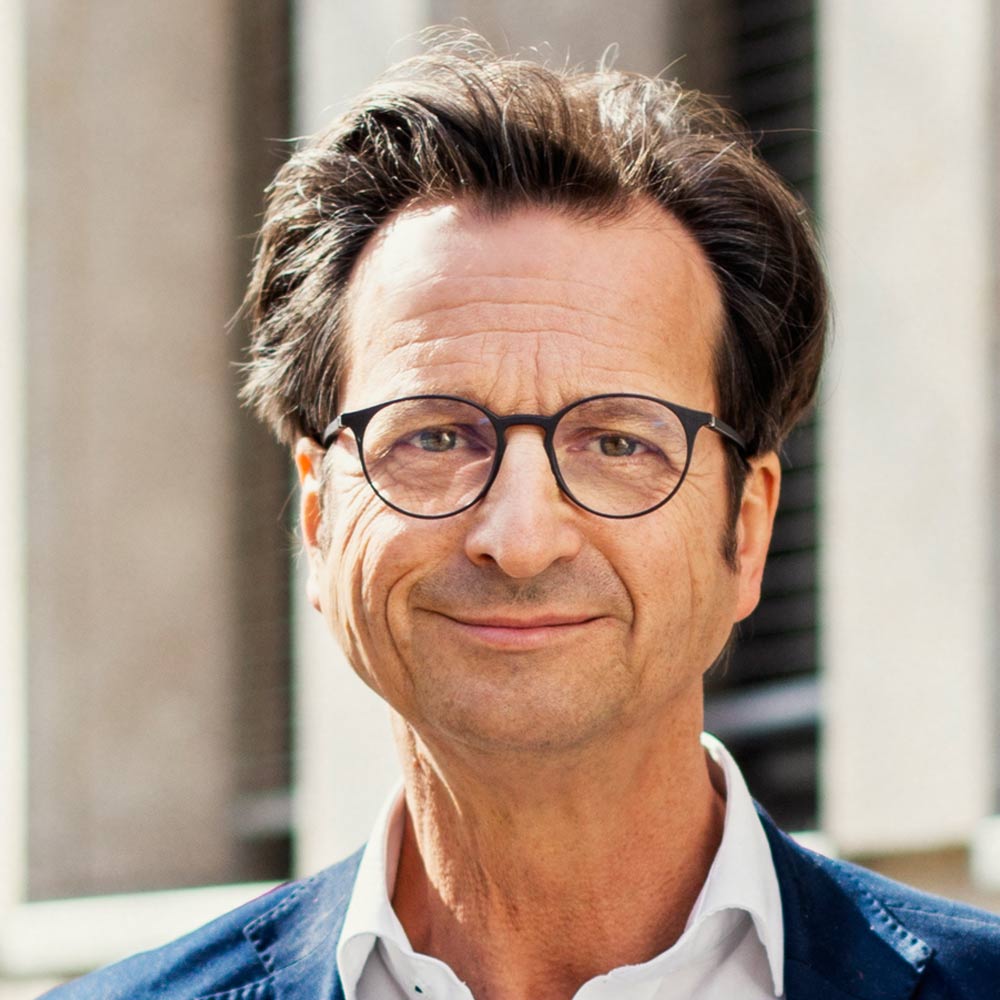
Cologne-based psychologist Stephan Grünewald is the founder of the market and media research institute rheingold. Grünewald became a bestselling author with his books "Deutschland auf der Couch" (2006) and "Die erschöpfte Gesellschaft" (2013) as well as "Wie tickt Deutschland" (2019).
Phone: +49 221-466 828 0
E-mail: gruenewald@rheingold-online.de