
Psychologist and founder of the rheingold institute Stephan Grünewald explains why there is now hamster buying and hysteria because of the coronavirus.
The interview appeared in the Kölner Stadt-Anzeiger on March 4, 2020.
Mr. Grünewald, the coronavirus is spreading fear and terror. As a psychologist, what do you notice about it?
The current alarm is related to the fact that we are dealing with a foreign pathogen from faraway Asia, about which we still know quite little. We are confronted with an unknown danger that we cannot see, hear, smell, taste or feel. In other words, there seems to be nothing at all we can do about it. Such an experience of powerlessness is almost unbearable for us, which is why we constantly want to reassure ourselves of our own ability to act.
Like what?
Through hoarding purchases, people demonstrate that they can take the reins of action. They have the sovereign feeling that they can at least take active precautions if they cannot protect themselves completely. Especially since most people have heard that the disease is usually mild. However, what is threatening in any case is a 14-day quarantine.
But that means being locked up in your own four walls or in the hospital for two weeks. On the one hand, this depressing thought also has something enticing about it: Finally getting away from all the stress! Simply doing nothing for a change, without having to apologize for it. An involuntary and at the same time unpunished retreat into one's own cocoon, which one usually only allows oneself in this way at Christmas. And what do people do before the holidays?
Stock up on supplies?
Exactly. Buying a hamster secretly holds out the hope of breaking out of the hamster wheel. In this respect, what we are currently experiencing is also similar to the pre-Christmas effort to equip one's own domestic constitution in the best possible way. With enough carbohydrates in the cupboard, one can also save oneself from potential mood crises, relationship conflicts and cabin fever and really eat oneself into a trance. Then there's the copycat effect. Even if we don't intend to get anxious at all, when we go shopping we see others next to me clearing out the shelves.
The excitation then spreads even much faster than the pathogen.
It takes a few days, the excitement only a few seconds, until it has gripped us and infected us with the idea: If I don't get in on the action right away, I won't get anything in the end.
But at least the excitement is not as dangerous as the pathogen.
That is undoubtedly true. Nevertheless, a second source of danger is currently emerging for society. In addition to the pathogen, the excitement it triggers is already making psychological waves before the physical danger has even arrived. And everyone can make a contribution to ensuring that the agitation does not escalate further, as can currently be seen in the increasing social hostility.
When someone claws the last mouthguard or someone coughs uncontrollably in the office?
Exactly. Or when infected people are berated savagely about how they dared to travel to Italy or celebrate carnival in Heinsberg. And I'm concerned about the images from the Turkish-Greek border, which bring back memories of the refugee crisis of 2015.
Where do you see the connection to coronavirus here?
Investigations after the Chernobyl reactor disaster in 1986 have shown that the experience of powerlessness in the face of radioactive contamination from the East was sought to be dealt with a few months later by a campaign against refugees pushing from the East to the West. For refugees are visible, tangible and, if necessary, to be kept out by force. Such humanization of danger and rigid responses could all too easily be repeated in times of Corona.
Do you see ways as a society to manage agitation?
It is very important to call a spade a spade with objectivity and sobriety and to ensure transparency. In my opinion, the health minister is doing a good job. The small signs of a rational approach to the situation are very important: washing hands, observing sneezing etiquette. These things reduce the feeling of powerlessness. And a third thing: staying in the conversation. By that I mean the real conversation - within the family, among friends and acquaintances, at work. Fake communication in the virtual worlds of social networks, on the other hand, tends to act as the perfect agitation accelerator.
The interview was conducted by Joachim Frank.
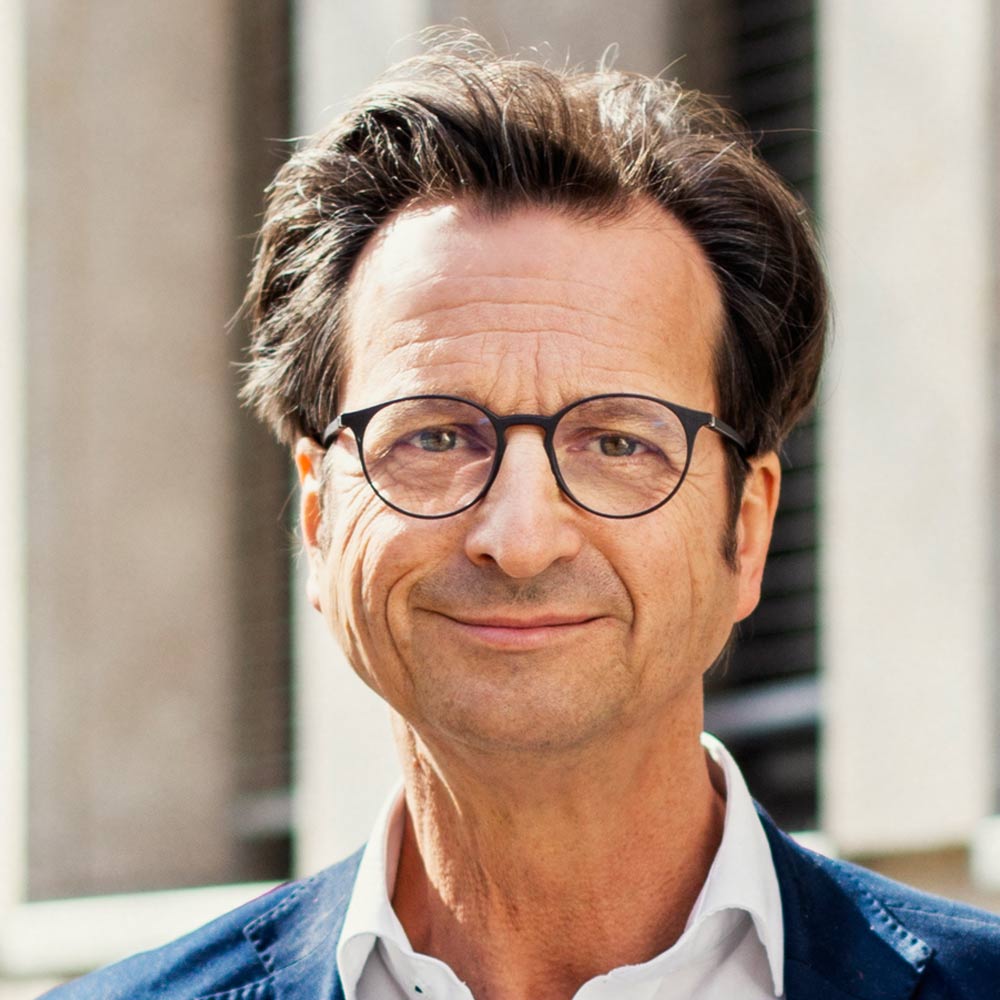
Cologne-based psychologist Stephan Grünewald is the founder of the market and media research institute rheingold. Grünewald became a bestselling author with his books "Deutschland auf der Couch" (2006) and "Die erschöpfte Gesellschaft" (2013) as well as "Wie tickt Deutschland" (2019).
Phone: +49 221-466 828 0
E-mail: gruenewald@rheingold-online.de