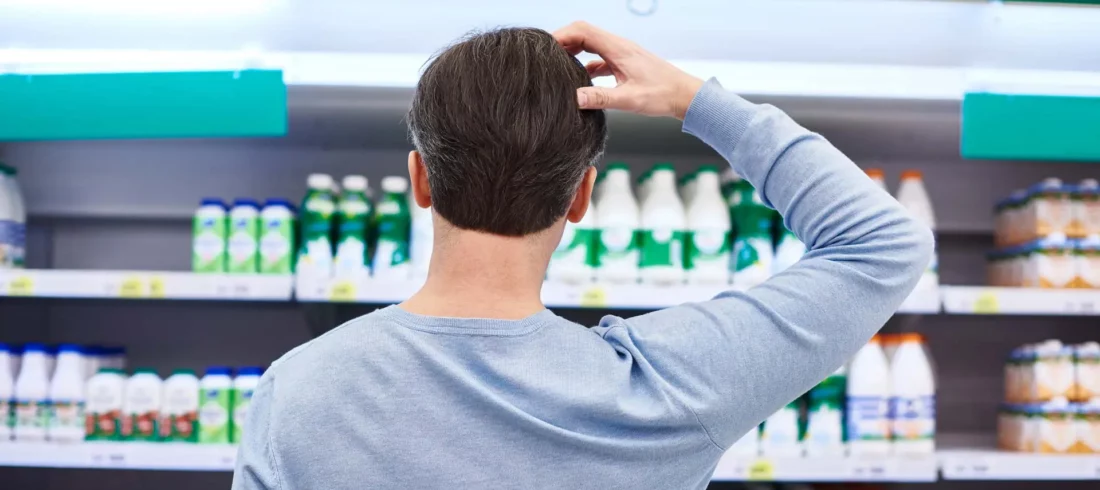
Kilos of canned pineapples, noodles and toilet paper - many Germans are currently acting as if there will soon be a famine. How irrational is that? And when does stockpiling in the cellar make sense?
If you go shopping these days, you're likely to find one or two empty shelves. On the Internet, you can even get the impression that the whole of Germany is panic-buying all the supermarkets empty: pictures of hoarding are flooding the social networks, and many of them are making fun of it.
What drives people to stockpile heaps of food, even though politicians and retailers stress that there is no reason to hoard food?
The article appeared at tagesschau.de on March 3, 2020.
The invisible enemy
Stephan Grünewald, psychologist and managing director of the market and media research institute rheingold, sees the "hoarding purchases" as an act of hyperbole. "With the coronavirus, people are confronted with a threat they can't see, smell, taste - an invisible enemy." That leads to an experience of powerlessness and inability to act, he said. "The hoarding purchases are an attempt to counter this and to feel able to act again," says Grünewald in an interview with tagesschau.de.
According to Grünewald, hygiene tips on how to protect oneself from infection, such as hand washing, sneezing etiquette and keeping one's distance, also have a psychological effect in addition to their proven practical benefits: they give people the feeling that they can counter the threat by taking concrete action.
But even those who don't actually feel the urge to stock up are unsettled by the hoarding purchases of others. "If you see people all around you running to the shelves in a panic and heaving noodles into the shopping cart, you get the feeling that if I don't join in now, I'll end up empty-handed," Grünewald says. "The excitement spreads faster than the pathogen."
Afraid that the supply will collapse?
It is difficult to say how irrational these fears are. Especially since it is unclear what they are specifically referring to. Do the "hoarders" fear that the food supply will soon collapse? The fact that canned bread, long spurned by many, has recently become more popular again at least suggests that this is the case.
The German Retail Association has given the all-clear in this case: "Although we are currently seeing higher demand for longer-life products and beverages in individual grocery stores, the supply situation is normal throughout Germany," says the German Retail Association. The supply structures are efficient and well prepared, and the supply of the population is guaranteed. However, should the quarantine zones in the supply countries expand, there could be shortages of one or the other product in the short term.
"Supply to the stores has been adjusted"
A spokesperson for REWE Group is even more specific: Despite the increased demand for long-life foods, canned goods and drugstore items throughout Germany, there are no bottlenecks in the supply of goods. The frequency of deliveries to stores has been adjusted, he said. "Using our digital infrastructure, we can see virtually in real time what has passed through the scanner checkouts in the respective stores." The corresponding products could then be ordered from the more than 30 central warehouses that REWE Group maintains throughout Germany.
However, if you are only worried about being stuck in isolation at home for 14 days at a time, having a few supplies in the cellar will definitely save you stress. In any case, regardless of the Corona virus, the Ministry of the Interior and the Federal Office of Civil Protection and Disaster Assistance advise people to always have enough supplies in the house to get by for about ten days. However, they are referring primarily to situations such as power outages, floods or heavy snowfall.
Stockpile yes - hoard no!
However, stockpiling a reasonable supply for all eventualities does not mean hoarding kilograms of canned pineapples, ready-made meals and toilet paper. What in the worst case scenario leads to rows of spoiled food being thrown away later, can actually be harmful in the case of medically necessary products: Because private individuals apparently bought respiratory masks and disinfectants in droves, there could be shortages of medical personnel.
Neither has any proven benefit in private households or for people who are not infected. Thorough hand washing is just as effective at home as disinfectants. This, in turn, is urgently needed elsewhere. Experts are therefore calling for it not to be hoarded, because that could lead to an artificial shortage. "Medical staff need it, not necessarily because of the coronavirus, but to fight other pathogens and because it has to be fast in day-to-day clinical work," says Iris Chaberny, director of the institute for Hygiene at Leipzig University Hospital.
Who will take care of me in quarantine?
However, with a home quarantine, as is currently ordered for Corona-infected persons or contacts, there is no real danger of a lack of care. As a rule, relatives and friends do the shopping for those affected. To avoid direct contact, the products are left outside the door.
If someone does not have support from their private environment, the health authorities or municipalities are responsible. In the municipality of Gangelt in the Heinsberg district, for example, which has been particularly affected by Corona, a network of voluntary helpers has been formed to support infected persons as needed. The German Red Cross has also offered to provide a vehicle and personnel for the care, says department head of the public order office Helmut Görtz in an interview with tagesschau.de. "So far, however, we have not received any such request."
"'Hamster purchases' also signal the end of the hamster wheel"
Despite all the concern that the coronavirus brings with it, the psychologist Grünewald also sees the sign of a certain fascination in the "hamster purchases". Because a 14-day quarantine means on the one hand that one is locked up, which of course nobody likes. "On the other hand, it also means the promise of being out of all constraints for two weeks, of being free of stress and being able to devote oneself to one's own interests alone or with one's family." Seen in this light, the "hoarding purchases" also signaled a "temporary end to the hamster wheel."
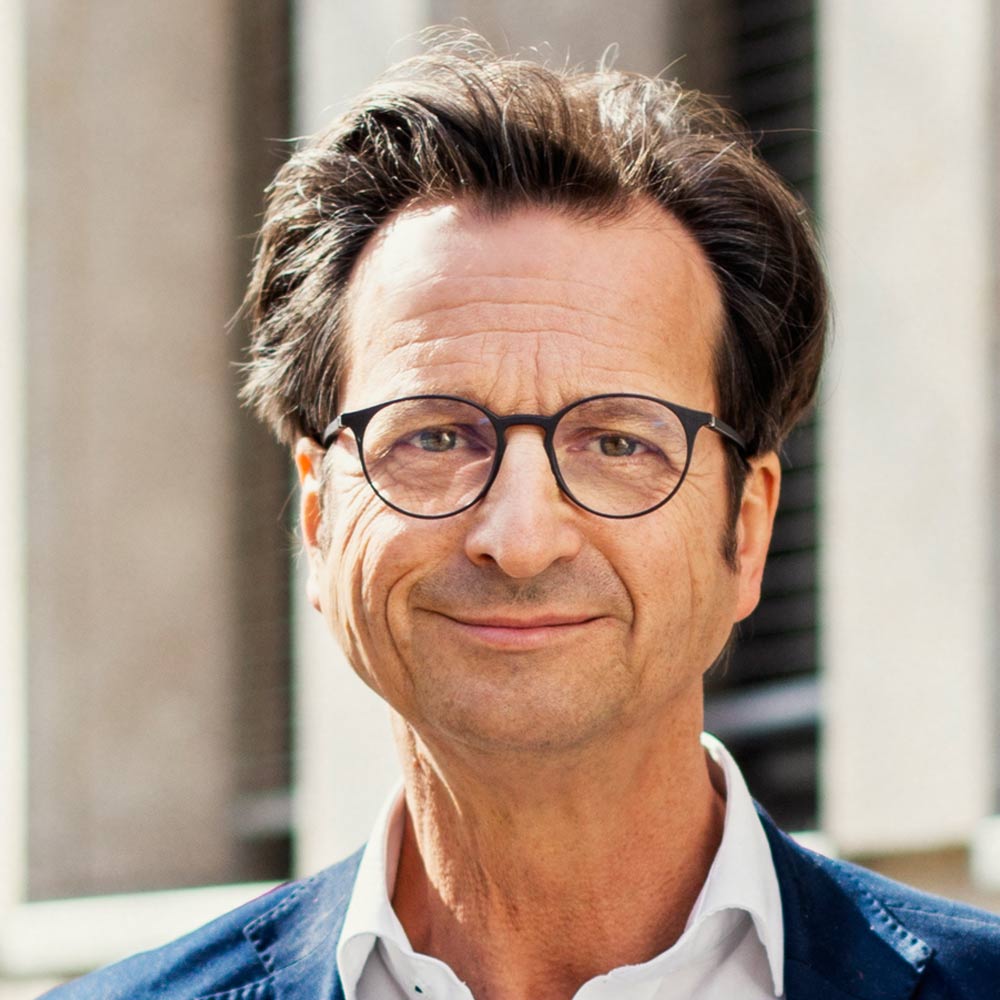
Cologne-based psychologist Stephan Grünewald is the founder of the market and media research institute rheingold. Grünewald became a bestselling author with his books "Deutschland auf der Couch" (2006) and "Die erschöpfte Gesellschaft" (2013) as well as "Wie tickt Deutschland" (2019).
Phone: +49 221-466 828 0
E-mail: gruenewald@rheingold-online.de