In the corona crisis, everyone makes the same sacrifice, said psychologist Stephan Grünewald on Deutschlandfunk radio. On the one hand, this leads to great solidarity, on the other hand, to the desire to break away from this principle of equality. When measures are relaxed, care must be taken to ensure that no rivalries arise.
The interview with Stephan Grünewald appeared on Deutschlandfunk on April 9, 2020.
Germany on the Couch" is the name of Stephan Grünewald's best-known book. He is a psychologist, market researcher and a member of NRW Minister President Armin Laschet's Corona Council of Experts. He recently analyzed the course of the crisis so far in a crisis newsletter. He writes of a phase of powerlessness in the face of a threat, followed by a phase of activity, i.e., decisions were made to reduce the risk of contagion. And now, at Easter of all times, he sees the phase of doubters having arrived. Social cohesion will soon crumble, he predicts.
Why is cohesion crumbling?
We've been through the crisis together for a long time now, and people have experienced that, in the face of this invisible threat, it's very, very important to close ranks between politics, the media and citizens. Everyone was prepared to make sacrifices, to scale down their daily lives, and everyone noticed that politics had entered such a skid. Day after day, new restrictions and limitations were imposed. But people willingly went along with this because it was a way out of this powerlessness. People had the feeling that they could do something to counter the virus.
However, this development came to a standstill, so to speak, just under three weeks ago, new restrictions were no longer necessary and also actually no longer sensible and possible. As a result, people were again confronted with this powerlessness. It was now necessary to endure, to live through this social Lent. This state naturally leads to greater tensions, that is the state now - the time of the doubters, the time of the polarizations. In other words, many people are now raising their voices and asking themselves whether what we are doing is at all appropriate. There is a growing danger that old polarizations and new polarizations will break out - the economy versus health, young versus old, crisis winners versus crisis losers, believers in the state versus apostles of freedom.
"...step back into the light and colorful life"
You talk about social Lent. As we know, Christian Lent lasts 40 days - from Ash Wednesday to Easter - but this ban on contact, that is, what you described as having to endure, does not yet last 40 days. Where does the impatience come from?
The impatience is not even there now, the first doubts are now noticeable. I believe that impatience will grow after these 40 days. Of course, this is also connected with the symbolism of Easter: Easter is the festival of the resurrection, and many people have the hope that afterwards they will also be able to leave the tomb, so to speak, that they will have to enter the light and colorful life again.
You spoke earlier about polarizations and described a number of groups - virologists versus economists, freedom-lovers versus believers in authority, young versus old, crisis winners versus crisis losers. Isn't it possible that by describing them in this way, you are creating the polarization that you are warning against?
The alternative would be not to describe and not to name the things that you observe as a psychologist in title interviews. After all, this debate is not about groupings, but at the moment we are also dealing with sensible questions: How much health containment is necessary and sensible, how can we ultimately get the economy going again at the same time, what do we have to do in terms of everyday openings so that people do not end up in a mental everyday collapse. The great opportunity of the polarization or doubt phase is that we are now finding new sensible solutions, that we are no longer driving this collective, restrictive momentum as if with a lawnmower, but that we are now finding decided, differentiated and very clever measures that simultaneously benefit health and containment of the virus, but which gradually open up social life again.
Currently people have four fears
How then, how can this polarization be prevented and how can social life be reopened without risking too much?
That is, among other things, also the task of the Expert Council, that one basically relates different perspectives to each other, and we are currently experiencing that people have different fears. The main fear is certainly the fear of falling ill, but at the same time there is also a growing fear of an economic recession, of personal bankruptcy. The third fear: How long will I be able to endure my everyday life, when is the threat of everyday collapse. And a fourth fear: How united will society remain and be, and will we not fall back into the old patterns, into the old cracks and divisions in the long run. Of course, all of this has to be monitored and wisely moderated.
For example, now you as a psychologist, what is your advice?
A very important piece of advice is - people feel that in the face of the threat, differences are no longer so important. The virus unites everyone, before the virus everyone is equal, and at the moment we are also all doing the same renunciation, there are hardly any exceptions. On the one hand, this leads to great solidarity; on the other hand, it is true that there is a longing for us to break away from this principle of equality again, but it must then be communicated very cleverly why one grouping, the other grouping can enjoy freedoms that the other grouping does not yet have. Otherwise, society runs the risk that this great solidarity that we are experiencing will give rise to new rivalries, new jealousies. That's why it's important to open up gradually and in moderation, but it has to be communicated intelligently so that everyone knows that it's good for the whole.
"It is important to stand shoulder to shoulder during the crisis"
But do you think that if, for example, the schools were to be reopened - that's always such a very special construction site, the schools - do you think that others would perceive that as an excess of freedom, that the children or young people would be allowed to go to school again, that the teachers would be allowed or have to go to work again?
No, I think everyone agrees on the subject of schools, if this is necessary from a health perspective, that this is a very important step to relieve the burden on families, to support the nursing professions in their work again, so to speak, so that the children have a fixed structure, a daily framework again. The question is rather which sectors and which types of stores will be allowed to reopen. Of course, it has to be communicated intelligently why, for example, the hairdresser's store can open, but not the other store.
Armin Laschet, the Minister President of North Rhine-Westphalia, on whose Corona Council you sit, will be speaking to his citizens on Sunday evening, Easter Sunday evening. Did you advise him to adopt this sovereign or paternal gesture?
Not explicitly. But I think it makes sense - and I'm sure this is also the opinion of the Council of Experts - to close ranks during the crisis. At the moment, we are experiencing a great deal of almost humility, a great deal of acceptance of politics. For a long time, politicians were seen as remote, aloof and unapproachable. Now people realize that we are in a community of destiny, and politicians are really trying to make important decisions, even though there are no clear directives. Many people are glad that they don't have to bear this responsibility, and people long for encouragement because they are doing without. It is therefore encouraging when the father of the state addresses the citizens and thanks them for their previous commitment, but also opens up subtle perspectives on how life can gradually continue in the future after Easter.
The interview was conducted by Christiane Florin.
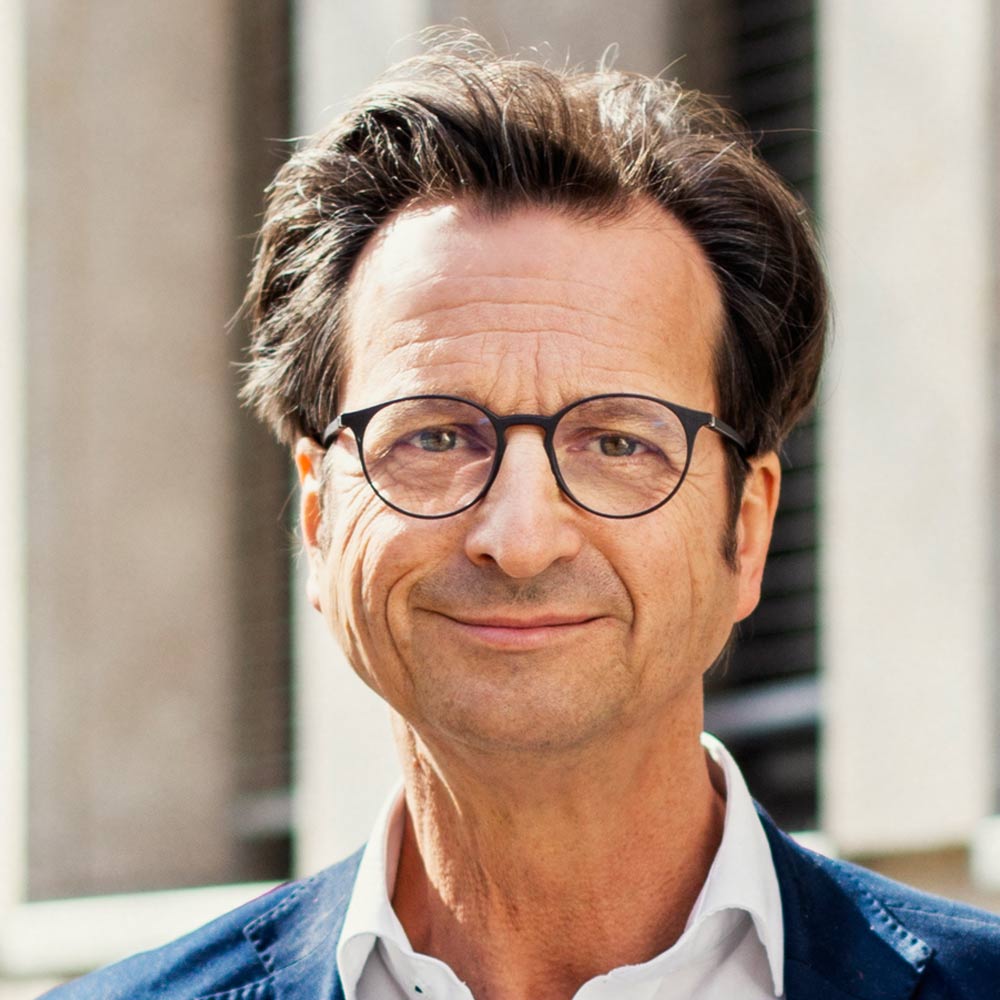
Cologne-based psychologist Stephan Grünewald is the founder of the market and media research institute rheingold. Grünewald became a bestselling author with his books "Deutschland auf der Couch" (2006) and "Die erschöpfte Gesellschaft" (2013) as well as "Wie tickt Deutschland" (2019).
Phone: +49 221-466 828 0
E-mail: gruenewald@rheingold-online.de