Corona is dividing Germany, says psychologist Stephan Grünewald. What happens when further measures become necessary? A conversation about morals, discipline and the soul.
The interview with Stephan Grünewald appeared on Zeit Online on August 15, 2020.
Mr. Grünewald, the number of infections is rising again. Are the Germans mentally prepared for the possibility that tougher restrictions may soon apply again?
We are at a stage where society is slowly realizing that Corona is not a short-term fate. Instead, we have to get used to living with the pandemic. People are naturally worried that the restrictions will increase again. And that's understandable, because that puts many in existential problems. That means a certain dilemma.
Does threatening people with the prospect of numbers continuing to rise help keep morale up in the long run?
Such a threatening backdrop at least reminds us that caution is still called for. However, the conversations we have at our institute show that there is an increasing desire to meet friends again, to take people in our arms, to celebrate together.
This leads to a more lax approach to the rules. Are these needs stronger than the fear of renewed restrictions?
We are in a conflict of different moral imperatives. We are a culture in which physical closeness such as a handshake, a hug or other intimate affections are important. All of this has been discredited by Corona. The commandment of charity has become the commandment of long-distance relationships. Everyone adhered to this for the time being, but slowly many feel that it simply won't work in the long run without social closeness. Many realize that their elderly parents or grandparents need a hug every now and then to keep from withering away.
How well can the people you speak to handle this conflict?
People found the first phase easier. Corona was a great unknown threat, everyone was equally marked by an experience of powerlessness. A danger that cannot be perceived is psychologically the worst incident. This powerlessness experience led to a great solidarity and, yes, a closing of ranks among politicians, journalists, virologists and citizens. Everyone joined forces in a collective braking activism against the threat. There was also still hope that it would be over after a few weeks. At Easter, the crisis was supposed to be over, and then resurrection was supposed to be celebrated again. Unfortunately, this did not come true. And so the phase of polarization followed: economy versus health, winners versus losers in the crisis, believers in the state versus apostles of freedom. As a result, solidarity was also rendered obsolete in many places. And now, disappointed, people are realizing that the pandemic will be with us for a long time to come.
So how do you keep morale high in a situation like this?
That is difficult. Especially since following the rules leads people into serious moral dilemmas. For example, there is the man who said in an interview that an elderly woman had fallen on the train and he asked himself: Can I help her, or will I possibly infect her? So even the oldest moral precepts, such as Samaritanism, are being called into question. Even the initial hope that Corona would provide a clear focus in the world for everyone to follow has faded. The complex social problems of justice, esteem, orientation that were already there before Corona are now returning with full force. Families who can't afford a 3-room apartment in the big rooms, for example, are now suffering even more from space constraints. And many caregivers have received applause, but not higher pay.
How strong do you think the feeling is among the population that they are in a threatening situation?
The threat is not as strong because we coped well with the first wave. But the basic attitude that people tell us in the interviews is more cautious today than before Corona. Almost all of the interviewees describe how they are always on the move with the handbrake on. We are in a completely different internal position than before the pandemic and find ourselves in a kind of in-between world, experiencing everything in a dampened way. For most people, life lacks the exaltation, sensuality and intensity of earlier times.
Is this cautious basic attitude that you describe sufficient to discipline people in the long term as well?
The discipline is under growing internal pressure of longing. Because the lockdown has sent the nation into a kind of collective early retirement. Young people in particular have had greater problems with this than older generations. They want to party, experience themselves in a group, go wild in a stadium or disco, or act out sexually. But pretty much everything that constitutes youthful life is currently capped. And although most young people consider themselves invulnerable and believe that the virus could not hit them, they have kept quiet for a long time. This is mainly because they are worried about their relatives. The fear of infecting others and making themselves guilty is huge.
Nevertheless, the public sometimes has the impression that Corona is over: Many complain that the obligation to wear a mask on the train or when shopping is not taken seriously by many people.
Many people experience the mask as paternalism in the true sense of the word. It acts like a filter between the person and the outside world and dampens many aspects of life. Many therefore consider it an act of maturity not to wear the mask at all or to wear it incorrectly. And if the obligation to wear a mask is not monitored and sanctioned, as is the case in many places, the question of whether or not to wear the mouth/nose protection quickly becomes a matter of personal arbitrariness. The mask then takes on a heraldic character and becomes the flag of a faction of the prudent, who are attacked by those who see the mask only as a nuisance.
Politics seems to have been almost on vacation over the summer. Despite raves and hygiene demos in Berlin, there were no central appeals or speeches from above. Can you understand that?
Yes, because a permanent reminder from above creates reactance. But in the fall, politics will again be called upon to play a greater role, because we'll certainly be facing another difficult phase. Many things will no longer be possible, because we will be more indoors, where the risk of contagion is significantly higher. Many still believe in a linear relaxation logic and expect that the last restrictions will now gradually be withdrawn. Corona, however, follows a seasonal rhythm. Just as we put on summer and winter tires, dressing warmer in the fall and winter, we should also slowly adjust to a time when stricter rules of conduct become necessary. Summer then allows greater degrees of freedom again.
Is it psychologically more bearable to go up and down like that than to restrict yourself permanently?
If you can prepare for it early and are also convinced that you can get through the winter that well, yes. But this awareness is not yet there. People prefer to hold on to the fact that things are steadily getting better.
Would an appeal by the chancellor now be called for again - after a long summer break - to remind the population that the pandemic is not yet over?
Although this is certainly a thankless task, it would be an important step now: The majority of the population hopes for a vaccine as if it were a magic bullet. But even the most optimistic virologists predict an effectiveness rate of only about 50 percent. Also, not all people could be vaccinated at once. This means that even with a vaccine, Corona will be with us for a while.
Angela Merkel's two speeches also had a great impact because she had almost never addressed the population in this way before. Are there other psychological tricks she can use to call the population to morality?
She should not operate with tricks, otherwise she would gamble away the role of the national guardian angel, for which she has also received much international praise. No: The chancellor is more convincing with her calm and objective manner. When she appeals to the cooperation of the population, she does so at eye level. With severity, she would only arouse defiance.
On the Internet, companies are increasingly using what is known as nudging to induce consumers to behave in a desired way. For example, by presetting the shipping method for orders in the hope that consumers will hardly change it. Would it be legitimate to use nudging in politics as well - with the aim of getting 80 million people to behave in accordance with a pandemic?
In order to find out what the right thing to do is, we as a society have to constantly weigh things up and experiment. We must dare to relax, but also take it back again if we have gone too far. Then we have to try another way. Psychological tricks, however, do not help. Instead, we need courageous pioneers who, for example, try out flying or traveling for everyone, otherwise we will remain stuck in restrictions that may no longer be necessary.
In your interviews, you identified eight different types that deal differently with the pandemic and its consequences. What are they, for example?
For example, there are those who become inventive in times of need. These are people who work in creative professions, as event managers or actors, for whom the purpose in life is massively lost. Others try to manage everything at the same time and are completely overloaded - the overburdened multitasker. These are mainly mothers who now have to teach their children in addition to their work. Others are rebelling against the government's impositions. They don't see the invisible virus as the aggressor, but the state.
Shouldn't these groups also be addressed differently?
It would be hard to get that through the media. But it is possible to deduce which group is most likely to need an address. The overly cautious do not need to be urged to be even more cautious. Nor is it easy to reach those who rebel against government measures. In such cases, any appeal often only arouses defiance.
Which group, then, is most worth targeting?
I would not address any group in particular, but convey an overarching attitude, otherwise you will only arouse the envy or resentment of groups that do not feel addressed.
Neither should the group of rebels protesting the requirements at hygiene demos be addressed in the first place?
No, this group is hard to reach anyway, because for the most part they move in a completely different sphere through social networks.
In Berlin 20,000 came, in Stuttgart last week there were a few hundred. What worries politicians is how large the group of sympathizers is among the population. Can you estimate that?
We work qualitatively, so I can't make a representative statement, but I would assume about 15 to 20 percent.
That's quite a lot! One fifth of the adult population, more people than would currently vote for the SPD.
Most of the sympathizers are probably close to the AfD. In addition, there are a few old-leftists who feel robbed of their strong idea of freedom and also many people who are currently facing existential threats because they are losing their jobs or have to close down their restaurant. In our in-depth interviews, which last two hours, people describe that doubts and skepticism also vary depending on their daily form. They start the day well rested in the morning, with full support for the measures, and in the evening they fall into bed full of resentment. So the number fluctuates. The following applies: Doubting, in contrast to denying, is still productive, because doubting leads to a debate and a search movement for the right path.
What erodes the morality of the masses?
We hear two things in the conversations: On the one hand, it harms morale when those in charge or their own environment trivialize the circumstances, but too much drama, a raised finger and a threatening backdrop are also counterproductive. Some people wonder whether the restrictions are really necessary in this severity, others are tired of the strict rules, they are running out of breath, so to speak. They become lax, but are also prepared to restrict themselves again more if it seems sensible to them.
Can specific populations be identified to which one or the other applies?
Our conversations show that the population is divided in two, so to speak. One half experiences Corona as an existential uncertainty, a time of confinement and excessive demands. The other half had a good time in the past months. They cleaned up, read a lot, had time for themselves. A kind of Corona Biedermeier has established itself. Many even secretly hoped that the period of deceleration could continue for a long time. These are mainly pensioners, civil servants, people who don't have to worry about anything. This division was already there before Corona, but it was masked by the great solidarity in the first phase. Now it is emerging all the more violently.
That might also explain the so-called cross-front on the demonstrations. Are we on the wrong track if we always try to explain things in political terms and assume that there is a left-right divide everywhere?
The psychological dimension should at least be included. The worried also show up at the demos, although not everyone who has worries walks along at such a demo.
How can these concerned people be won over to the necessary measures?
By developing measures that also address their concerns: the fear of unemployment, being overwhelmed with children at home, the fear of spatial confinement and domestic violence, the feeling of being lonely because you hardly see your colleagues anymore.
And what helps the rest of the population in the winter depression?
The autumn and Advent season is already traditionally the time of inner contemplation. It will certainly help to celebrate this in particular this year, to make yourself comfortable within your own four walls. It's no use just preaching renunciation and restricting yourself. It is important to think carefully about how to get through this time well and how you can still experience moments of happiness and joy.
The interview was conducted by Hannes Leitlein.
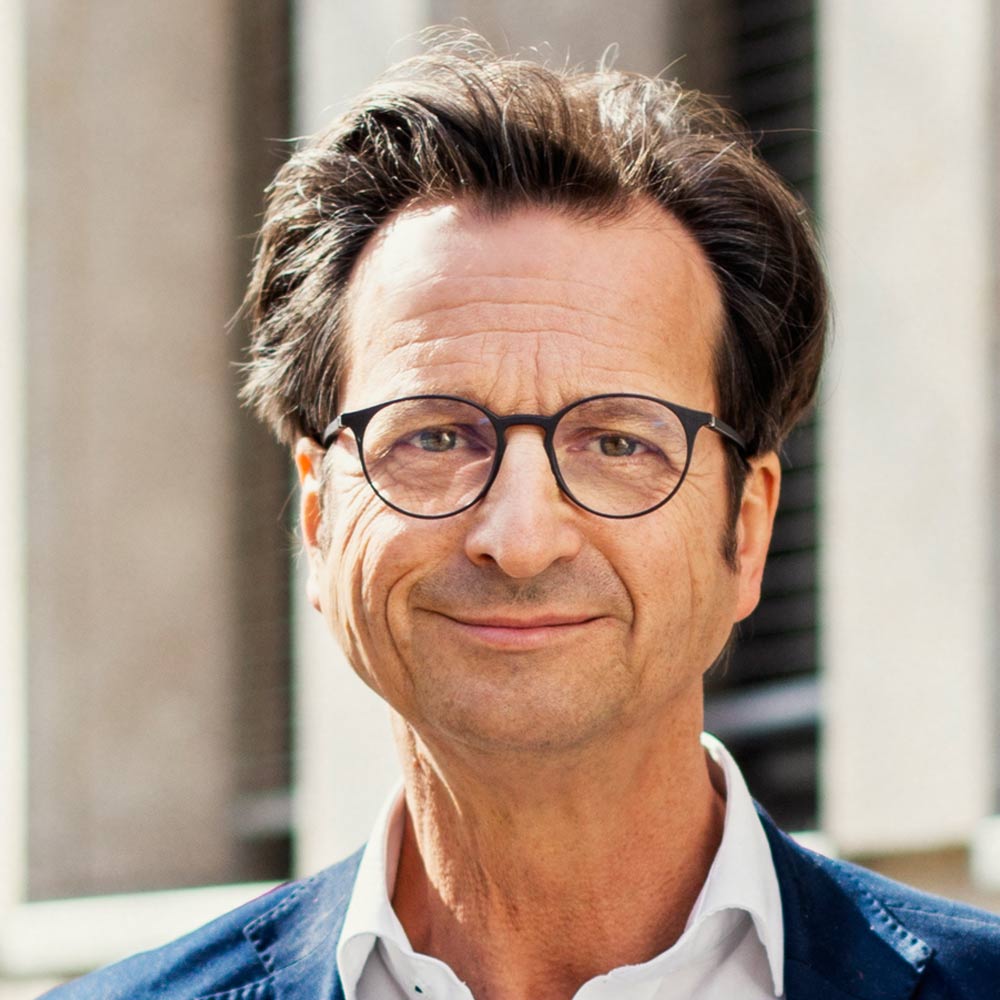
Cologne-based psychologist Stephan Grünewald is the founder of the market and media research institute rheingold. Grünewald became a bestselling author with his books "Deutschland auf der Couch" (2006) and "Die erschöpfte Gesellschaft" (2013) as well as "Wie tickt Deutschland" (2019).
Phone: +49 221-466 828 0
E-mail: gruenewald@rheingold-online.de