Conspiracy fantasies run rampant, party-goers become rioters, bus drivers who point out that masks are compulsory are beaten up - the corona-induced social anger grows and leads to violence. In the Welt interview, Stephan Grünewald talks about reasons and motives for countering the possibilities of this development and predicts "conditions (...) like in a Tönnies refrigeration chamber" for the cold season.
The interview with Stephan Grünewald appeared in WELT on August 14, 2020.
You conduct in-depth psychological interviews on the state of mind of Germans for politics and business. What goes through the mind of the "psychologist of the nation" when he sees images of Corona demonstrations in Berlin or Stuttgart?
The sometimes almost delusional conspiracy theories spread because people seek release from the feeling that they no longer understand the world. Corona is a great experience of powerlessness and thus a source of anger. Not long ago, we felt omnipotent with our smartphone or laptop. At the push of a button, we could run our lives. Then suddenly a virus set limits. We are exposed to a danger we cannot taste, smell or perceive. Such an enemy is difficult to endure. For the psyche, it is the greatest disturbance to be without a handle. Many people transfer the intangible threat to the state. It is now seen as the real aggressor.
But where does this great outrage come from?
With loud protests or even conspiracy theories, people want to reclaim solid ground. They are looking for a system of order with clear directives for action. They defiantly cling to the old image of a reality that no longer exists. Being part of an almost sect-like community also helps combat loneliness. In addition, since the refugee crisis, parts of society no longer feel sufficiently valued in their lifestyle or their achievements.
Are the riots in Stuttgart and Frankfurt also an expression of Corona rage?
Long before the pandemic, Germany was already in a troubled mental state. The lockdown caused us to collectively dig in. Many problems were temporarily buried. Now we are in the digging-out phase. Since we went back outside, the conflicts and social fault lines are breaking out more than before. The dwindling, social cohesion, growing class differences, unequal educational opportunities, a general lack of orientation and perspective, all of these are exacerbated by Corona. This also includes the difficult integration of people with an immigrant background.
In an interview with the WELT, a Frankfurt club owner speculated that the rioters felt disconnected and did not perceive Germany as their country, their home. He said it would make it easier for people with an immigrant background to feel a sense of belonging if we Germans cultivated a healthy patriotism. Is he right?
It is indeed easier to integrate into a country that is at peace with itself. We still have a long way to go before we have the relaxed attitude of other countries, even if the 2006 World Cup was a national relaxation exercise in patriotism. Many people on the left still view everything that has to do with homeland or national identity with suspicion. In extreme cases, they prefer to stick with Holland in soccer. On the right, people overcompensate and apostrophize for German greatness without a sense of history. This leads to a difficult situation for people with a migration history. Those who change their homeland always face a conflict of loyalties anyway. The feeling of betraying the origins of one's parents plagues one. And if I then also have the feeling that the new home country does not accept me in the way I would like, this conflict of loyalty is further intensified.
And so for all these conflicts, Corona is a kind of fire accelerant?
It's been fermenting for a while, but Corona has completely split up entire realities of life. At the beginning, there was still collective solidarity, but polar fronts quickly broke out. Health versus business, young versus old, crisis winners versus losers, believers in the state versus apostles of freedom. Some experience Corona as existential uncertainty and an unbelievable imposition. They fear for their jobs or companies, or they are overwhelmed by domestic confinement and homeschooling. It feels like limbo. Others have enjoyed deceleration in lockdown and had the most peaceful time of their lives. This group has settled comfortably into a Corona Biedermeier and wouldn't mind an extension. That creates a lot of tension.
Where do we stand at the moment?
In an experimental phase that re-normalizes the entire everyday life. We are calibrating how school, vacation, shopping or the private party can work with Corona. Along the way, it's possible to fly off the rails. Too much restriction gives us the feeling of being buried alive. Living it up too much produces images of celebrations or crowded vacation beaches and stokes fears of a second wave. Somewhere in between, the new reality has to settle in. Everyday life must not feel like a ghost game of the Bundesliga in the long run.
Is there a threat of growing aggression between the cautious and the relaxed? Bus drivers have already been beaten up because they ask people to wear masks.
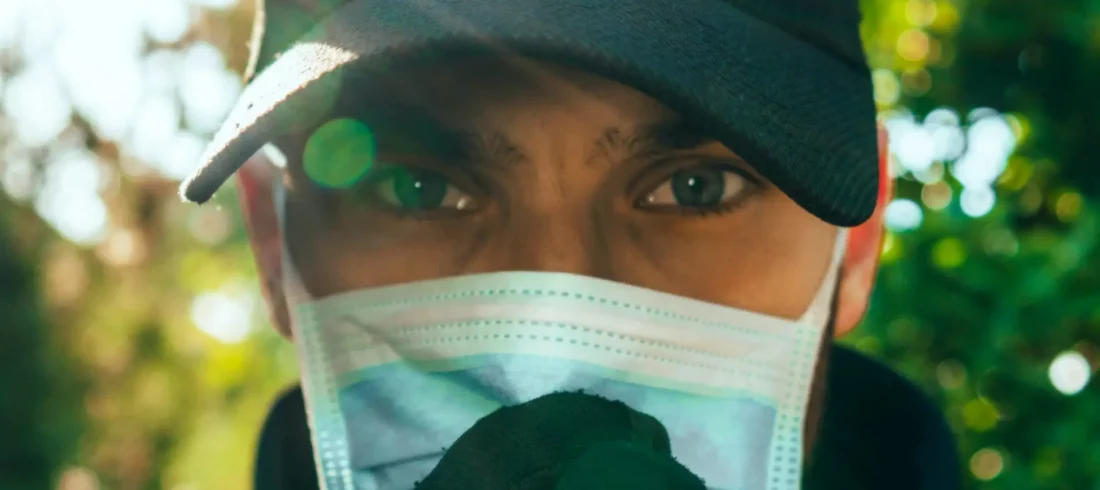
The mask is experienced as a symbol of paternalism, in both senses of the word. It is an enormous nuisance, especially in a country that considers itself particularly 'responsible'. It is important, however, to consistently monitor the mask requirement and to sanction violations. Otherwise the mask takes on a heraldic character, it becomes a badge of opinion. I then use it to signal whether I am of a cautious nature or whether I trivialize or even deny Corona. Then the same thing happens as in a soccer stadium, where the fan blocks are not reasonably separated from each other. The mask takes on the character of a club flag. And then it gets dicey in everyday life.
How can someone on the bus or train be made to comply without causing an argument?
Admonishing from above is not advisable. Instead, you should speak of yourself and say to the other person in a friendly way, for example: 'I am worried and concerned. I would appreciate it if you put on a mask.'
What awaits us in the fall?
The economic pressure will grow, as will the faction of unbelievers and trivializers. In cool weather, we will have conditions everywhere like in a Tönnies refrigeration chamber. Just as we put on winter tires every year, we will then need fall and winter standards for our behavior in the future. The big problem will be that, despite all the discipline, the infection figures will go up. So we won't even be rewarded for our cautious behavior. This situation will be difficult to moderate.
How should politics communicate with the public?
The population has lost sight of the big goal. At the moment, we are sitting like a rabbit in front of a snake and are almost entirely focused on numbers and the threat situation. For more openness, we have to accept that the risk will increase. We have to define this risk corridor that is acceptable to us.
Did Corona also bring good things?
In 2019, we were still stuck in a Shire grouchiness. Many had the feeling that they were actually doing well and therefore it would be best if nothing ever changed. Now they have experienced that they can very well change their lives and do without things. Many no longer want to go back to the hamster wheel, they want to cut back on their working hours and spend their time in a more meaningful way. Consumption is being reflected upon. It was an important signal that the stimulus package did not promote the automotive industry, but new technologies.
Why is North Rhine-Westphalia's Prime Minister Laschet (CDU) having such a hard time, while Markus Söder (CSU) from Bavaria is being celebrated for his crisis management?
For those who had settled into the Corona Biedermeier, Markus Söder is the guardian of paradise. His message is: stay at home, don't risk anything, death is lurking outside. Armin Laschet was the one who drove us out of paradise when he started everything up again early. But even those who were particularly hard hit, parents for example, experienced Söder as the clearer leader. He scored points with them as a dragon slayer.
The interview was conducted by Hannelore Crolly.
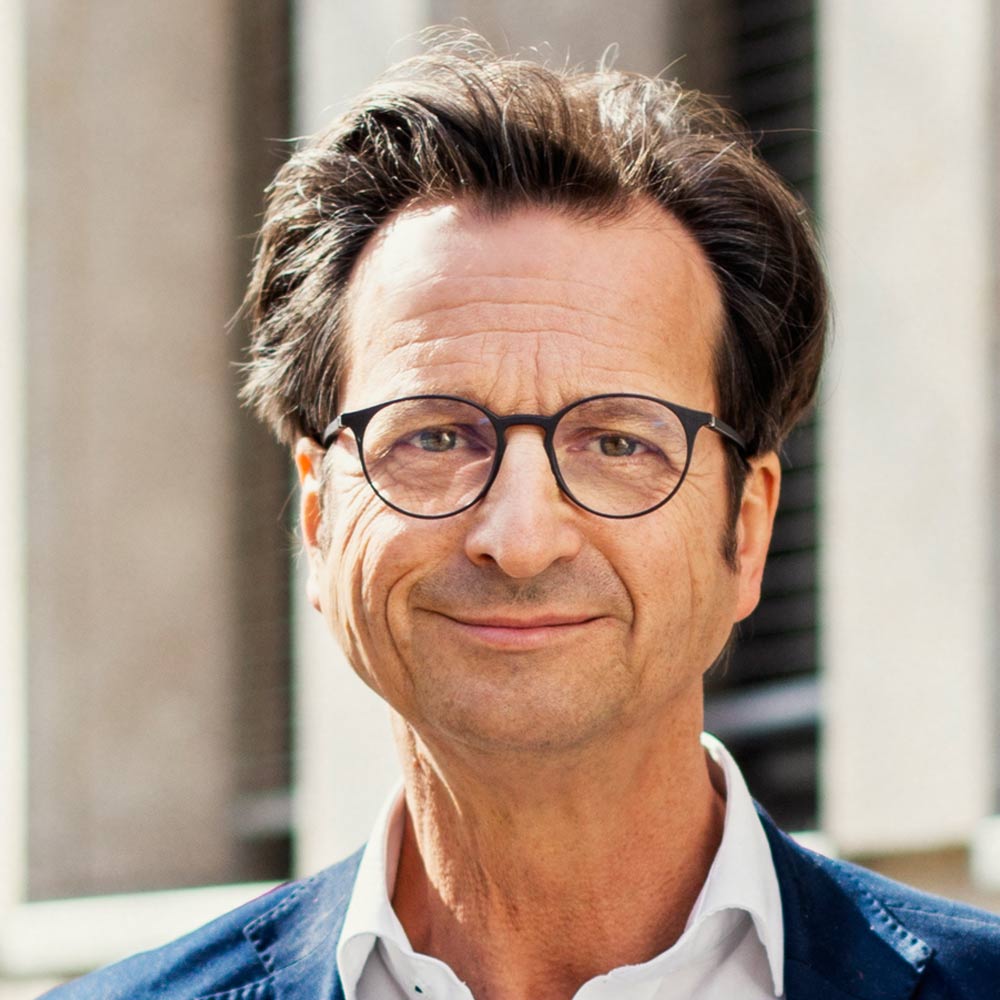
Cologne-based psychologist Stephan Grünewald is the founder of the market and media research institute rheingold. Grünewald became a bestselling author with his books "Deutschland auf der Couch" (2006) and "Die erschöpfte Gesellschaft" (2013) as well as "Wie tickt Deutschland" (2019).
Phone: +49 221-466 828 0
E-mail: gruenewald@rheingold-online.de