
This article appeared in the Kölner Stadt-Anzeiger on May 24, 2019.
The truant revolt
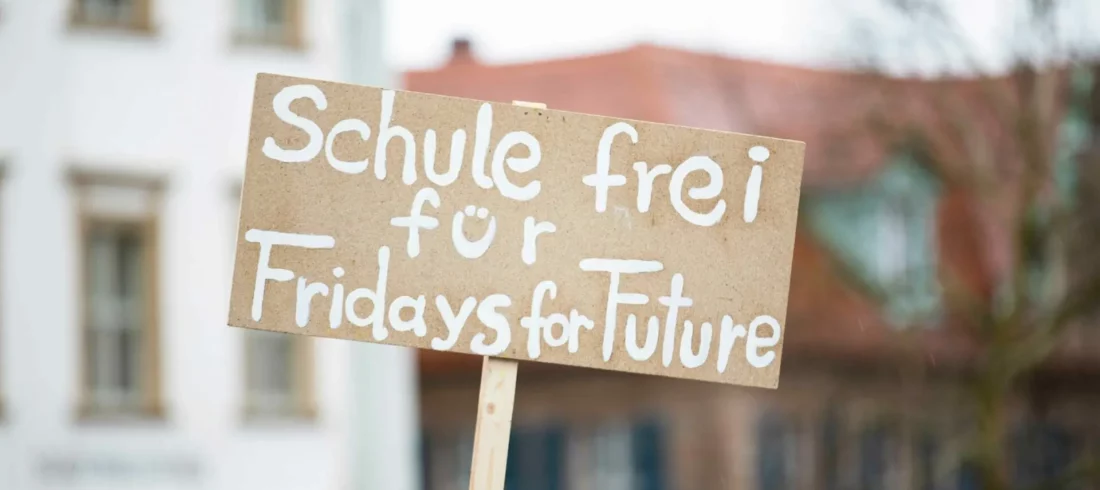
The student strikes for more climate protection on Fridays are already part of everyday life in the country. They are peaceful, amicable and even find sympathy in large parts of the adult world. In a pilot study, the Rheingold institute investigated the deeper motives, pitfalls and prospects for success of this new form of youth rebellion.
In the in-depth interviews with students, you can feel how much passion they put into pursuing their goals. They present their arguments with verve and knowledge. At all times, their mission to make society pause and rethink is palpable. Their commitment stems from the suspicion of being cheated out of their future by adults. It is true that "everyone is in the same boat. But the supposed community of fate has different terms. The students no longer trust that "the old people" will stop climate change on their own. They seem to be selfish and, yes, childish, with only their own near future in mind.
But this mistrust does not lead to a radical break with the adult world or to a bitter generational conflict. The students' longing to be taken seriously by adults with their protests is too great. Participation in the strikes sometimes has the character of a rite of passage. "The little ones" want to prove that they are more reasonable and responsible than "the big ones" and thus belong to the adult world. This makes them dependent on the approval of teachers, the praise of parents or even the benevolent rebuke of politicians. Here they find the recognition they desire. They are offended, on the other hand, when the police, through their ostentatious composure, give them the feeling that they are not to be taken seriously.
The hope of growing through academic and professional success leads to an ambivalence about truancy. Every Friday, students ask themselves anew how many absences they can afford without jeopardizing their Abi and career ambitions.
However, participation in the strikes also creates community and allows the students to experience cohesion. They mainly go to the demonstration in a clique. Under no circumstances do they want to find themselves alone and disoriented in the crowd. The strikes thus become a fun-filled group outing in which teachers or parents are also joyfully included.
This longing to strengthen the community in a fragile world is also articulated in the fact that the movement has only vague enemy images. The over-35s or "the politicians up there" are identified as potential opponents. Such diffuse opposition welds one's own group together, but does not create antipodes with irreconcilable opposites. Especially since the students see the older generation not only as potential traitors, but also as potent agents of change: "After all, they can change things.
Ultimately, the students also skip the revolt. They are not driven by a longing for radical change, but rather by a fear of change - specifically, of climate change. They don't want to overthrow the existing system, they want to preserve it.
The paradoxical consequence that stabilization requires radical change with the renunciation of freedom, growth, enjoyment, luxury and collective harmony is not resolutely realized. This is also manifested in the fact that Greta Thunberg, figurehead and lone star of the "Fridays for Future" movement, is literally blanked out by most of the young people in the in-depth interview. Superficially, she is talked down to as a "puppet of the adults." On the surface, the interviewees shy away from the great and painful losses that Greta's resolute fight against climate change would entail.
This shying away from the ultimate consequence gives the strikes something of a procrastination. The peaceful, cheerful agreement of students, parents, teachers and, to some extent, politicians merely creates a symbiosis of concern that vaguely sustains the hope for a better climate future and creates a win-win situation for all involved in the short term. The students demonstrate their adult sanity and get adult recognition. The adults build on the next generation without being coerced by it to make concrete sacrifices.
The next few months will show whether the movement will coast along in indecisive cuddling or whether it will risk a generational conflict by making more radical demands that actually attack the social consensus of comfort. The country would need this polarizing dispute to move forward and become active on climate issues.

Cologne-based psychologist Stephan Grünewald is the founder of the market and media research institute rheingold. Grünewald became a bestselling author with his books "Deutschland auf der Couch" (2006) and "Die erschöpfte Gesellschaft" (2013) as well as "Wie tickt Deutschland" (2019).
Phone: +49 221-466 828 0
E-mail: gruenewald@rheingold-online.de