
The Specter of Uncertainty - How People in Germany Look to the Autumn of Crisis
In its crisis update, the Cologne-based rheingold institute used in-depth interviews to get to the bottom of Germans' fears and perceptions of the crisis.
The Germans, who have been shaken by the crises, find themselves in a disturbing transitional phase. Inflation, price explosions, war and global warming are building up into a threatening backdrop that is becoming increasingly tangible in everyday life. While the Cologne-based rheingold institute, which specializes in depth psychology, noted a state of shock paralysis shortly after the outbreak of the war, which later in the spring turned into "war tinnitus" - a largely repressed fear of war - Germans are now at the beginning of a new phase. Even if most people are still trying to conserve the summery lightness in spite of looming problems, there is a marked change compared to the early summer.
"It is precisely this diffuse threat situation that brings a great potential for fear to fruition," says psychologist Stephan Grünewald, founder of the Cologne-based rheingold institute, which regularly conducts a depth psychology study of Germans' attitude to life and consumer mood in a "crisis update."
1. diffuse anxiety potential with four unknowns
The indeterminacy occurs in four ways. First, the extent and duration of the crises are not clear to most respondents: Will we sit in lukewarm or freezing apartments in winter? Will a Putin on the defensive resort to nuclear weapons? Will there perhaps be a power collapse that causes dramatic chain reactions? The more uncertain the forecasts, the more drastic the escalation worries.
Second, the different trouble spots are becoming intertwined in perception, which could lead to the crises reinforcing each other, but also putting them into perspective. The war in Ukraine may exacerbate the energy crisis. The next Corona wave will make staying in cold homes almost unbearable. Conversely, the climate crisis may also encourage the desire for a warm winter. In turn, the terrible events of war can put the fear of Corona into perspective.
Third, the extremely dry summer is an anxiety-provoking emblem or vague harbinger of what may await people in terms of shortages in the fall and winter. The drought additionally triggers supply worries and moves climate change into the realm of possibility as an apocalyptic threat scenario. Furthermore, the Rhine as a drying up lifeline becomes a mental image for the fact that the flow of life can dry up, the steppe-like meadows announce a phase of drought that could take hold of many areas of life and fundamentally change our reality of life.
Fourth, however, people also experience the hastily put together relief packages as indeterminate - on the one hand, because for many the burdens of the crisis have not yet concretely arrived in their everyday lives, and on the other hand, because they cannot yet gauge exactly what these packages mean for them personally and whether they will actually be able to cushion the extent of the possible burdens.
2 Policy-makers are caught in a balancing act between transitional helpers in the crisis and diffuse crisis projections
Politicians are currently having a hard time building trust in this autumn equation with four unknowns or indeterminates. Depending on the individual's perception of the crisis, they are accused of either dramatizing or trivializing the problems. Some voters approach politicians with diffuse hopes of redemption, but these hopes can quickly turn into disappointment or malice - as in the case of Robert Habeck - if the supposed saviors do not offer convincing and reliable solutions. Another section of the electorate tries to escape the uncertainty by defiantly declaring politics to be the scapegoat: "Unfortunately, all we have left are completely incompetent politicians who have driven us into the crisis through their own fault. With a different Russia policy, we wouldn't have all these problems," complains one voter in the exploration.
However, a large part of the electorate accepts politics as a transitional aid. Even though they often cannot yet experience the turning point in concrete terms, they are preparing themselves for a time that will demand many sacrifices and changes.
3. four different perceptions of the crisis among the population are forcing social division
The worsening of the crisis will accelerate social division. It is already clear from the in-depth interviews that the effects of the crisis are perceived and processed very differently.
Some of those surveyed are in despair and are facing the fall with a resigned sense of powerlessness. They already see themselves unable to cope with the increased payments on account for electricity and gas or the high fuel costs. They see the government's calls for savings as cynical, since they no longer see any savings potential for themselves. They see their livelihoods acutely threatened and fear that they will lose their homes or jobs.
A second part has great fears of decline. The crisis has already reached their everyday lives and they fear that they will soon no longer be able to afford travel or hobbies. To keep their heads above water, they literally struggle. They try to alleviate the financial hardship and halfway stabilize their standard of living by making partial sacrifices, saving money, working overtime or taking on part-time jobs.
A small group at the upper edge of society is trying to largely escape the crisis. They try to largely block out the vague crisis signals and keep reassuring themselves that they can save for financial reasons. Sometimes they suppress the signs of crisis by overcompensating. Through increased consumption or an unbridled desire to travel, they want to give themselves the reassuring feeling that they can continue to enjoy the fullness of life.
Many respondents in the upper middle experience the crisis as a threat, but do not fear a massive drop in their standard of living. They have confidence that their savings or income will be sufficient to get them through the fall and winter unscathed. The more the indeterminate consequences of crisis and war manifest themselves in events and inflation, the greater the desire for their own stabilization, self-efficacy and anxiety-reducing ways of dealing with them also becomes in this group. "Life has become not only a financial balancing act for these people, but also a mental one," Grünewald says. Social solidarity is very important to this group. They want to show themselves and their environment that they can flexibly arm themselves against crises by definitely saving or partially restricting themselves.
4. six contexts of meaning of saving can promote the willingness to save
For those for whom saving is not an existential and material necessity, it can be charged with different meanings, which can then also increase the willingness to save.
- "Less is more" is intended to make life simpler and more decelerated. The partial renunciation already practiced in the Corona period is intended to be a building block for a more conscious life.
- Saving as an expression of solidarity and German autonomy is supposed to contribute to cohesion in society or resistance to Putin's war of aggression. Above all, the filling of gas storage facilities is experienced as an indicator of cohesion.
- Smart saving - for example, by switching to private labels - is an expression of the personal art of living. People are proud to spend less money without having to accept substantial losses.
- Calming savings becomes a challenge that makes you feel like you're always in control during a crisis. Helpful features like a budget book or spending apps convey self-efficacy.
- Spartan saving, following the example of the ancient Spartans, is supposed to strengthen personal or social resilience and resistance. Doing without or taking cold showers appears to be an act of personal hardening and resistance to crises.
- Moral saving turns personal restriction into an exemplary virtue. One's own savings performance becomes a proud yardstick of personal esteem and self-aggrandizement. The more those willing to save morally exaggerate their renunciation and mutate into savings guardians, the greater will be the reactance of the defiant, who regard saving and the crisis as an expression of a misguided policy.
Investigative Design:
With the rheingold Crisis Update, the Cologne-based rheingold institute, which specializes in depth psychological methods, regularly examines the mood of Germans since the beginning of the Corona Crisis, thus supplementing its ongoing research with targeted current issues. Especially since the outbreak of the war, research intervals have been shortened due to the extremely dynamic situation. For the crisis update in September, 30 test persons were interviewed for two hours each in depth psychology, flanked by findings from current studies. In total, the rheingold institute interviews around 5,000 people a year on a variety of topics and thus symbolically puts them on the couch.
The four phases of the crisis mood since the beginning of the war
Our depth psychology crisis updates show how rapidly people's states of mind have changed since the war began:
Phase 1: Shock and expressions of solidarity
At the beginning of March, citizens were in a state of shock. Stunned, they experienced how a reality of war with an unimaginable potential for escalation broke into their everyday lives. They tried to escape their initial helplessness by constantly updating the news loop, by being helpful and expressing solidarity, or by private diversionary maneuvers.
Phase 2: Fading out the war and invoking normality
As early as May, there was a serious change in the state of the soul. Since then, the war has been largely suppressed in favor of an invocation of normality. Many people's consumption of news has dropped drastically. Above all, the shocking images of the war are avoided. In small talk, people now prefer to talk about Corona rather than the war. Nevertheless, the war remains perceptible in the background as a kind of grueling war tinnitus. This tinnitus is drowned out by various strategies of self-soothing and everyday stabilization.
Phase 3: Summer break of the problems
Moreover, since early summer, inflation and the gas crisis have shifted attention to domestic problems, which, however, have not yet had a psychological impact on most people. The tanks are still half-filled. High energy prices and cold living rooms are still a distant threat and have not really arrived in everyday life. Energization is currently sought primarily in the self-indulgence and heat of the summer, in the desire to experience carefree and exuberant moments.
Phase 4: Germans before the crisis autumn - the specter of indeterminacy
The Germans are mentally in a disturbing transitional phase. The indeterminacy of the threat situation is unleashing a great potential for fear, which is being countered with various attempts at stabilization.
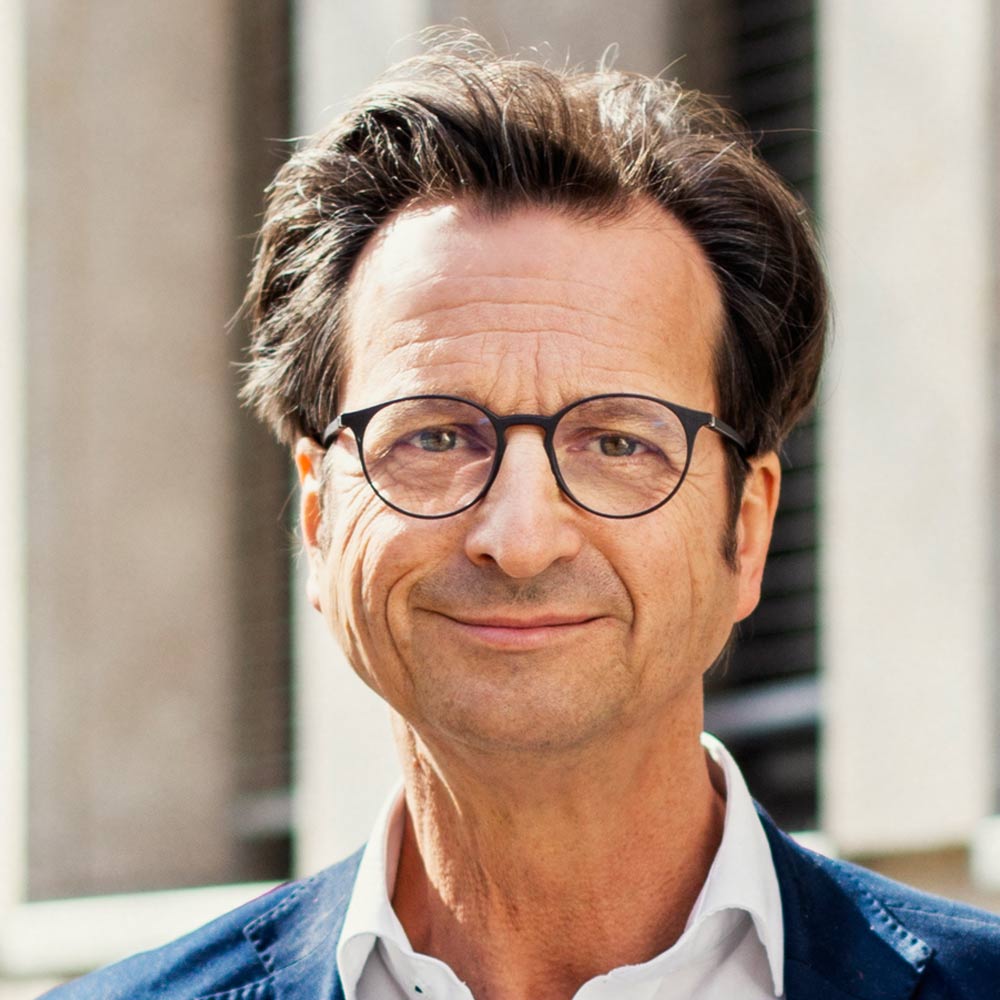
Cologne-based psychologist Stephan Grünewald is the founder of the market and media research institute rheingold. Grünewald became a bestselling author with his books "Deutschland auf der Couch" (2006) and "Die erschöpfte Gesellschaft" (2013) as well as "Wie tickt Deutschland" (2019).
Phone: +49 221-466 828 0
E-mail: gruenewald@rheingold-online.de