How brands can act in the psychological turning point of time
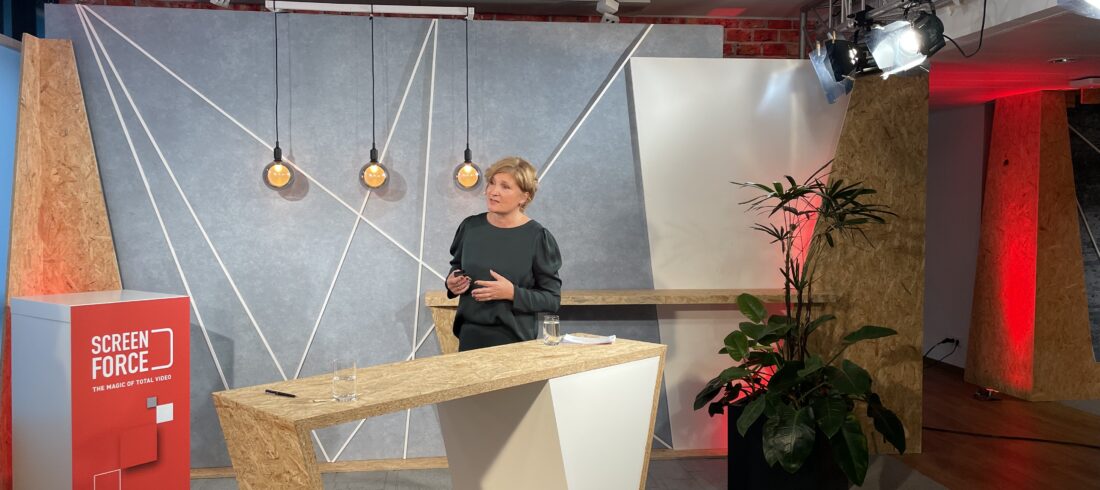
More than 700 participants from Germany, Austria and Switzerland were live online at the second Screenforce Expert Forum on Thursday morning, which was dedicated to ways out of the crisis. Marcel Fratzscher (German institute for Economic Research), Birgit Langebartels (rheingold Institut), Daniela Süßenbach (Congstar) and Cornelia Krebs (September Strategie & Forschung) shed light on the topic from different economic, psychological and communication perspectives. In the current situation of the Ukraine war and the energy crisis, the outcome of which cannot be predicted, brands convey stability and confidence, thus becoming a psychological support for people.
The article appeared in Business Times on November 3, 2022.
"Media have a key role in times of crisis with well-founded and trustworthy information and also enable short breaks and distraction with entertainment. TV offers brands the opportunity to convey emotional messages. With clear values, optimism and attitude, they reach people and become trusted constants in turbulent times. Brands are now asked to accompany people as reliable partners," says Screenforce Austria spokesman Walter Zinggl (IP Austria), summing up the expert forum.
The following link will take you to the recordings of the contributions:
Psychological turnaround: Brands as a reliable companion through the crisis
Corona, the climate crisis, the energy crisis and the war in Ukraine all have an incredible impact on the human psyche in various forms. The war, through its shock effect, has triggered an escalation logic that has caused people to block out the issue and keep it away from themselves. Corona, on the other hand, has followed an exponential logic that has led to intense scrutiny of the issue. Climate change is a linear logic: the predictable threat scenario tends to make people sit it out.
In the first phase, the start of the war triggered a state of shock and a great wave of solidarity. The second phase, which began in May 2022, was characterized by a fading out of the war and an evocation of normality. During the summer months, the problems were also given a summer break. Since the beginning of the fall, the specter of uncertainty has caused people to oscillate between bracing themselves and staying away.
The interlocking of different crises with an unclear extent and an undetermined outcome can lead to both relativization and potentiation. People perceive crises differently. People who are already burdened find themselves in an existential impasse as a result of the confluence of problems. Those who were already affected by everyday hardship before the crises find their worries and fears even greater. Those who can afford it feel liberated from the need to save.
In this time of crisis, brands must show that they are there for people and will not leave them alone. They must encourage, stabilize and preserve the familiar.
Birgit Langebartels
Restrictions on consumption have many manifestations: Saving also lets people regain control over their lives and feel resilience. Smart saving can be perceived as an expression of the personal art of living if it is achieved without substantial losses. Solidarity savings is an expression of a sense of community and conveys a sense of autonomy from Russia. Moral saving turns personal restraint into a virtue.
"Brands must show in this time of crisis that they are there for people and will not leave them alone. They must encourage, stabilize and preserve the familiar. They score points with consumers through presence, reliability and transparency," advises Birgit Langebartels (rheingold Institut).
Sustainability plays an important role in preserving what is known and preserving the world. Self-efficacy and control are significant stabilizing factors, which is why people like to build and tinker during crises. Freedom of choice between brands and offerings also gives people a sense of control and relieves them. The feeling of sharing a destiny with the community also has a stabilizing effect. Established brands demonstrate historical mutability and show that they have already survived many crises. Brands are well advised to radiate confidence and optimism and to let consumers look ahead. The central component of communication must be the value mission (purpose), which also conveys consistency and optimism.
Brands can position themselves as personal markers, growth promoters, everyday companions, mood changers, situational style aids and protective powers to help people through crises as reliable partners.
The way to the future: showing attitude
Not only crises, but also digitization are causing a fundamental change that challenges people and brands alike. Daniela Süßenbach (Congstar) and Cornelia Krebs (September Strategie & Forschung) see Generation Z as a major challenge for brands because it no longer lives a uniform lifestyle and is overwhelmed by the media overload it has experienced since early childhood. The eternal hunt for the better option makes them restless ("special snowflake syndrome"), forms countless subcultures and minimizes the sense of community. They warn against focusing communication too strongly on Millennials and losing sight of other age and target groups in the process.
Under the title "Go, Congstar, Go!", a transformation process was initiated in 2019, before the outbreak of the major crises, to make the telecommunications brand fit for the future. In the organization, team structures were adapted to the new tasks, and social media and content creation were strengthened. As a result, this year attitude moved to the foreground on all channels, ahead of product benefits, in order to appeal to all target groups and to emotionally charge the corporate image, as well as to create a collective brand experience.
Reorganization of the economic system
According to Marcel Fratzscher (German institute for Economic Research), the tense situation on the market will persist over the next 18 months: The economy is sliding into recession, although experts do not expect a deep recession and anticipate a modest upturn as early as the second quarter of 2023. However, quantifiable forecasts are difficult or almost impossible to make at present due to the lack of assessability. However, the assumption is that the war in Ukraine will not escalate, supply chains will recover and financial markets will remain stable. Fratzscher sees one of the biggest problems in the coming 18 months in the high dependence on Russian gas. It is over 50 percent, cannot be compensated with renewable energies and therefore means high vulnerability. A dramatic increase in insolvencies, on the other hand, is not to be expected. They are currently mostly below the level of 2020, yet quite a few companies will close for reasons of profitability. An increase in unemployment is also not expected, as around two million jobs are currently unfilled in Germany.
In Fratzscher's opinion, three things are needed to overcome the crisis: At the globalization level, more independence is needed. The strongly pronounced, asymmetrical dependence on China exceeds that on Russia. Systemically, China plays an important role in the supply of raw materials. To have greater autonomy in times of conflict, it needs more resilient globalization, better diversification and stable trade relations with other countries. It also needs an ecological transformation and thus a shift to climate-neutral and renewable energy. The technologies are available, but infrastructure investments are needed for the transformation to succeed. In addition to government investment, however, innovation and corporate investment are also needed. To strengthen the latter in particular, Fratzscher explicitly advocates deregulation in order to maintain competitiveness in the long term.
"Whether the ecological transformation can succeed is still uncertain. Yet it is not only relevant for climate protection reasons, but also has a decisive influence on safeguarding the economic location and thus on securing prosperity," says Marcel Fratzscher of the German institute for Economic Research.
In addition, the constantly high shortage of skilled workers, combined with the increasing aging of society, demands a social transformation. Fratzscher's greatest concern here is the distributional impact and social acceptance. People with low incomes are around three to four times more affected by rising energy prices than those with high incomes. In order not to run the risk of being confronted with both a social and an economic problem, targeted support and framework conditions are needed here.
According to Fratzscher, successfully surviving a crisis as a society requires not only a robust civil society but also strong solidarity, reliable institutions, appreciation for science, resilient companies and, last but not least, openness and cooperativeness. A clear focus on strengths will enable the transformation to succeed.