
How brands are now making themselves indispensable as builders
Psychologically, people are currently in a transitional phase in which they sense that the carefree past of life and consumption could be lost forever, that the future is uncertain. This is accompanied by melancholy, a sense of their own fragility and cautious pausing. At the same time, there is a desire for support, new confidence and prudent departure. Brands should be aware of this condition of consumers and be both 'mourning companions' and 'helpers of new beginnings'. Consumers long for products and brands that stand closely by their side, understand them and accompany them through this crisis-ridden transition.
As a brand, not speaking out at all and sitting out the crisis is just as misguided as ignoring the state of mind of consumers by continuing to communicate in the same way as before the crisis or 'going full steam ahead' with a carefree, euphoric consumer mentality.
"Yesterday was yesterday and today is tomorrow."
Test person from the rheingold Corona studies
1. settling in the smaller circle of life
The time of big breakouts, greedy consumption and unbridled indulgence is behind us. Ebay classifieds are booming, young people from Gen Z no longer travel to New Zealand but to Neunkirchen and nestle with their parents for weeks. The radius is getting smaller - physically, but also mentally.
Corona reinforces consumers' longing for proximity. Ties to family, neighbors, but also to local traders are becoming more important. Globalization is viewed critically; the conditions in mask deliveries have shown them how dependent we have become on China. The fact that Trigema manufactures masks, breweries have mixed disinfectants and trade fair builders have produced plastic masks for cashiers is valued as an act of solidarity by the private sector.
There is a shift in consumption intentions toward the regional - to strengthen local companies and retailers. Cat food, which was previously ordered online, is now bought at the discounter around the corner, vegetables and meat at the nearest farm store. Of course, Amazon & Co. retain their relevance, especially for products that are not available in the immediate vicinity.
People are very busy with themselves and stabilizing their everyday lives. Contemplation, enjoyment, self-efficacy, satisfaction are more likely to be found in small things, in taking time for the family, gardening, hiking, cooking, decorating and handicrafts. But there are also the high-speed ones, who are under steam in the reduced circle of life: they throw themselves into a senseless busyness, thus banishing their feelings of powerlessness and gaining control. Professionally, one video conference chases the next, the stretch joints of a business trip, the way to work on the bicycle, fall away. Multitasking parents who work and care for their children full-time have hardly any time for themselves. Nor for consumption. They don't strive for the big goals either, they rather flirt with small escape moments and rewards for their efforts.
Overall, consumption is being scaled back and reflected upon. People are no longer buying on impulse, and the desire for variety, inspiration and trying things out is diminishing. The impulse to buy is accompanied by the question: Do I really need this?
2. perspectives for products and brands
Shopping is possible - but different. Our carefree, experimental mood has disappeared, the full braking by Corona has led not only to physical but also to mental withdrawal. Even if the shopping streets convey an image of increasing normality, our inner state of mind is anything but normal.
a) Stabilization and structuring of everyday life
The strong need for control means that purchases are generally more considered and less impulsive - after all, the aim is only to stabilize and equip the small circle of life. This is the time of brands that people have known since childhood, that convey trust and support, and on whose 'strong shoulder' it is easy to get through the crisis. Brand classics are now more relevant than trying out new, unknown brands.
Food is of course central, but the shopping experience is very limited. That's why people write shopping lists, do weekly bulk shopping and are less driven and inspired. The stabilizing function of food is important: Salty snack items are booming; chips are used to nibble away one's breakout tendencies. Sweet snacks and dairy products comfort and appease.
Many consumers also feel a fear of getting bogged down and are arming themselves against it. Ready-to-eat foods are being dispensed with, while more fresh vegetables are being processed, and people are cooking more themselves anyway. Fears of short-time work and unemployment can also lead to a shift to entry-level price products and private labels. Confidence-building safeguards via a high-quality appearance and seals (Fresenius institute, Stiftung Warentest) are sought here.
Fruit juices are being used significantly more to stay healthy and in the juice. The fast-growing lye products promise nibbling without sinking, especially when one feels drained.
In general, physical fitness is very important. We run and steel ourselves to stay mobile and in control of the situation. Products for cooking, baking and gardening are growing at double-digit rates; they, too, make it possible to structure everyday life, to spend time together with the family, to stay in action. People are cleaning out, boxes of books are lined up on the streets to be given away, and masses of household cleaners are being bought to clean and scrub. The home improvement stores are particular winners of the crisis. Do-it-yourself is a proven remedy for worries and feelings of helplessness.
In this emotional situation, brands generate trust by being close to their consumers, by being at eye level with them. Communication in which the brand presents itself as the navel of the world and then from above is currently not in demand.
b) Mood modulation
The longing for big mood changes has given way to the desire for small mood ruffles. People no longer seek excess because they fear mood swings and outbursts. Beer is used for sedation, but the slight buzz is the ultimate in feelings. It is also the hour of Netflix, Disney+ & Co. Distraction, entertainment is sought to keep the great outburst desires under control.
Popular are viral clips, little jokes, funny memes in social networks that create momentary relief. Brands and retailers can score points now by making consumers' lives a little more colorful and lighthearted. In doing so, the current situation should be taken up and an encouraging, constructive and creative way of dealing with it should be shown.
c) Small pleasures and specialties
The rheingold Corona studies show that consumers want to compensate and reward themselves for the contact, event and mobility sacrifices they have suffered. Life in the small circle is to be enriched. That's why people are looking for special products and brands that were less targeted before Corona. The special chocolate, the lavender soap from Provence or the organic steak promise a sensual upgrade that can also be justified because one has saved a lot of money for going out and eating culture and amusement.
Corona is reinforcing a trend here that has been apparent for a long time: Quality over quantity, for example, in beer consumption. The large mass-produced beers have been experiencing declining sales for years, while small, special craft beers and breweries are springing up. A willingness to try special products with a high quality promise and sensual, aesthetically designed packaging is emerging.
d) The freestyle: brands as transitional helpers
Through stabilization, mood modulation and small distinctions, products and brands succeed in making the consumer's small circle of life pleasant. That is the mandatory program in the specifications. But they can score particularly well if they address consumers' current transitional sensibilities. On the one hand, this means being a grief counselor: standing close to the consumer, showing genuine understanding for the difficult transition phase, and thus making grief possible. On the other hand, to support the look ahead as a rebuilding helper: to lead back-strengthening and confidently into the future. But not a carefree, buoyant future, but one that is more introspective and aware of the vulnerability of life. That can be very touching or moving and open people's eyes. People want brands that appeal to the heart, to the strength of people to get through something, to the appreciation of mundane joys and the belief in better times. Brands should build that bridge between the normality that is lost and the future that is to be gained. The Gaffel spot 'By far the best Kölsch' gets life flowing again (going out, drinking Gaffel), but also hints at the heavy, barracked times - both in a humorous, spine-tingling way.
3. social responsibility of brands
rheingold Studies show that brands loved by consumers have already been filling the vacuum left by the disappearance of moral authorities for many years. With all the church scandals, celebrities with integrity so far who turned out to be tax evaders, a politics that for many managed the status quo without vision or leadership, what was left to cling to?
Through Corona and after Corona, brands and companies are being watched much more sensitively for CSR, transparency in production, supply chains, employee treatment. Consumers expect social responsibility to be taken on. People prefer to give their money to companies that act morally and give something back to society.
The brand purpose of brands, which has become increasingly important in recent years, will receive a strong boost from Corona. What mission does a brand want to follow beyond product sales and key figures?
Companies like Edeka (Edeka says thank you) or Mercedes (#stayhome) put their products in the back seat and people in the spotlight at the beginning of the crisis. It will have a lasting effect on the acceptance of these brands if they continue to take the concerns of these employees into account in the future.
Telekom is also experienced as supportive with its initiative ('10 GB free data volume per month'). Telekom succeeds here in assuming social responsibility in two senses: it facilitates communication with loved ones (e.g., grandparents) and it profiles itself as a promoter of the digitization push, which is being greatly accelerated by Corona.
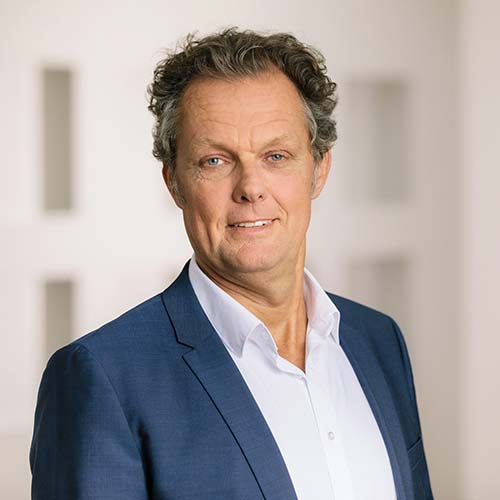
Frank Quiring, a graduate psychologist, is a member of the management team at the Cologne-based market research institute rheingold. Frank Quiring's work focuses on packaging, food/beverages, and cultural psychology. Quiring is one of the authors of the rheingold youth studies, which regularly take a close look at the sensitivities, issues and trends of young people.
Phone: +49 221-466 828 0
E-mail: quiring@rheingold-online.de