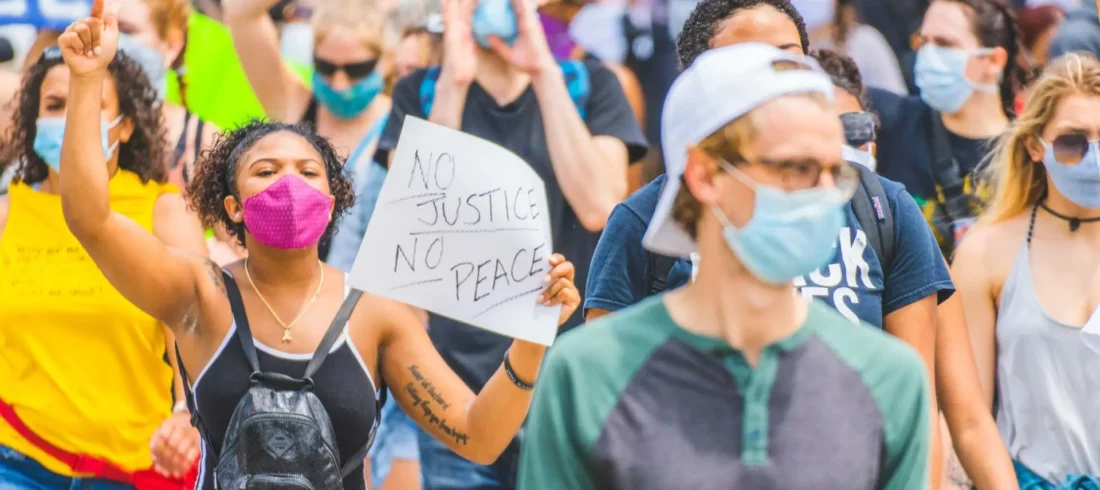
Why did the protests against racist police violence in Germany have so many participants? Stephan Grünewald sees a connection with the experience of the Corona crisis.
The interview with Stephan Grünewald appeared in Spiegel on June 11, 2020.
Mr. Grünewald, just a moment ago, everyone who could was sitting at home and isolating themselves - and now we are seeing large demonstrations and protests against racism and police violence. You say: This is no coincidence. Why not?
There is, of course, the concrete trigger that would have mobilized people even before Corona. But the mobilization is much stronger because of Corona, because the Corona crisis has sensitized us in several ways.
What were we made aware of?
Especially in the beginning, Corona was experienced as a collective destiny, as a leveller, as a virus that knows no class distinctions, that stops at no one. We had a collective spirit and solidarity in the first phase. There was an understanding between doctors, politicians, media and citizens that led to a collective braking activism. In the second phase, however, which began with the lockdown, the rifts that were already there became even more apparent.
What trenches?
From homeschooling to housing conditions, it became clear that there are clear class differences in Germany. Someone who is expected to stay at home and has enough square meters or a garden is in a completely different position than someone who has to get by with a family of several in a two-room rented apartment. We have found through studies that there is an enormous spread in the reality of life at this stage. For some, Corona means existential insecurity because they feel they are overwhelmed and about to collapse. Others have settled into a Biedermeier coziness and enjoy the deceleration.
So we have been sensitized to injustices in our society. But we don't take to the streets against too high rents or for higher wages for nurses, but against racism.
Racism has always been a reason for many to take to the streets. But the antennas have now been realigned. Because in the meantime we had the hope: Perhaps Corona will lead to a more solidary society in which everyone is valued. Many then also applauded every evening the fellow citizens who until then had been overlooked or underpaid.
In the second phase, as you call it, there were also other protests: against supposedly excessive Corona measures, both in our country and in the USA.
We currently have an increased potential for anger among the population. Corona is an alien and incomprehensible threat that individuals cannot perceive and against which they can do nothing. Such an experience of powerlessness is difficult to endure. Therefore, since Corona, there is an increasing danger that the threat and the alienation associated with it will be humanized. The longing for a visible enemy or scapegoat to fight grows. This is the breeding ground for everyday racism and conspiracy theories, which are ultimately also attempts to define a culprit against whom one can take action. Some have also shifted the blame from the virus to the state, which restricts freedoms and against which they defiantly rebel. Incidentally, the protests now are also successful because they channel the feeling of powerlessness against a visible enemy - the violent police.
And now we are in the third phase?
Yes, the phase of opening. We find ourselves indefinitely in a kind of in-between world, strangely muted and nonsensical. We wear masks, we are not supposed to touch each other as much as we can. Our life is like a ghost game of the Bundesliga, it does not have the spice and intensity as before. Actually, this would be a time for mourning and letting go. We could say goodbye to what used to define our lives. Whoever allows his sadness becomes more receptive to consolation, and he creates space in his soul for confidence and visions of a different and more just life after Corona. However, there is now also the danger that many people will turn their sadness into defiance and anger and want to restore the old conditions with all their might.
However, the protests are not only directed against violent police officers, but also against everyday racism and thus, in principle, against all members of the majority society: because one realization is that no one is immune to racist prejudice. That is again relatively diffuse.
Periods of mourning are a good moment for self-examination in society. We have noticed that there are people in our own country whom we do not value enough. Moreover, we are sensitized in another way: Not only have we experienced that we are not all equal in the crisis. But even people who are otherwise privileged have had to bow to a power to which they were helpless. This goes so far that we now also all feel on a daily basis how difficult it is to breathe through a mask. This is one of the reasons why the video of the suffocating George Floyd made such an impact.
But having to breathe through a mask and being suffocated by a police officer can't compare.
I'm not comparing it, it's about raising awareness. We can better imagine the monstrous if we have experienced it to some extent.
When we arrive in whatever new normality we have - how much of that empathy will remain?
The question always arises. But this time, the reality of our lives has really been turned upside down. In other crises, such as the financial crisis or even partly the climate crisis, we were always able to keep the big dangers at bay. We had bunkered ourselves down in the Shire, Germany was a paradise for a long time, and everything that was threatening and alienating we outsourced to the Grey Land, which was beyond our horizon in terms of space and time. Now, for the first time, the virus has broken into the Shire.
And what does that mean?
We have realized that we can give up and change things we take for granted. We risked shutting down our entire country to avoid getting into inhumane decision-making situations. We were willing to take economic damage on ourselves in order to strengthen the common good. Ideally, this sensitivity to racism and inhumanity will retain its productive power for a long time to come.
The interview was conducted by Xaver von Cranach.
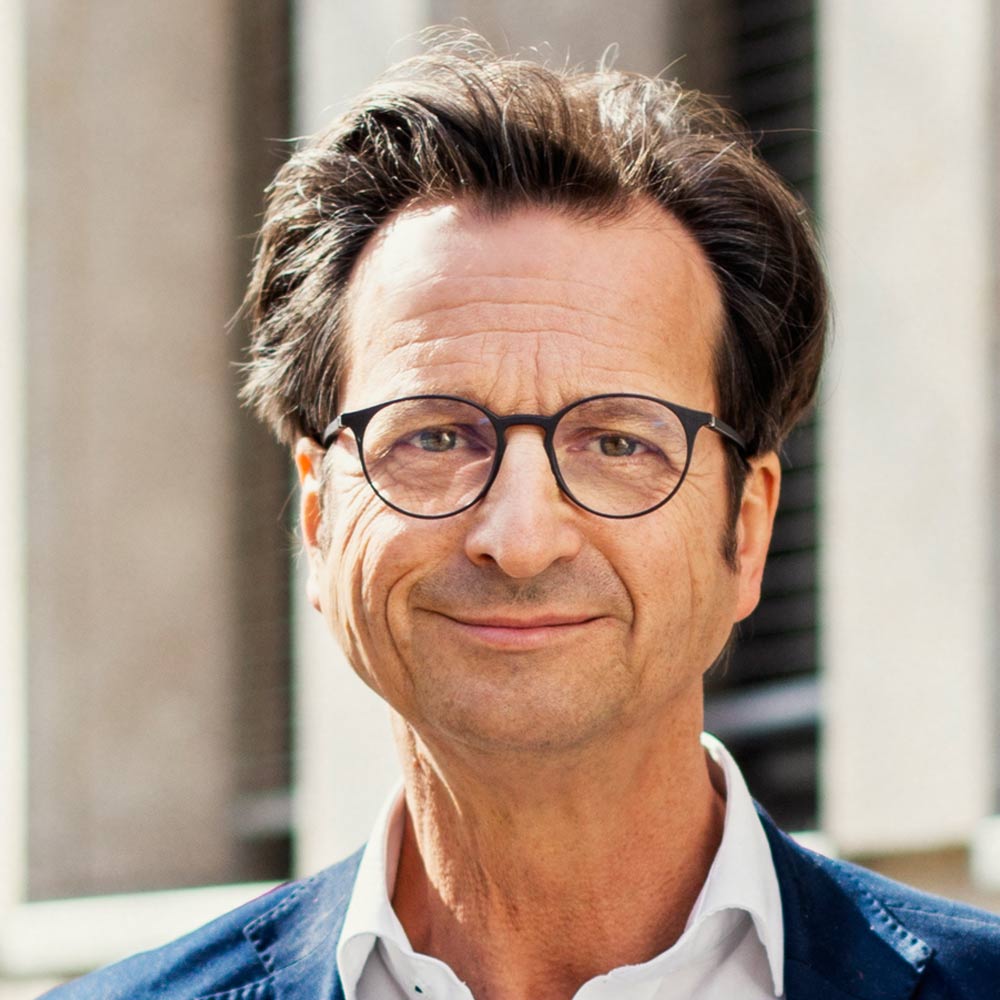
Cologne-based psychologist Stephan Grünewald is the founder of the market and media research institute rheingold. Grünewald became a bestselling author with his books "Deutschland auf der Couch" (2006) and "Die erschöpfte Gesellschaft" (2013) as well as "Wie tickt Deutschland" (2019).
Phone: +49 221-466 828 0
E-mail: gruenewald@rheingold-online.de