
Depth psychological study by the rheingold institute finds massive repression and psychological defense strategies.
The Germans are trying to suppress the war in Ukraine to a large extent. After a collective state of shock at the start of the war at the end of February, every effort is currently being made to evoke normality. However, this is only partially successful. The war always remains in the background as an eerie sound, even behaving like a mental "war tinnitus," according to psychologist Stephan Grünewald, who, with his Cologne-based rheingold institute, has recently examined the state of mind of Germans in several parallel studies.
"Rigidity in shock is emotionally unbearable," says Grünewald. In the first weeks, people moved out of their helplessness with helpfulness and solidarity. Now people are trying to filter the reality of war out of their everyday lives - many people have deactivated the breaking news on their cell phones, avoid confrontation with images of war, and avoid war as a topic of conversation altogether. In depth-psychological group discussions and interviews, the subjects had to be led to the topic again and again. Once confrontation is unavoidable, the horror is initially put into perspective. There are numerous military conflicts around the world, wars have always existed - this or similar evasive movements can be identified.
By demonstratively living a "normal" everyday life and pointing out that the front is thousands of kilometers away from Germany, many people try to push away the threat of war.
But the reality of war with its "tinnitus" always resonates, sometimes loudly, sometimes quietly, haunts people's dreams and finds its way into their language. "In previous years, people spoke of 'hoarders,' now they say 'bunkers' in our in-depth interviews," Grünewald says. Expressions like "exploding gas prices" or "catapulted news" also revealed how much the war subconsciously preoccupies people.
The rheingold institute has found several strategies of self-soothing and everyday stabilization that people use to keep their fear of war at bay. These include self-strengthening through sports or mental fitness, self-soothing through experts who de-dramatize events in Ukraine, and the ability to provide for oneself or to do without if infrastructures collapse. For example, many people prepare for emergencies by hoarding food, checking escape routes or simply preparing for lean times ("frying fat instead of sunflower oil").
Central to many is cohesion and being together with family and friends, as well as pleasurable moments. Here, the researchers have also found hedonistic expressions in the style of the 1920s, the desire to enjoy life and party like there's no tomorrow.
"Such a permanent repression is mentally deeply exhausting," says Grünewald. Of course, one can "party away" fears and worries, but the lightheartedness is missing. "We observe a latent irritability and aggressiveness in our studies," the psychologist says. "The 'war tinnitus' creates tensions that not infrequently erupt into arguments and irreconcilable disagreements."
Paradoxically, in contrast to war, even Corona was a stabilization for people, a familiar terrain on which they moved safely. "Corona is more tangible than war," said one respondent, "here everyone has their fixed position and their well-rehearsed reasoning. In the rhythm of the seasons and studying the daily infection numbers, the pandemic taught them what to expect and how to protect themselves if necessary, he said. War, on the other hand, follows an unpredictable logic of escalation that dwarfs even climate change in its dramatic nature.
In private conversations, therefore, the topic of Corona still dominates at present - in contrast to the media. The familiar threat of Corona is also helping people to mask the threat of war. Furthermore, familiar polarizations and lines of contention that have kept Germany in suspense over the past two years are glimmering again.
This strong polarization is currently not observable when it comes to the topic of war among the population - also due to the fact that the threat of war has been largely ignored. Even when it comes to controversial issues in the media, such as the question of arms deliveries, the feeling of deep ambivalence prevails among most citizens. The almost equal distribution of supporters and skeptics on this issue, as determined by opinion polls, is not an expression of a division in society, but rather a symptom of a dilemma felt by many: On the one hand, people are in favor of arms deliveries because they want to support the victims of the Russian war of aggression; on the other hand, they fear that this arms logic could fuel the escalation logic of the war.
In media consumption, the tinnitus of war and the sheer irresolvable ambivalences of war therefore lead to a longing for scenes of the ideal world, which, however, have to be far enough away from one's own everyday life - transformed worlds, set in a different time or scenery. Series such as the Bergdoktor, the Netflix series Bridgerton, or even various commercials thus enable temporary escapes from everyday life in crisis permanence.
The strategies in dealing with the fear of war in detail
1. harmonious get-together
Birthdays and weddings are (re)celebrated, there is chilling, barbecuing and drinking. The circle of friends is gradually expanded again. In the get-together, people clearly make an effort to leave mood killers outside.
"I live in a privileged bubble, feeling secure in my circle of friends. Here I am seen and heard."
2. dance on the volcano
This way of dealing is driven by the unconscious fear that everything that brings pleasure might not be possible for much longer. Whether the gas crisis due to war, travel restrictions due to new mutations or flight and meat bans due to climate change - all this leads to a "better now than never" behavior.
"I act very spontaneously now. Who knows what tomorrow will be. If you want anything, do it now!"
3. self reinforcement
The tinnitus of war is leading to a renaissance of strength - not only is steeling muscles in gyms or boot camps and strengthening defenses extremely popular, the focus on mental resilience is also in vogue. Unconsciously, people want to prepare themselves for bad times.
"I'm afraid that the whole system will collapse, which causes me a lot of stress. To relieve the stress and strengthen myself, I do sports every day."
4. self-sufficiency/autarky
What was yesterday still smirked at as "preppertum" has now entered the mainstream. Bunkering food, keeping a packed travel bag within reach, planting vegetable patches and filling water reservoirs - these measures counter the uneasy feeling that the blessings of the modern world cannot be taken for granted and - as observed in Ukraine - can be downright bombed from one day to the next.
"My colleagues at work buy iodine to be ready for a nuclear strike. That was so far away from the reality of my life not long ago..."
5. faith in authority and lateral thinking
In an increasingly uncertain and seemingly chaotic world, people are looking for pillars that promise security and orientation. On the one hand, these are leaders and guides of the Western world. On the other hand, however, there are also "alternative" experts and news sources who, denying scientific, social and political facts, bring the world into a new "order.
6. renounce and reorganize
In economic or political times, people become inventive or suffering. Already the feared threats and shortages bring many people to practice prophylactic or demonstrative renunciation (planned shopping, switching to private labels, second-hand clothes, ...) or to put their flexibility to the test (by bike to work).
"I'm not afraid of the bomb, but I am afraid of the collapse of the supply chains. My son is diabetic and needs certain supplements. I always try to stay one step ahead."
About the method
Over the past few weeks, the rheingold institute has continuously conducted qualitative research into the state of mind of Germans. In the last few weeks, more than 130 people were put on the couch for two hours each in group discussions and in-depth interviews on the topic of crisis. In the past week, an additional 12 people were interviewed qualitatively and psychologically.
rheingold conducts around 5,000 two-hour explorations a year on all areas of everyday life. We, around 45 permanent and 55 freelance employees, explore markets, media and culture. This has resulted in a unique wealth of experience on a wide variety of topics. From very intimate human phenomena to politics and everyday culture. rheingold thus has the most comprehensive, always up-to-date, qualitative knowledge about consumers worldwide.
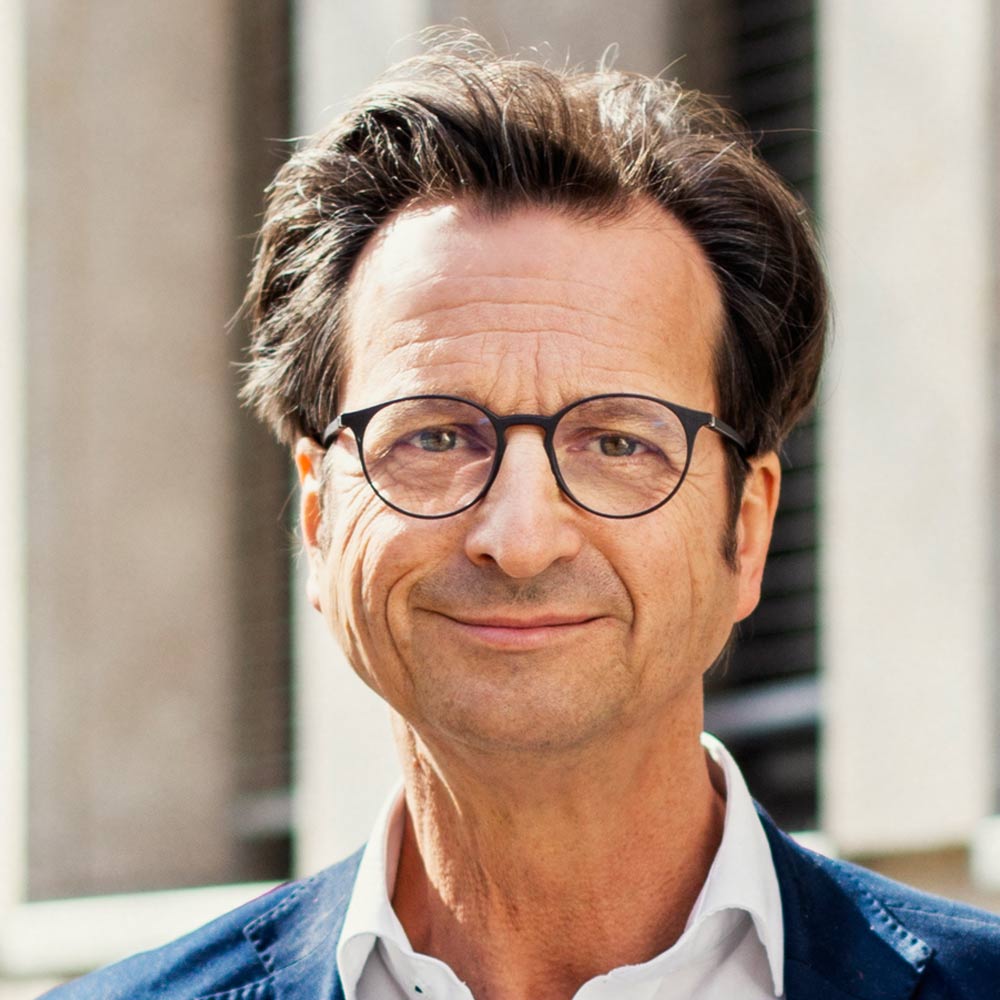
Cologne-based psychologist Stephan Grünewald is the founder of the market and media research institute rheingold. Grünewald became a bestselling author with his books "Deutschland auf der Couch" (2006) and "Die erschöpfte Gesellschaft" (2013) as well as "Wie tickt Deutschland" (2019).
Phone: +49 221-466 828 0
E-mail: gruenewald@rheingold-online.de