Germany's Future Between No-Future Mode and Creative Power in a Small Circle
Two-thirds of Germans are anxious about the future of society. A lack of trust in the state and institutions and fear of social division are forcing people to retreat into private niches. However, there is also a growing willingness to work alone or with like-minded people for a future worth living. These are the central findings of a representative and depth-psychological study conducted by the Cologne-based rheingold institute in cooperation with the nonprofit philosophy Identity Foundation in Düsseldorf.
"I see people facing huge problems in this century. Drought,
(female, 28 years, Hamburg)
hunger, resource war, migration movements around the world."
The omnipresence of serious crises has unsettled the population, and confidence in a better future has been fundamentally shaken: the majority of Germans are in a "no future" mode. The majority of Germans face social challenges and upcoming upheavals with a resigned attitude. They do not believe that the major problems of our time can be solved; the performance of the state and Germany's future prospects are viewed with great skepticism. Confidence that the state, politics, institutions and parties can solve the crises has eroded: Only 26 percent are optimistic about the actions of politics and parties in the future. The perception of a social majority: "Germany is on the brink of decline" (61 percent) and "we are facing drastic changes as a result of crises such as Corona and climate change" (88 percent).
Many citizens find themselves in an acute feasibility dilemma. They recognize the major problems of the future, but have no idea how these challenges of the century can be overcome. As a result, they are increasingly retreating into their private shells or personal niches. "People are entrenching themselves in small circles of influence with like-minded people and trying to save what can still be saved in their personal environments," says Stephan Grünewald, psychologist and founder of the rheingold institute, which specializes in depth psychology research.
The global, European or all-German perspective is replaced by a new self-reference. The focus is on one's own self, one's family or one's immediate social environment. Private "niche projects," taking care of one's own world and the pursuit of personal small happiness are consequently in high demand. Optimism for the future is more likely to come from a belief in oneself and one's own abilities (79 percent), one's own family (79 percent) and one's personal environment (81 percent).
Faith in the unifying state and parties is fading. The greatest fear for the future concerns social climate change with its progressive polarization and the drifting apart of society.
Government action experienced during the Corona and climate crises was seen as inadequate. This contributes to an insecure and partly resigned relationship with politics. Although many respondents see good conditions for an individually successful life in Germany (67 percent), confidence in social cohesion is increasingly eroding: 83 percent are afraid of a social divide, 90 percent observe a growing social divide between rich and poor, and 91 percent perceive increasing aggressiveness in society.
The fear of division is already anchored in the now. Half of the population feels "let down" in their current life situation. 30 percent state that life is already "difficult and stressful" at
. At the same time, around a third (31 percent) feel relaxed and relaxed about prosperity.
There are also significant differences with regard to concrete private strategies for the future, which can be differentiated on the basis of six future types. The spectrum ranges from the encapsulated, who prefer to fade out questions about the future or glorify the past, to the tribalists, whose radius of action ends in the neighborhood or in the club, to the missionaries, who devote themselves to an ideology that saves the world, such as veganism.
A spirit of optimism is germinating on a small scale - a third are working towards a better future
On a small scale, however, a hopeful grassroots mentality is also evident. Many respondents experience self-efficacy and progress in their own work. A spirit of optimism, a desire for the future and a will to shape things are evident in a third of those surveyed when they get to grips with their own living environment. Many develop the feeling that they can contribute something themselves and promote a better world from below. Neighborhood initiatives, changed eating and consumption habits, social and ecological networks or post-capitalist business models are attracting more and more attention in the world of those surveyed.
The landscape of these "packagers" is still very heterogeneous in its topics, goals and lifestyle. Although a significant overall social trend is not yet discernible, optimism about the future is evident in particular contexts and with sustainable perspectives. The fact that these many small plants of a new will to shape things could grow together in this decade is currently the great hope of an otherwise sobering picture of Germans' expectations for the future.
"The hopelessness that many people feel and the political failure that the majority bemoan is something we've noted in previous of our studies," says Paul J. Kohtes, founder of the philosophy foundation Identity Foundation. "We may be facing a very fundamental shift in societal perspective, and the idea of institutional solutions from the top is a discontinued model. What's interesting is that one-third of the population now finds encouragement in the spiritual, not as an escape from the world, but as a drive to energetically face life and its challenges," Kohtes says.
"We are experiencing a turning point in time," Grünewald affirms. "This study describes the spirit, the uncertainties, the forces of regression and progression of a transitional period in which our society will undergo massive change." It remains to be seen whether the tendencies toward retreat and further parcellation will be strengthened or whether the forces of societal growth together and overcoming dividing lines by taking up common challenges will be strengthened.
On the sample and method of the study:
As part of the qualitative study of the future, 64 voters were interviewed in two-hour in-depth psychological interviews. When selecting the respondents, care is taken to ensure that party preferences and sociodemographic structures (gender, regional distribution, age distribution, education and occupation) are represented as accurately as possible. The in-depth explorations are conducted and analyzed by a team of five psychologists. The findings were underpinned by a quantitative survey representative of the whole of Germany (n = 1000).
About rheingold Institut für qualitative Markt- und Medienanalysen:
rheingold is one of the most renowned addresses for qualitative psychological impact research. With around 50 permanent employees and 140 freelance contractors - mainly psychologists - the institute specializes in depth-psychological cultural, market and media research. Every year, around 5,000 women and men lie "on the couch" at rheingold. In the process, the scientists also analyze the unconscious psychological influencing factors and contexts of meaning that help determine every person's actions.
About Identity Foundation:
The Identity Foundation is a non-profit foundation for philosophy and realizes projects on questions of identity. Previous research topics have included the development of elites, the self-image of Germans, and aspects of the personal and spiritual development of being human. Since 2014, the foundation has been a cooperation partner of phil.cologne, Germany's largest annual philosophy festival. Here, it oversees its own salon series under the title "Grenzgänge der Philosophie" ("Crossing the Boundaries of Philosophy").
Here you can find the download of the complete study results:
The results in detail
Crisis permanence puts the brakes on the mood of optimism
If you talk to citizens about their ideas about the future, there is little sign of a spirit of optimism about the future. Two decades of crisis have led to a deep sense of insecurity among people in this country. Many feel that their ideological foundations have been shaken, trust in institutions and political parties is waning, the ideological framework is dissolving, and people are increasingly worried about a further division and polarization of society.
"I belong to the generation that has to live with the decisions of today. If we continue like this, we'll soon be finished."
(female, 26 years, Munich area)
Corona forced fear of the future and strengthens self-reference
The Corona crisis has further exacerbated people's insecurity and heightened their fears for the future. After all, almost everyone has experienced their usual lives being turned upside down and the rhythm of their everyday lives being thrown out of sync. Friendships or relationships have broken down because of deepening ideological rifts over the "right" way to deal with the virus or vaccination. In addition, many policy decisions in the Corona crisis have been experienced as inadequate or inappropriate.
"The pandemic has shown that our state cannot protect us from everything. We are once again more dependent on ourselves."
(male, 29 years, Munich urban)
People's openness to the future and the world has shrunk considerably. Many people no longer think in global or European terms. Even the national perspective has been lost sight of, because people's focus is primarily on the personal local area, their own family or their own self. Only 5 percent of the quantitative respondents are actively involved in society themselves (demos, environmental associations, etc.), while 41 percent focus on their personal local area and make a contribution in everyday life, for example with sustainable consumption or helping their neighbors.
Symbolically, many Germans have retreated into their private shell. In their small sphere of activity, they surround themselves with like-minded people; here they feel security and self-assurance.
"Our home is Noah's Ark. Our own home will not perish."
(Respondent in in-depth interview before flood disaster).
This is also reflected in the figures of the representative survey: the majority of people (87 percent) perceive an increased self-referentiality and place hopes in an individually good future (64 percent). This is why securing one's own future (pensions and social security) is at the top of the personal wish list (70 percent), while the desire for an intact environment is only in second place (50 percent).
Fundamental feasibility dilemma creates future vacuum
The confrontation with the future plunges people into a fundamental dilemma of feasibility. Beyond their self-designed spaces of retreat, they encounter problems in the world that are almost impossible to overcome: The delta variant is on the rise, the example of Afghanistan shows how fundamentalist world views undermine the values of the West, and floods and forest fires make it visible that climate change is inexorably approaching.
"I see people facing huge problems in this century. Drought, hunger, resource warfare, migration movements around the world."
(female, 28 years, Hamburg urban)
People feel that they are facing century-long challenges globally and nationally (pensions, affordable housing, debt, care emergencies). However, most have no idea how to solve these enormous problems, and they also experience politics as largely haphazard. The future appears as a huge vacuum that is sometimes filled with paradisiacal hopes of redemption, sometimes with dark fantasies of doom:
"I see a lot more green, affordable housing, no hot spots, more animals. We're not flying anymore. Everyone is taken care of. Maybe there will be a basic income because the machines will work for us. Everyone can be who they are, no one cares."
(female, 26 years, Munich)
"If the climate catastrophe occurs, we in Europe will have to live as if under a dome. A cheese dome, so that the air is still there to breathe. Around it there is misery, drought, everything is full of dust and darkened."
(male, 18 years, student, Cologne)
Fear of Social Climate Change: Confidence in Social Cohesion is Dwindling
Although many respondents still see good conditions for an individually successful life in Germany (67 percent), confidence in social cohesion is increasingly eroding: 83 percent are afraid of a social divide, 90 percent observe an ever-increasing social divide between rich and poor, and 91 percent perceive increasing aggressiveness in society. The promotion of social justice and the interests of the common good were named most frequently (89 percent) when it comes to the most important tasks of politics.
The fear of division is already anchored in the now. Half of the population feels "let down" in their current life situation. Thirty percent say that life is already "difficult and stressful" at the moment. At the same time, around one third (31 percent) feel relaxed and relaxed about their prosperity. There are also significant differences with regard to concrete private strategies for the future, which can be differentiated on the basis of six future types.
Six future strategies in the spectrum of regression and progression
With regard to concrete private strategies for the future, there are significant differences that can be differentiated on the basis of six future types:
Those who are encapsulated force a retreat and entrench themselves in self-referentiality or in symbiotic forms of life that are not questioned. They rigorously ignore the big questions about the future because they want to maintain their personal status quo. Sometimes they tend toward a strong idealization of their own or Germany's past.
The familiars have strengthened their kinship support during the crisis. Their ideas for the future mainly relate to stabilizing or expanding their nuclear family. A larger apartment, property, children's education or travel determine their life horizon.
The tribalists force a growing together on a social level and get involved locally with like-minded people. The implementation of their projects at the club level or in the neighborhood network gives them the feeling that they can shape the future on a small scale.
The self-empowered associate the future primarily with their personal career and their development or career opportunities. They have experienced in the past (as migrants or upwardly mobile people) that they can turn their destiny around through ambition or trust in their abilities. Trust in God or in the state is replaced by trust in one's own potential, which can be developed if one is optimistic and willing to change.
Progress illusionists placate the feasibility dilemma with the hope that technological development will solve the major challenges. This gives them the (moral) freedom to enjoy the rest of their lives without restraint. For them, the future therefore means above all the unfolding of their own dreams.
Missionaries find a tackle to the future by committing to a world-saving idea. They eat a vegan diet, refrain from traveling or rely on cryptocurrency. It is important to them to act as role models in these original areas and to convince others of their stance.
A preliminary form of missionizing is increasingly found among young people in their dealings with their parents, with whom they usually maintain a good relationship. Since young people do not risk an open revolt, they have developed a subtle form of re-education - setting new standards in sustainable lifestyles or gender-equitable language and thus trying to create preconditions for a better future in the family environment. The flip side of the new model of education, however, is an ever-increasing delegation of shaping the future from parents to the younger generation.
The upheaval as an opportunity: expanded self-efficacy, the power of authentic neo-communities and the desire to grow together
Pressure to change (88 percent) and a pessimistic view of the future (76 percent) are clearly evident. Nevertheless, the crises are also perceived as an opportunity (80 percent). This is because Corona and the lockdown experiences have also led to a new form of self-efficacy. Spurred on by the external restrictions, many people have become active and creative indoors. Cooking, planting, renovating - full of pride and confidence, many have felt that they can make a difference and move things in small ways.
Against the backdrop of the vacuum of the future, activism in the personal sphere is perceived as the only way to counteract the perceived hopelessness. Experiencing togetherness and a willingness to help give courage (51 percent), while spiritual references make some of the population optimistic about the future (32 percent).
Social relationships were also reordered and sorted. Digital contact maximization was replaced by the search for genuine and sustainable relationships: Who is really close to me? Who can and will I trust? With whom can I make a difference? Above all, the flood disaster showed what forms of solidarity a community is capable of that does not surrender itself to an abstract supply apparatus, but instead takes on tangible tasks.
The focus on the local area has strengthened the feeling of responsibility and feasibility, of being able to make a difference and change things on a local level. Future projects then arise from the respective concrete spheres of life - pragmatically, practically, very real and as a counterpoint to the promises of the political establishment, which are perceived as empty. The insight is growing that participation leads to greater satisfaction and community spirit.
Prognosis: We are experiencing a turning point in time and the study describes the spirit, the uncertainties, the regression and progression forces of this transitional period. It remains open and to be hoped that not the tendencies to retreat and further parcellation will be strengthened, but the forces of social growing together. In this way, social fragility can be stabilized and dividing lines can be overcome by taking up common challenges - the individual can grow beyond himself through the feedback and appreciation of the community.
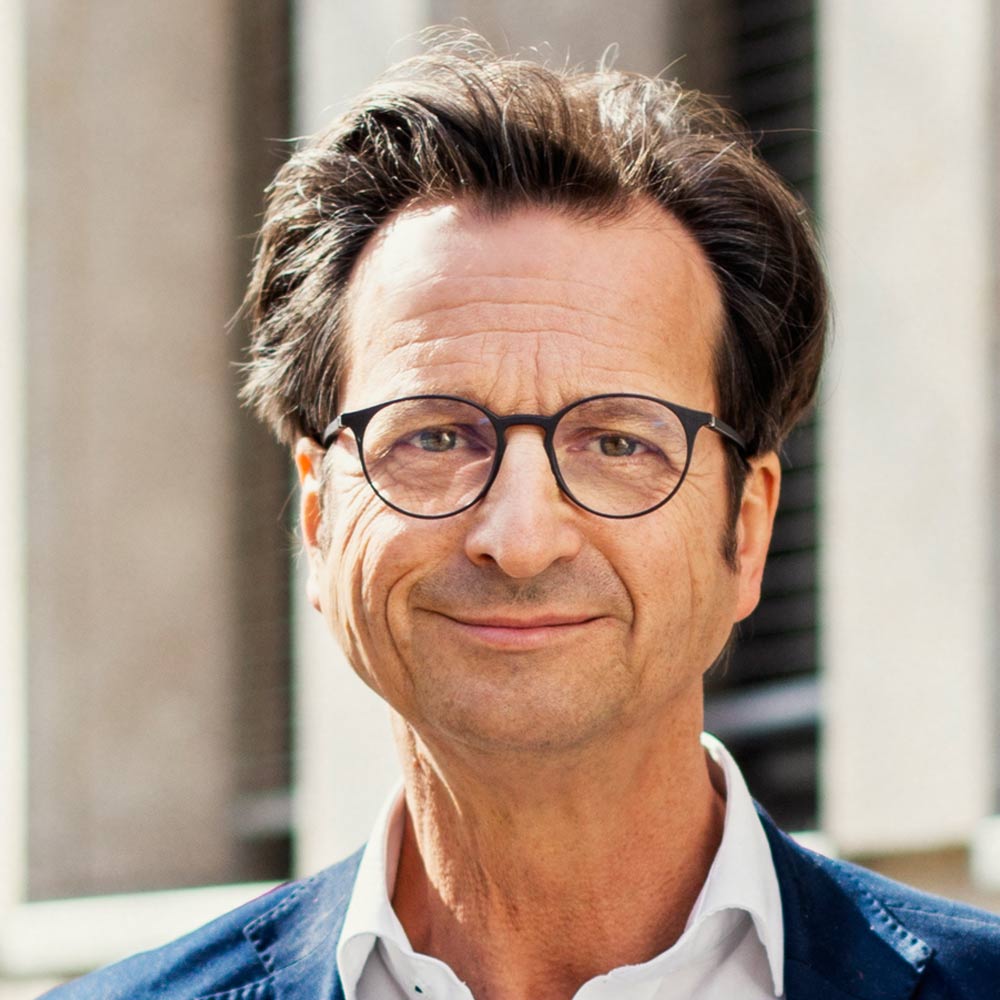
Cologne-based psychologist Stephan Grünewald is the founder of the market and media research institute rheingold. Grünewald became a bestselling author with his books "Deutschland auf der Couch" (2006) and "Die erschöpfte Gesellschaft" (2013) as well as "Wie tickt Deutschland" (2019).
Phone: +49 221-466 828 0
E-mail: gruenewald@rheingold-online.de