
The last 18 months have seen lasting changes in the world of work. The move to home offices, the introduction of hybrid work concepts and the intensive use of video conferencing tools have become an integral part of everyday working life for many companies. To what extent have these developments led to a changed management culture and how do managers themselves perceive the new working reality? Answers to these questions are provided by the current qualitative and quantitative study conducted by rheingold instituts on behalf of the personnel service provider Hays.
For this purpose, 750 executives from companies with more than 100 employees were interviewed across all industries. The current survey builds on last year's study "Adapting to a new reality - leadership under Corona".
The establishment of the new working reality, dealing with uncertainty and the simultaneous demand for orientation on the part of the employees, required new management strategies. The managers found the lack of spatial and personal proximity to be a particular challenge. In addition, for 70 percent of those surveyed, managing at a distance requires more time and organization.
As the survey results continue to show, decision-makers are reacting differently to these new framework conditions: Just under half of them want to motivate employees more in the future and deal openly with suggestions. As many as a third want to hand over more responsibility in order to create scope for personal responsibility and results-oriented work. Just as many managers want to give more space to individual employee support. The trend toward a participative-collaborative management style is discernible, but contrasts with the desire for control among some of the respondents. After all, one in five executives wants to change little about the way they lead.
Three leadership typologies of the hybrid working world
Finally, the study identified three different leadership types that have emerged on the basis of the new framework conditions: 52 percent of the respondents can be described as "performance managers". Their ambivalent leadership practice is expressed in increased motivation and individual support for employees, but in combination with small-scale specifications and close-meshed control. This prevents genuine personal responsibility. Just under one in three is committed to "employee empowerment," giving employees more freedom since Corona and motivating them to work independently.
This type is driving internal digitization forward the most. The third and smallest group of leadership types (18 percent) is sticking to "business as usual. They see the changed conditions as temporary and therefore have little reason to change their management style.
The complete study can be downloaded here:
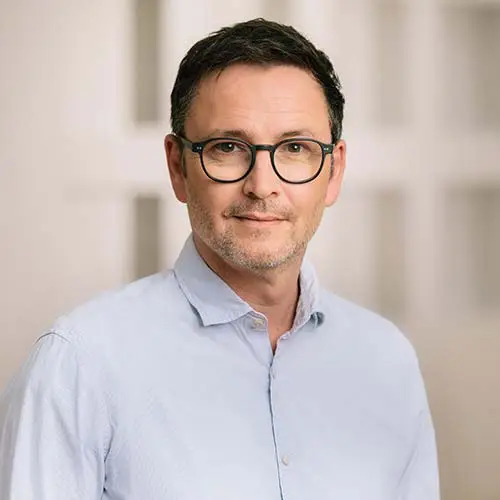
Sebastian Buggert holds a degree in psychology and is a member of the management team at rheingold. His research focuses on retail, media, and the service and financial industries. He is an expert in the field of digitalization and has long been intensively involved with the influences or opportunities of digital change both for markets and for qualitative market research.
Phone: +49 221-466 828 0
E-mail: buggert@rheingold-online.de