
How will Germans deal with the war in the future - and with an autumn full of worries? The psychogram of a country between reality repression, impudence, readiness to protest - and a great deal of desire for renunciation, which can be charged with psychological added value.
This essay appeared in the August 30, 2022 online edition of WirtschaftsWoche.
How will Germans react when fall and winter come, when the energy crisis is no longer a distant threat but an everyday reality? Will citizens mutate into savings champions or are popular uprisings looming, as Foreign Minister Annalena Baerbock fears? A prognostic approach to these questions is made possible by looking at the mental state of the country in the face of the reality of war and rising prices.
Our depth-psychological studies show how rapidly people's sensitivities have changed since the war began. At the beginning of March, citizens initially found themselves in a kind of paralysis of shock. Stunned, they experienced how a reality of war with an unimaginable potential for escalation broke into their everyday lives. They tried to escape their initial helplessness by constantly updating their news feeds, by offering help and expressing solidarity, or by using private diversionary tactics.
As early as May, there was a serious change in the state of the soul. Since then, the war has been largely suppressed in favor of an evocation of normality. Many people have drastically reduced their consumption of news. Above all, the shocking images of the war are avoided. During small talk, people now prefer to talk about Corona rather than the war. Nevertheless, the war remains perceptible in the background as a kind of grueling tinnitus. This tinnitus is drowned out by various strategies of self-soothing and everyday stabilization. People engage in sports to make themselves fit for the crisis. They seek harmonious togetherness with their friends. They stockpile food, postpone investments or buy a bread machine to feel more autonomous.
In addition, inflation and the gas crisis have been shifting attention to domestic problems since early summer, but these have not yet had a psychological impact on most people. The tanks are still half-filled. High energy prices and cold living rooms are still a distant threat and have not really arrived in everyday life. Energization is currently being sought above all in the self-indulgence and heat of summer, in the quivering desire to stop time for a few weeks after the exhausting Corona years and to experience carefree and exuberant moments again. At parties, people celebrate exuberantly as if there were no tomorrow. Sometimes it seems like dancing on a volcano. Yes, winter is coming, but: Endless summer is happening.
In the coming fall and winter, the problems around gas supply and inflation, which have been kept away, will determine the everyday lives of Germans with great force. This will intensify the winter frustration that was already observable in our studies last year. This frustration is based primarily on three aspects that reinforce each other: a major feasibility dilemma, a resigned attitude and a growing self-reference.
Most citizens do not deny the crises and problems, but they have no idea how they or the politicians can remove the immense mountains of problems. The feasibility dilemma is reinforced by a resigned attitude that is often accompanied by a lack of desire and drive. Many citizens have set themselves up in a kind of disappointment prophylaxis during the Corona years. In order not to be constantly depressed because projects fail, they take the precaution of cutting off their desires and are content with their own lives taking a mild course at best. The dilemma of feasibility and resignation in turn reinforce the retreat of citizens into self-reference. Many people no longer think in global, European or national terms, but are focused on themselves and their immediate regional environment. It is to be feared that the wave of solidarity that began at the start of the war will come to an abrupt end this winter.
Through the winter with confidence in change
However, the coming winter also holds the opportunity to escape the paralyzing feasibility dilemma. Because the problems surrounding supply bottlenecks and energy savings are neither abstract nor global, but concrete, related to everyday life and therefore manageable. The heating knob, the hot water tap, the gas pump nozzle or the shopping - people literally have all this in their own hands. The coming winter does not freeze people's options for action, but creates space for spirited action and self-efficacy. It holds the opportunity to rise above oneself and gain confidence in change.
For politics, this means the transition from the mothering care of an Angela Merkel to an adult attitude that calls on citizens to share responsibility and help shape the future. This transition seems to be succeeding, as the chancellor, vice chancellor and foreign minister form a political triptych that embodies and initiates different transitional moments.
"The coming winter does not freeze citizens' ability to act, but creates space for spirited action and self-efficacy - and holds the opportunity to rise above"
Olaf Scholz promises as a paternal calming pole that the supply framework will be maintained and that citizens will have financial backing in times of need ("You'll never walk alone"). Robert Habeck acts like a big brother at eye level. He names the problems, and you can literally see the painfulness of the transition on his face. This makes him transparent and honest. But he also sets a course by demanding renunciation and conveying confidence. Annalena Baerbock, on the other hand, becomes the antithesis of German Angst through the clarity of her positions and her willingness to rock the boat. In her dynamism and consistency, she embodies Joan of Arc qualities.
Although politicians are swearing the citizens to the transition, not everyone will go along with it. Divisive tendencies and the formation of camps are to be expected, as was already seen in the dealings with Corona. A large proportion of citizens will follow the calls for austerity and be prepared to defy risk and the crisis. Most will cut back and develop a kind of pride in saving or deprivation. In many businesses and households, we are likely to see a self-disciplining competition for the unofficial title of world savings champion. Some will defy the policies and measures. In doing so, they will seek to prove that all the restrictions are actually unnecessary, as an expression of a misguided policy toward Russia or a solidarity with Ukraine to which the interests of their own country would be sacrificed. Both camps will interact. The more the austerity-minded morally exaggerate their renunciation and advance to the status of austerity guardians, the more strongly the reactance of the defiant will be articulated.
There will also be people who seek to detach themselves materially from the crisis because they have the financial means to save. The reality of life for higher earners will differ drastically from those who had to cut back even before the gas crisis - and who will be hit hard by the expected high additional payments. The winter therefore carries the risk of increasing social coldness and division in the country.
A fourth group of people will restrict themselves while ideally detaching themselves from crisis and politics - and try to counter the impending cold with self-care and warmth of heart. Fireplaces, candles, warm blankets, teas and scents will create a cozy atmosphere.
Basically, the acceptance of saving will increase if it is not in a deficit logic, but is charged with a spiritual added value. Orientation to the historical example of the Spartans can charge saving with attitude and meaning. The call to "awaken the Spartan in you" then becomes an expression of solidarity, autonomy and personal or state resistance.
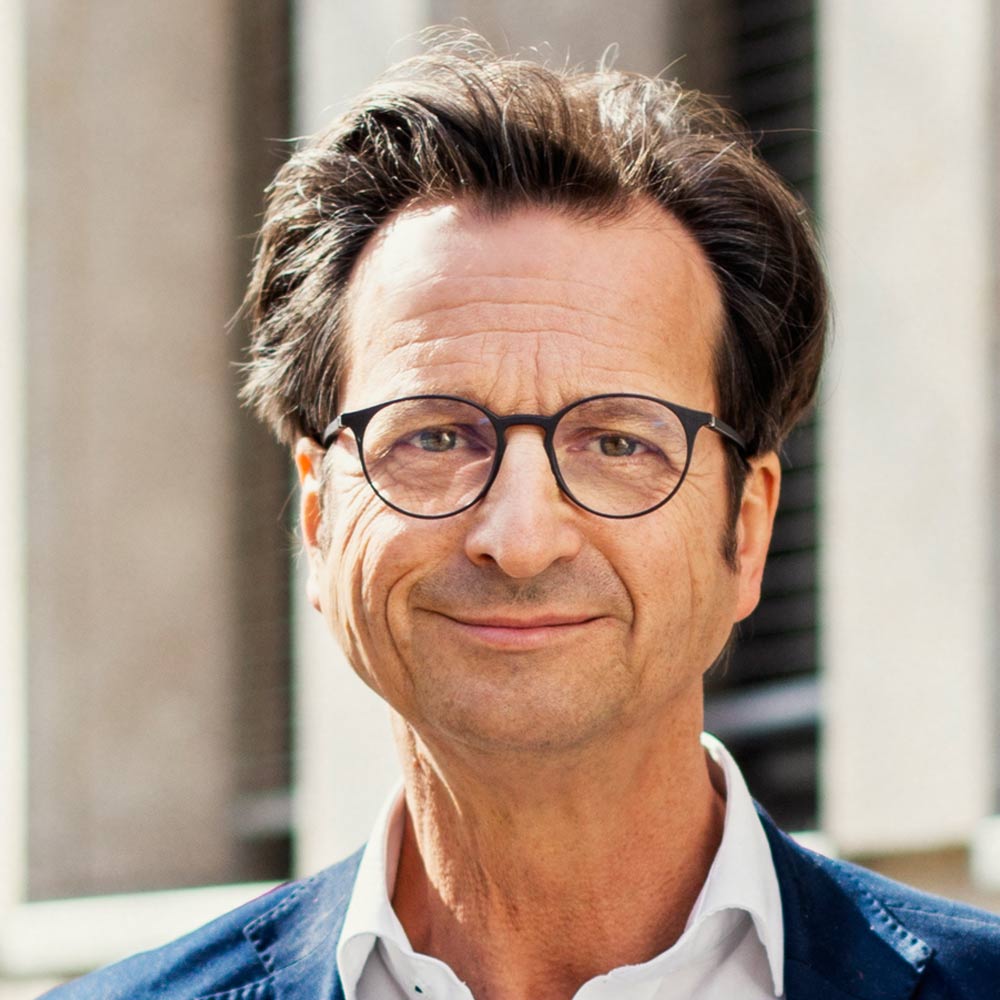
Cologne-based psychologist Stephan Grünewald is the founder of the market and media research institute rheingold. Grünewald became a bestselling author with his books "Deutschland auf der Couch" (2006) and "Die erschöpfte Gesellschaft" (2013) as well as "Wie tickt Deutschland" (2019).
Phone: +49 221-466 828 0
E-mail: gruenewald@rheingold-online.de