
The motives behind the willingness to donate
Helping others strengthens one's own self-esteem and makes one's life more meaningful. Helping makes people happy. This is one of the key findings of a study conducted by the Rheingold institute on behalf of McDonald's Germany. But why is this so, how do people actually become donors and what other hidden motives lie behind the willingness to donate?
Study director Sabine Loch has the answers to these questions:
Ms. Loch, you have established with your depth psychology interviews that donors are the happier people. Does donating make people happy, or are happy people simply more willing to share?
Both and. Those who grow up in an emotionally stable family learn the value of giving, of making donations, as early as childhood. On the other hand, those who have experienced financial or psychological hardship are more likely to feel poor later on and focus on managing their own lives. In this way, however, non-donors also miss out on the concrete moments of happiness that giving triggers.
What exactly leads to these feelings of happiness?
Donating strengthens one's own self-esteem; one feels like a better person. This effect is even more pronounced in the case of helpers who are very concretely socially committed. They feel like a pillar of society. Donors, on the other hand, are also concerned with balancing their own lives. The perception of poverty and need awakens a guilty conscience that can be numbed with a standing order. Donation is therefore also an unconscious compensation to be able to enjoy abundance and wealth more carefree.
If giving has such positive side effects, how can non-donors become donors?
In stable families, donating is virtually part of the maturation process. Adolescents feel that as they grow older, they "move up" into the circle of donors; they begin to take on responsibility. Some already donate from their first own salary.
So does it make sense for fundraising organizations to engage intensively with children and young people?
In any case. If you don't grow up with the topic of donations, you first have to recognize the benefits for your own well-being. That can be a lengthy process. So it makes a lot of sense for donation organizations to focus their attention even more on children and young people - in other words, on that phase of life in which the fundamental willingness to help is shaped.
In earlier studies, for example for Plan, you examined precisely this phase of life. What characterizes it in particular?
In their teens, their eyes suddenly widen. However, this also means that a lot of frightening news about war, poverty and environmental destruction comes pouring in relatively unfiltered. For some, this is too much and they shut themselves off. Others jump at it and want to help, want to save the world. The beauty is: At this age, they even believe they can. This is a great opportunity for aid organizations to channel young people's commitment into small projects and thus retain them in the long term.
So, whoever helps once, stays with it continuously?
That would be nice, but it's not quite like that. There are always periods of time that serve primarily to cope with one's own life - for example, when starting a career. The willingness to help is reactivated when everyday life again leaves more room for it or a special event occurs. It's a bit like church loyalty, which we also studied. Those who have good experiences with the church in childhood also return to it as adults, even after phases of long abstinence.
In your study, you distinguished between helpers and donors. What unites them, what separates them?
Both have a common dream, they want to save the world or make it a little better. Helpers want to get up close and personal, to feel this process in their everyday lives and to share in the suffering. This is where donors tick differently. They identify with higher-level goals - for example, environmental protection or hunger relief - and then delegate their cause to an organization. In doing so, they give themselves permission to put the need at a distance.
Does that also mean that potential donors would rather not see the need, for example, on the organizations' advertising posters?
Not necessarily. The campaigns have to balance very strongly between shown misery and alleviated misery. Too much misery activates the reflex to duck away. But if poverty is soft-painted too much, the impulse to want to help is missing. With our depth-psychological interviews, we can see very precisely where this boundary runs in people.
What is the advantage of depth psychological interviews, especially for this topic?
Donations are a topic that generates a great deal of social pressure. In effect, this means that a great deal is glossed over in short interviews or checkboxes. The intensity of the in-depth interviews - each lasting at least two hours - means that people really let their guard down emotionally and reveal their true motives.
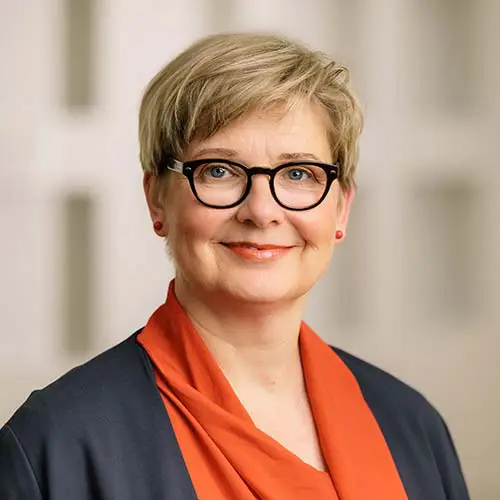
Sabine Loch is a psychologist and Unit Director Food and has been working at the rheingold Institute since 2005. Her focus is on food, retail and non-profit organizations.
Phone: +49 221-466 828 0
E-mail: loch@rheingold-online.de