

The article appeared at planning&analysis on August 20, 2019.
The great hope for the next generation
In the labor market, too, everyone is looking eagerly to Generation Z. It is being hailed as a beacon of hope that will make companies fit for the future. Consequently, there is already competition for pole position in the race for this promising new generation, even though the Z-ers are still largely in training.
Therefore, as part of the rheingold research series "Understanding Gen Z", we are devoting ourselves to the question of how this generation looks at the professional world, what expectations, hopes, fears and anxieties move them. From this, we derive ideas and recommendations for employers with regard to personnel communication, employer branding and the recruitment or management of the young target group.
"I want to at least maintain my parents' standard of living."
1,000 options, what to do?
The career choice is perceived by Gen Z as a major directional decision. Young people are faced with an immense variety of options and feel that they are in demand, that universities and employers are courting them, on posters, in social networks and at events and job interviews.
At the same time, they have an idea of how central the profession is for their own lives. The subject is brought home to the next generation by schools and parents, who provide them with all-round advice and counseling, psycho-tests, internships and information. Gen Z is also used to finding in-depth background information on the web from an early age. As a result, they can already speak impressively competently about personality development, leadership styles, work-life balance or drivers of job satisfaction at the age of 18.
Specifically, Gen Z representatives can describe a wide variety of expectations and requirements for the profession in great detail:
- The profession should enrich one's life and personality; the keyword vocation often comes up in our conversations. It should take up one's own inclinations, be a piece of one's own identity, and ideally never become boring.
- At the same time, work should not dominate life, but leave room for leisure, hobbies and family. Interestingly, men in particular reflect the desire to have a family of their own and see themselves in the role of provider in perspective. They are therefore looking for a job "that can support a family" and at the same time leaves enough room for a family life.
- For young women, the sense of purpose is more important. They place greater emphasis on the social contribution of their occupation and weigh it against the value of having a family or children of their own.
- GenZ has great expectations with regard to everyday working life. It is a horror to have to struggle to get to work every morning and do boring routine work or to wear oneself out in unproductive power struggles. They often experience their parents' workday as too monotonous and stressful. In contrast, the young offspring want variety, flexibility and scope for their own initiatives and development.
- After all, the representatives of Generation Z are looking for security, reliable relationships, clear guidelines and superiors who accompany them in a spirit of partnership. The demands on the boss are clearly formulated: He or she should be a professional role model, choose to address employees at eye level, provide empathetic guidance, and at the same time offer freedom for the development of the next generation. The ideal boss acts like an influencer in the workplace, inspiring and accompanying, not overburdening, but acting like a big brother from an almost caring attitude.
These requirements are anything but nice-to-have for Gen Z. They create enormous demands: on the job, on employers, and on themselves. In sum, they create enormous demands: on the profession, on employers and on themselves. After all, Gen Z's greatest fear is making the wrong decisions and ultimately not being happy in their chosen career. As a result, there is great pressure to learn and perform during training, and uncertainty and stress during the career search phase.
"I want to be able to be there when my child takes his first steps."
Employers must offer flexible stability
Employers encounter Generation Z uncertainly looking for a beginning, for a first professional home in which they feel secure, want to try things out and develop. To be attractive here, they need to communicate both stability and mobility and freedom for the personal development of Gen Z applicants.
In the beginning, it's all about the immediate work environment, a pleasant working atmosphere, nice colleagues, cooperative bosses and an easy start to the working day. Against the backdrop of concerns about committing too early or making the wrong decision, the decision to take the job should not seem like a fateful determination. Instead, a flexible perspective for the future should be communicated that offers junior staff a wide range of options, such as changing departments, topics or locations.
In this context, Generation Z repeatedly brings up the start-up, which feels to them like a modern form of family business. It promises a youthful working atmosphere, manageability, cohesion among like-minded people, dynamism, variety and scope for personal development.
"If I have children, it will be just one; more is not socially acceptable and is difficult to reconcile with a career."
Study design
In a compact rheingoldSprint, a total of 20 pupils, trainees and students, between 18-24 years of age, were interviewed. Women and men were represented by 50% each. 2 rheingoldGroups, 6 rheingoldInterviews and 6 rheingold voiceMessagings were conducted. In terms of content, we talked to the young people about the world of work, the decision for a profession or training path, expectations of employers, as well as the concrete steps towards starting a career.
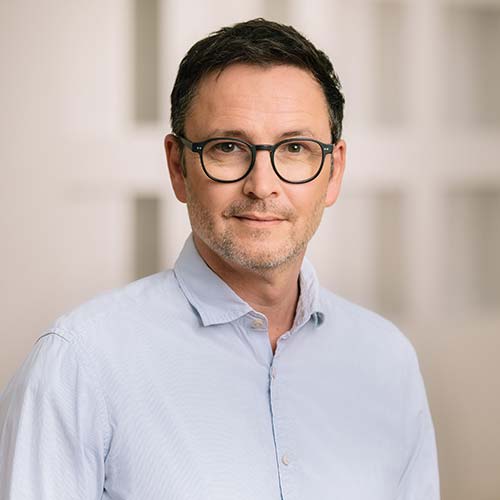
Sebastian Buggert holds a degree in psychology and is a member of the management team at rheingold. His research focuses on retail, media, and the service and financial industries. He is an expert in the field of digitalization and has long been intensively involved with the influences or opportunities of digital change both for markets and for qualitative market research.
Phone: +49 221-466 828 0
E-mail: buggert@rheingold-online.de