

This article appeared on marktforschung.de on October 7, 2019.
How chef and the rheingold institute understand situational use motivation
With regard to user-centered product development, it is enormously important for the digital cooking portal Chefkoch to understand the motivation of its users in as differentiated and profound a way as possible. The focus was directed beyond target groups, in the sense of demographic user groups, to the actual use and situation-specific motivation. To this end, rheingold's psychologists accompanied chef users for more than 60 hours while they cooked and analyzed their individual approaches from the initial idea to the food posting.
Why a particular digital service is used or visited again and again is often not directly explainable to the users themselves. Usage decisions happen in seconds, and the user experience (UX) is often enormously fleeting. Yet some applications feel 'just right' while others feel bumpy or unwieldy. The challenge is to understand and ultimately create that 'just right' feel. In the end, these positive user experiences derive valuable ripple effects to the brand that engage the user and, at best, turn them into a recommender.
"Often, the design of digital services is based solely on usage data or target groups. In contrast, Chefkoch wanted to make the concrete situational use and the underlying motivation the point of orientation. We wanted to understand what drives and emotionally moves the user at the moment of use," says Sebastian Buggert, study director and member of the management board at rheingold. This was not just to investigate who uses what and how, but to explain why applications are called up and used in certain situations and how usage can then be experienced in a satisfying or inspiring way. "The study is enormously important for us. It helps to identify what motives users have in the cooking process and then to consistently design our portal in a user-centric way," emphasizes Christoph Eikmeier from Chefkoch.
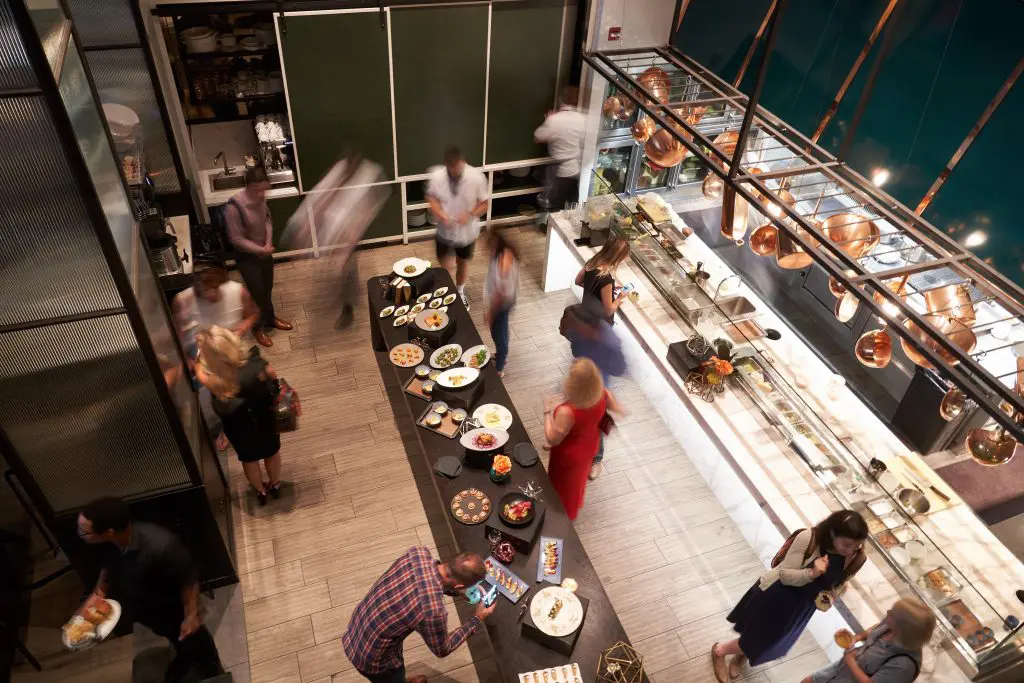
Against this background, individual cooking cycles were explored step by step in a total of 30 in-depth interviews. In this way, both the overriding cooking motivations and a total of 21 situational usage motives were identified and analyzed in terms of their rational and emotional motivation. "The study shows the diversity of our users' usage contexts. For the inspiration phase alone, we were able to identify five different motives. Not all inspiration is the same. That's exactly why the results are so valuable for us, because they allow us to understand the background of usage," explains Katharina Ernst, UX Researcher at Chefkoch.
Examples of different situational motives in inspiration:
Motif #1 Inspiration: To tune in and be encouraged
The first motive for inspiration is primarily looking for encouragement to cook in general, but also to try new recipes or ingredients.
"When I see so many variations of a dish, it's great. Then I say to myself: Now you try it, too!"
Chef user, 42 years
Motif #5 Inspiration: find ideas for processing ingredients
Based on specific ingredients, this inspiration motif is more focused, looking for appropriate ideas and ways to diversify.
"We have been given lots of currants. What are you going to do with them? You can't always just eat pancakes."
Chef user, 39 years
Each of the 21 identified situational usage motives was examined in depth for the following aspects:
- Contexts and triggers
- Situational drivers and barriers
- Classification in superordinate basic motives of cooking (mapping)
- Typical progressions and target group-specific variations
- Goal and intended outcome (rational and emotional)
- Relevance and potentials for chef
The 21 situational motives identified were quantified in a second step on the Chef platform. The frequency, relevance and satisfaction with the available solutions were evaluated. In addition, the usage motives could be prioritized in terms of their relevance for customer loyalty, as well as new product development, and used as springboards for product development.
"We have now anchored the user motifs in the company in such a way that colleagues first ask themselves the question every time they make a new product decision: What can be found in our user motive portfolio? This study should serve as a model for us to align Chefkoch even more closely with users in the future," emphasizes Katharina Ernst.
Sebastian Buggert holds a degree in psychology and is a member of the management team at rheingold. His research focuses on retail, media, and the service and financial industries. He is an expert in the field of digitalization and has long been intensively involved with the influences or opportunities of digital change both for markets and for qualitative market research.
Phone: +49 221-466 828 0
E-mail: buggert@rheingold-online.de