
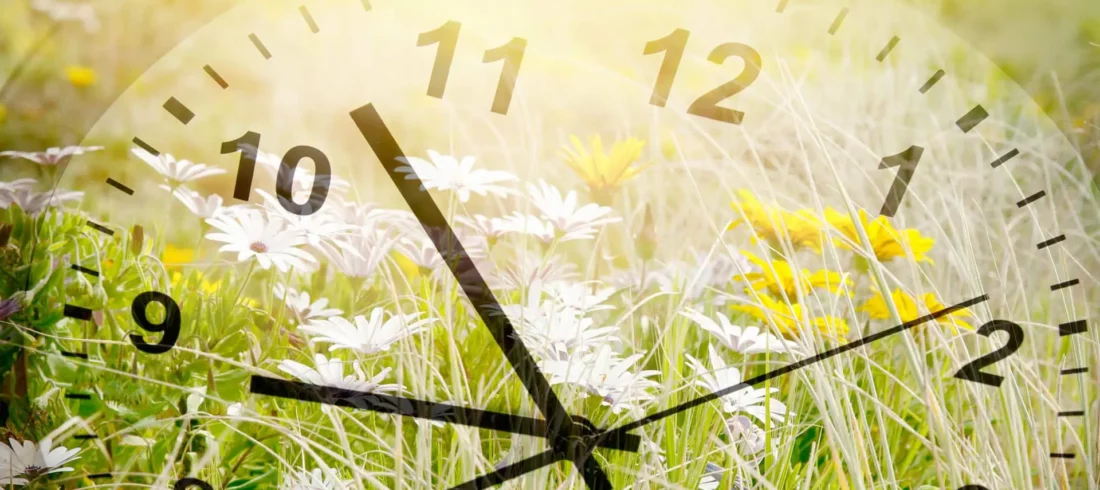
To take back the annual time change unconsciously promises to stop the global time change.
The result of the time change survey has to do with the citizens' feeling that the world is out of joint, said psychologist Stephan Grünewald on Deutschlandfunk radio. In Germany in particular, people would love to stop time in order to be able to enter a state of permanent presence in which nothing changes.
The interview with Stephan Grünewald appeared on Deutschlandfunk on September 1, 2018.
What is striking about the results of this survey is that participation in Germany was particularly high, with three million votes, and an overwhelming majority voted to abolish the switch from summer to winter time. But why? I had the opportunity to talk about this with psychologist and psychotherapist Stephan Grünewald, who is co-founder and managing director of the Rheingold institute for Culture, Market and Media Research.
Yes, the issue has come up twice a year anyway and has then heated up people's minds, namely when daylight saving time or winter time was changed and people noticed that their accustomed daily routine was once again disrupted. The fact that this has now become an open question throughout Europe has of course led to additional heating. And psychologically interesting is, if you follow the experts, no matter whether you pay attention to the biorhythm or to the energy balance, there are arguments for one side and for the other, but no compelling arguments. Nevertheless, the majority vote, especially in Germany, is clearly in favor of abolition. And I think there are reasons for this that are not based on the time change itself.
We will definitely come back to that in a moment, Mr. Grünewald, first of all back to the result. For example, when I look at the reaction of the Chancellor, Angela Merkel, who is still visiting Nigeria, to this result or to the announcement that it is now to be changed, she says she supports it and then adds - and this has to be seen as a joke - that with regard to her host in Nigeria she doesn't even know whether he knows what central problems the people in Europe have. So the first thing we can say is that this is not that important, at least not as a matter of life and death for European politics.
Reasons for the result
No, these are, let's say, everyday questions that move us, but they are not questions about war and peace, about starving or not starving, about corruption in society. It is a completely different level that is being touched here. Of course, it also shows, I think, that the Chancellor has a bit of a sneer on her face, because she has the feeling that Germans are very saturated and spoiled to some extent.
Then let's talk about the reasons for this result. You mentioned it yourself, I just looked at a study from the Bundestag from two years ago and the bottom line is that in all points that are relevant for people - i.e. economic performance, health impairments or energy consumption, which was originally an important point when it was introduced - you can neither say that it has particularly positive effects nor that it has particularly negative effects. Is it possible to state this for the time being, so to speak, it's a question that doesn't have that much to do with the matter itself.
It is, let's say, a very emotionally stirring decision that is being made. And I think the resolution is already in the concept of the time change. We're talking about a small time change that happens twice a year, but what has been moving people unconsciously for years is the big time change, the turning point in time in which we are currently living. The feeling that the world is out of joint, that we live in a world that is no longer understandable and that is increasingly unsettling. And there are many tendencies at the moment, precisely because Germany is doing well, because we are one of the last safe shire countries in the world, that we would love to stop time, to enter a state of permanent present, because every change, every future perspective tends to augur that the great and carefree years are over. Therefore, in our research we observe an unconscious fear of the time change in a large, global sense. Before the times when more and more foreigners are coming into the country, when society is becoming digitalized, when globalization with its unmistakable consequences is worrying people, and the great longing is that not everything can stay as it is.
And if everything can't stay the way it is, can we regain a little bit of what we used to have, which is a uniform time, you don't have to change twice a year, is that what you mean?
Exactly! And this regaining, that is still a time when people have the feeling that the world was still in order, that is connected with youth, with childhood memories. And the longing is, can't we, by taking back the time change, this annual time change, the big time change that is happening to us now, can't we cancel that.
"The great distinctions have dissolved".
You said that you see this as a larger trend, and you also just described it. You mentioned digitization, migration, and changes in larger contexts. Where exactly are you still observing this or are there other phenomena where you see exactly this same reaction?
We experience the same reaction in the loss of, let's say, a spiritual compass, even when we deal with election campaigns, with the parties: the great distinctions, the clear programs, the certainties of faith have dissolved. And that makes the world so unmanageable, and that naturally increases the longing for home. Home is a time in which we felt safe as children, so the fact that we now have a Ministry of Home Affairs fits in wonderfully with the fact that we now want to return to the old times, as it were, by reversing the time changeover.
But if we are already on the way to the service society, to the digital society, whatever changes that may bring, can we afford this attitude, can we afford this skepticism and this longing for the familiar, the old, the cuddly, can we afford it?
Yes, we can at least afford to have that longing; it can't be taken away from people, so to speak. But it's precisely what we're feeling, digitalization, that is leading to a liquefaction of time. There are no longer fixed working hours, you can be reached all around the clock, and customers and superiors expect a response to an e-mail within a few minutes. In other words, this entire liquefaction that we are experiencing naturally leads to an increased longing to immerse ourselves in an uncommonly constant rhythm.
What I meant was, can our reaction be a promising way to deal with these changes if we reject them or reject them in parts, even in such a small point as the time change twice a year.
If we succeed in establishing a mainstay that means we have a manageable size, we have a fixed rhythm, but at the same time basically use this mainstay to swing a leg that makes us open to the future, that makes us open to experimentation, that makes us more open to the world, that is prepared to see the future not only as destructive but also as an opportunity, then I can say yes to that.
"Not only shirt-sleeved, but also sensible".
So you can try both: to look for the homely and the cosmopolitan, so to speak?
The problem is that if you seal yourself off in your home, if you rely only on fixed rhythms, if you permanently try to freeze the present, so to speak, then you are naturally no longer capable of change. The big problem that we experience as psychologists, of course, is that the willingness to change grows to the extent that one has the feeling that it is necessary. In other words, need leads to agility. But compared to Africa and other countries, we are still an island of prosperity, we are still - relatively speaking - doing incredibly well, and that of course makes it more difficult to change and to change things, not just time.
Jean-Claude Juncker, the President of the European Commission, has now said, as his conclusion from this online survey, in a nutshell: The people want it, so let's do it. Is this, so to speak, also a sign from Brussels, where there is also a lot of skepticism, a lot of reservations about the bureaucracy there, about the slow decision-making processes and the laborious search for a compromise, that they are now saying in a rather casual way, you want it that way, so let's do it?
That's not only shirt-sleeved, but also sensible. We have just seen that there are no objective advantages or disadvantages for one or the other. Then you can also comply with the will of the majority, so to speak, and don't need to hold on to something that doesn't make much sense from a scientific point of view and that is rather an absurdity for people.
So Europe is suddenly very close to the people.
Europe is close to the people, and I don't think that's populist in this case. If a decision were to be made now against better knowledge, against studies of a different kind, then I would find that questionable, because the starting position is almost completely undecided, one can orient oneself very well on the vote, on the decisions of the citizens.
Psychologist and psychotherapist Stephan Grünewald here in conversation with Deutschlandfunk. Thank you very much for this!
I have to thank!
The interview was conducted by Jasper Barenberg.
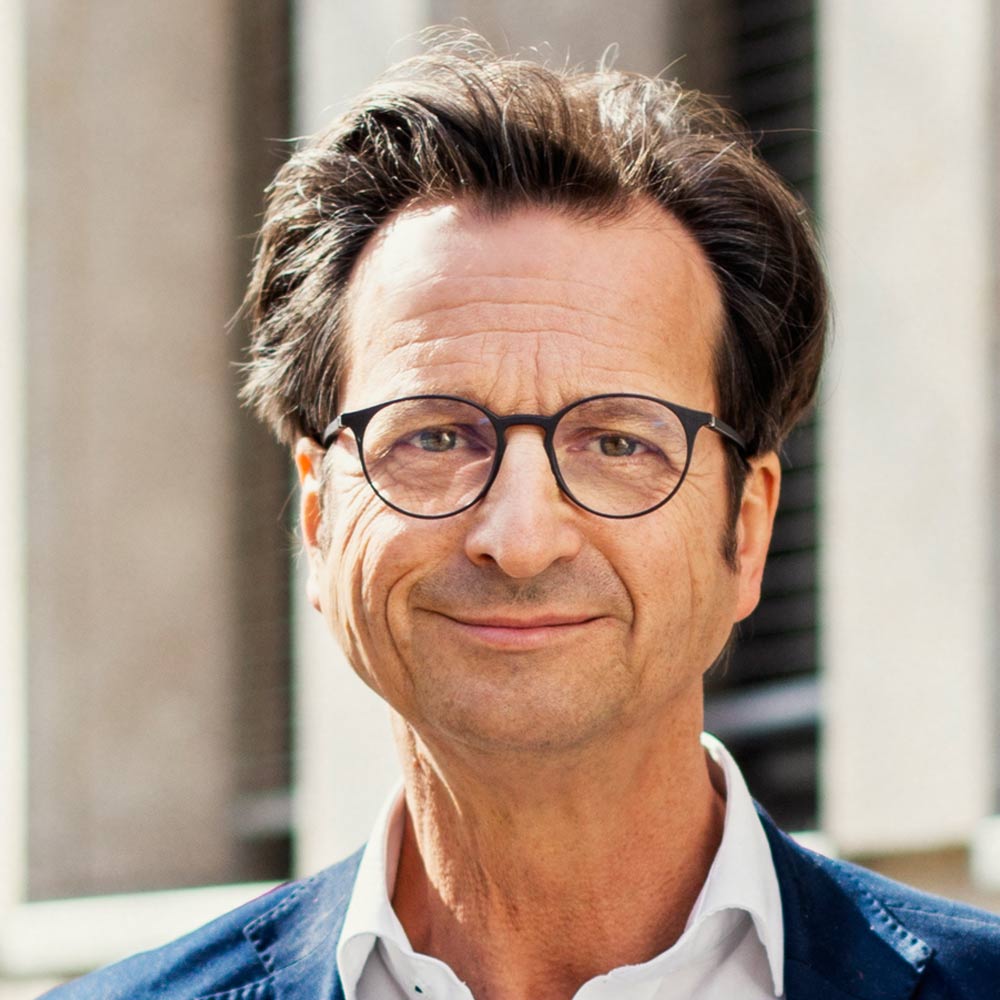
Cologne-based psychologist Stephan Grünewald is the founder of the market and media research institute rheingold. Grünewald became a bestselling author with his books "Deutschland auf der Couch" (2006) and "Die erschöpfte Gesellschaft" (2013) as well as "Wie tickt Deutschland" (2019).
Phone: +49 221-466 828 0
E-mail: gruenewald@rheingold-online.de