Mediengruppe RTL Deutschland and the rheingold institute take a close look at the culture shift in video use in Germany
Video-on-demand ushered in the cultural transformation of moving image use in Germany. The "new" video providers on the market have enforced what was almost unimaginable in Germany a few years ago - the willingness to pay for one's everyday escape. On behalf of the Media Group RTL Germany, the Cologne-based market research institute rheingold conducted a moving image study to investigate how and when moving image consumption takes place, what users expect and what moves them.
Moving image in transition
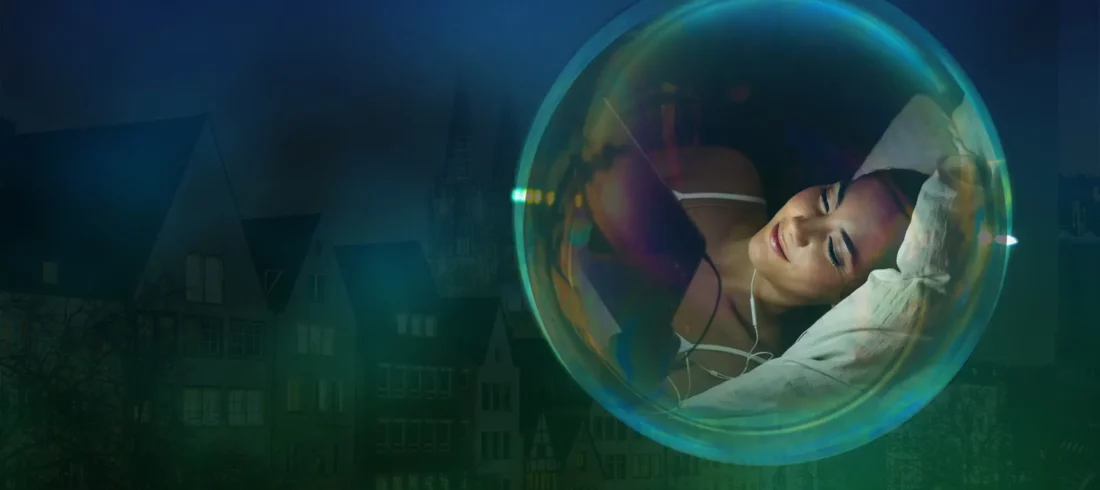
Stephan Grünewald, Managing Partner of rheingold institut, summarizes the core result of the moving image study "Moving Image in Transition" as follows: "Always accessible and available, with full control - this is what everyday life looks like in our society. The media differentiate themselves primarily in terms of their relevance to everyday life. Television supports people's everyday logic, it structures the day and confronts them with the events of the world outside. As a 'media emotional pharmacy', television offers the right moods at the right time of day and creates an event platform for community feelings. While television always brings us back to everyday life, video-on-demand usage serves a daydream logic. The use takes place withdrawn. The viewer enters a dream bubble and escapes from everyday life. Regardless of the motivation for using moving images, the fact is that moving images trigger creative processes and encourage people to engage with their own lives or the world outside."
Moving images are plentiful, but alongside the everyday mover television and the dream factory cinema, video-on-demand is gaining popularity as a daydream factory available at any time. When considering the motives for use, it is just as important to put moving image use into perspective. Even if streaming services are perceived as very modern, self-determined and free, video-on-demand does not come close to the usage times and net reach of TV. What accounts for the positive assessment is the feeling of being able to choose from an "infinite" pool of content in a self-determined way - including the end point of its use. Users experience themselves as the media avant-garde and are proud of their binge-watching successes. However, they conceal the fact that they largely shut down for many hours and immerse themselves, addiction-like, in parallel worlds that promise them experience enhancements previously reserved for personal daydreams. Due to the pronounced use, viewers find themselves fully concentrated and without any distractions in a dream bubble, usually alone and "lost in the stream," so to speak. For this reason, video-on-demand is an entertaining, attractive, self-determined fortress, but with few impulses for shaping one's own life and few opportunities for conversation, since giving away plotlines is an absolute "no-go.
TV provides reality anchor
The expectations towards television are completely different. Television is supposed to entertain and animate in a relaxed way. Users can simply switch on and let themselves be "sprinkled" without immediately going into a dream bubble, because TV provides reality anchors that viewers expect and appreciate. On the one hand through advertising and on the other hand through the program: News, talk shows, advice programs or reality formats - they offer viewers the entire canon of life and the connection to their own everyday life can always be established. In contrast to video-on-demand use, which is usually targeted and homogeneous, there is something or other to discover in the linear TV world that does not necessarily correspond to one's own typical viewing habits and directs one's gaze to new, unknown things. At the same time, the reference to reality provides order and structure. Fixed times and broadcast slots give users orientation and provide end points. Stories are told to the end and the viewer is brought back to reality. The linearity of television also creates social events at the same time - major events in particular provide common themes. Viewers' deep partnership with television also plays a role. While video-on-demand is identity-less, so to speak, linear TV is associated with channel faces and brands or one's favorite format. This creates identity and the feeling of a counterpart, a partner.
Viewers are no longer simply spectators and consumers
"We constantly keep an eye on developments in the video market out of our own interest. There are more and more offers and providers, which has not only changed the market, but media use as a whole. Viewers are no longer simply viewers and consumers, but agents with clear expectations," explains Thomas Kreyes, member of the management board of Mediengruppe RTL Deutschland. "This expectation is made very clear by the rheingold study: for all its love of streaming, TV is the window to the world, with all its diversity and an everyday relevance. Here, advertising plays an important role, because the spots provide everyday context, which always brings the viewer back to everyday life and reality. An obviously indispensable USP. It's not for nothing that TV achieves a net reach of 94 percent within three days, while streaming services come in at 15 percent."
The moving image study design
In March and April 2018, the rheingold institute surveyed a total of 110 people who are both TV and video-on-demand users for this moving image study. These were divided into two target groups: 19 to 25 years and 34 to 49 years. The data was collected in two stages: About 50 moving image users were interviewed in qualitative individual interviews and 60 others were interviewed in two rheingoldArenas (group discussions). For the discussion rounds, eight to ten moving image users were interviewed on site and 20 additional online guests were invited, whose written contributions were included in the discussion.