
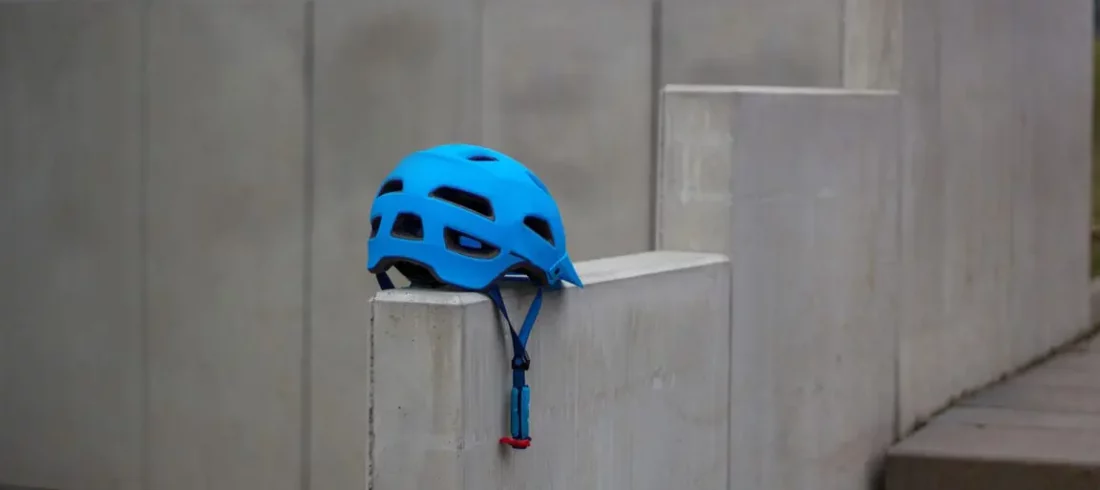
Young bodies in their underwear, brightly colored helmets and the loose brushstroke of an educational campaign: "Contraceptives from the bedroom for more safety in road traffic! A media shitstorm brought the Ministry of Transport's helmet campaign a lot of attention - and just as much criticism of the clumsy, silly and everyday sexualization. Obviously, the campaign hits a sore spot. But it does the helmet no favors.
The rheingold institute for Qualitative Market and Media Research and the rheingold Academy have studied the bicycle helmet as a psychological object and reveal the weakness of the helmet campaign: it puts its finger on the wound, but it does not free us from the psychological dilemma of the bicycle helmet.
With the bicycle helmet we trade 'beauty' for 'safety': The helmet is annoying and sweaty, it pinches, ruins the hairstyle and looks silly. But it can save us from serious injury. All subjects know all this - and suffer from a guilty conscience when they put 'sexy first' above 'safety first'. The current campaign stages 'sexy', but demands 'safety'. In this way, it diffusely exacerbates the fundamental dilemma, triggers pressure, but offers no way out.
The bicycle functions as a free ride vehicle:
The bicycle itself does not appear in the campaign at all. The in-depth interviews conducted point to the special character of this mode of transport: Riding a bike means freedom. We feel the wind in our hair, the fresh air, let our thoughts wander, are flexible and independent - and allow ourselves small and large breaks in the traffic rules that would be almost unthinkable in a car.
'Free ride' between 'casual' and 'reliable':
The right degree of freedom oscillates between 'nonchalance' and 'reliability'. This is shown by the typical helmet biography: As children, we become reliable road users with helmets, and as teenagers we take a casual break from the helmet requirement. As parents, we are sometimes reliable role models and sometimes casual overachievers, but we only send our children out into traffic wearing helmets. As adult cyclists, we want to be neither stuffy principled riders nor sinful road hogs. The helmet is used flexibly and depending on the occasion.
The character of a bike ride decides:
When we embark on a sporting adventure on a bicycle, it is naturally part of our equipment. Only under its protection can we enjoy the stimuli and risks of free riding. In everyday routines with little stimulus, on the other hand, the helmet disturbs us and restricts our freedom. Here, we like to leave it at home.
The qualitative investigation of the rheingold study led to clear findings:
Young people and adults are foregoing bike helmets, especially for everyday rides. In the current campaign, the passive bedroom heroes on the posters evoke the dilemma of 'sexy' and 'safety' and appeal to our conscience. But they ignore the sense of freedom in cycling and stimulate ridicule, criticism and resistance rather than a new desire for the helmet. Instead of educating about the dilemma of 'safety' and 'sexy', the campaign could have resolved it psychologically.
In this context, the analysis of the study revealed the openness for the helmet in sporting contexts as a possible strategic key: If rides in everyday life were also staged as a sporting adventure, the helmet could fit as a natural piece of equipment. Helmet wearers in everyday road traffic would no longer be stuffy safety fanatics. Instead, they would become heroic adventurers in the urban jungle. In this way, they could combine 'safety' and 'sexy' - and free the helmet from the grubby image that is currently being reheated.

Paul Bremer studied psychology in Lisbon, Warsaw and Hamburg as well as morphological media psychology in Berlin. After 3 years of training as an analytical intensive consultant, he has been working at the rheingold Institute since 2016. His focus as a researcher is on international research, the retail and beverage sector and political consulting. He is now a member of the management team as Sales and Insights Director
Phone: +49 221-466 828 0
E-mail: bremer@rheingold-online.de