

The image of the chemical industry from the point of view of consumers, opinion leaders and employees was investigated by the rheingold institute on behalf of the VCI in an in-depth psychological study. The analysis of the 140 two-hour psychological in-depth interviews conducted and the 1,500 online surveys shows that the perception of the chemical industry (CI) moves in a paradoxical field of tension that is determined by four central aspects of meaning.
In a first spontaneous understanding, the CI appears to people as an abstract and largely incomprehensible quantity. Already in chemistry classes, most of the interviewees found no real access to the formulaic world of chemistry.
This inconceivability is then usually overlaid by a second understanding, namely a rather destructive idea of CI as the devil's work: smoking chimneys, gigantic and sinister-looking industrial complexes, memories of chemical accidents or images of smog and yellow snow determine the perception and make CI a potentially dangerous or even destructive industry.
Only in a third aspect of perception does the image of CI turn around. People recognize that CI is an important solution industry, which creates jobs as an innovation driver and, especially in the current Corona crisis, appears as a welcome savior in times of need: "Without CI, we would still be living in the Middle Ages and would have neither disinfectants nor vaccines today."
In a fourth view, people realize that CI is not so abstract after all, but an elementary necessity of life that shapes their entire daily lives: "Without chemistry, there would be no light bulbs and refrigerators, no electric cars and wind turbines, and certainly no televisions or smartphones."
Paradoxically, people cope better with the negative aspects of CI than with its positive ones. This is because people experience a profound emotional ambivalence toward the innovative and powerful solutions industry. On the one hand, they desire the vital solutions and products of the CI, but on the other hand, they realize that they are dependent on the support and assistance of these protective powers.
The larger, more significant and, above all, more indispensable an industry's solutions are for one's own existence, the smaller and more immature people feel. Protective power' industries such as insurance companies or energy suppliers, but also the chemical industry, almost inevitably trigger in people the mortifying feeling of not being able to find protection and secure health by their own efforts. This mortification creates defensiveness and repression. The chemical industry is literally hidden and made invisible by the people.
The importance of chemistry as an elementary necessity of life reinforces these feelings of mortification in people. In view of the indispensability of chemistry in a modern and comfortable everyday life, they feel their dependence. Since people neither want to nor can do without the achievements of chemistry, they also feel complicit in the negative consequences (climate change, environmental pollution) of the chemical industry. Sometimes they realize their own corruptibility by the 'seductive products and services' of the CI.
The positioning of the CI must therefore resolve a paradox: The bigger and more important the CI makes itself out to be as a problem solver and progress maker, the smaller, more immature and more dependent consumers feel. The strategic challenge for the CI is to embrace its great importance, its innovative power and its increasingly important role as a problem solver without triggering feelings of dependency, smallness or immaturity in people.
The CI succeeds in this by not primarily proclaiming its claim to size and power, but rather by promoting a social commitment as an innovative problem solver. The CI generates a productive "come together" mentality primarily through the exchange and involvement of all relevant social groups, from the IGBCE and politicians to NGOs. In general, the CI should not act as a dominant protective power, but as a growth promoter that places itself at the service of society and the individual.
The communication tonality should therefore be characterized by a proud self-effacement and a sovereign self-relativization. The CI can establish eye level and touchability through relationship offers and a new culture of dialog. Above all, it can create trust through approachable representatives who seek public debate at eye level with both self-confidence and self-criticism. The CI's commitment to socially relevant issues should be confirmed by concrete actions and projects, for example in the area of resource conservation and the climate protection platform (greenhouse neutrality by 2050).
For example, consumers want environmental standards in countries such as India or China to be raised and less 'poison' to be discharged into exhaust gases and wastewater. A concrete roadmap for switching from petroleum to alternative/renewable raw materials is sought, as well as an improvement in recycling processes and rates. Finally, an elimination or reduction of toxic/harmful substances such as glyphosate, pesticides, fertilizers and a switch to 'natural' alternatives as much as possible is desired.
The study can be found in German and English at the following link:
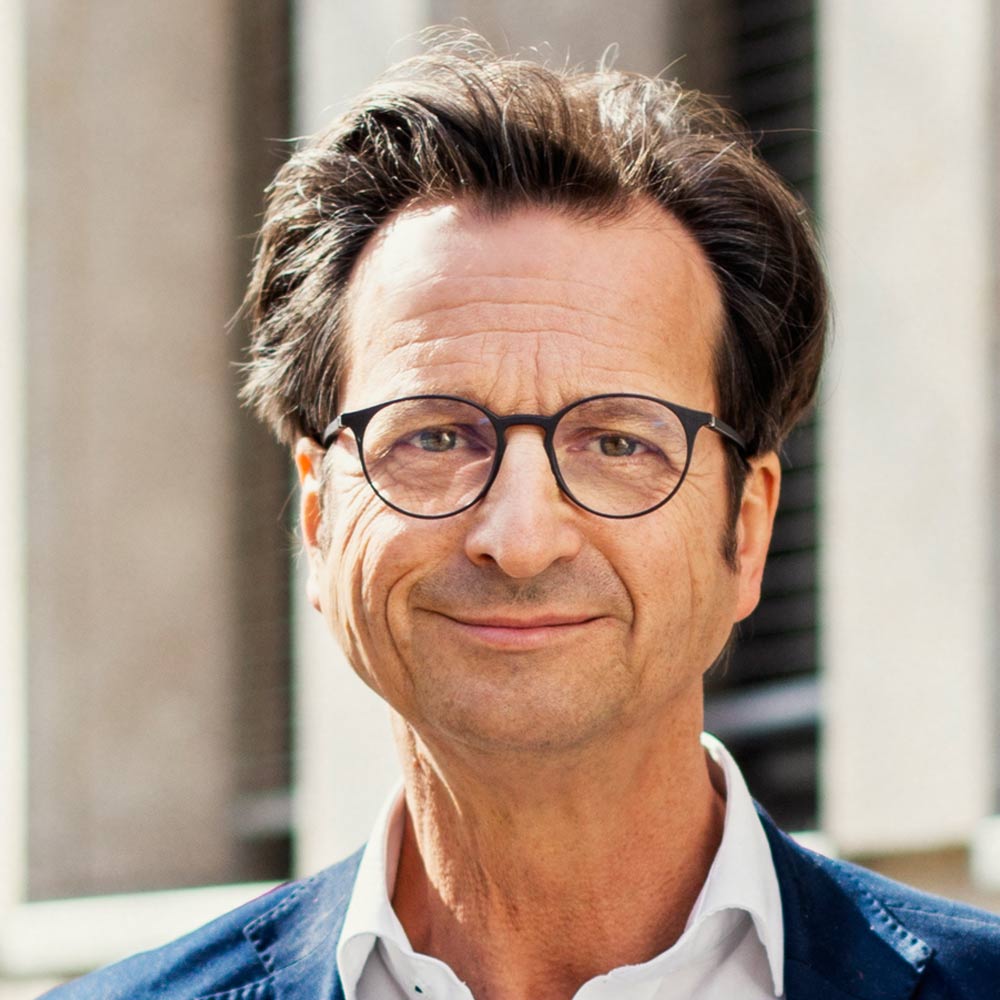
Cologne-based psychologist Stephan Grünewald is the founder of the market and media research institute rheingold. Grünewald became a bestselling author with his books "Deutschland auf der Couch" (2006) and "Die erschöpfte Gesellschaft" (2013) as well as "Wie tickt Deutschland" (2019).
Phone: +49 221-466 828 0
E-mail: gruenewald@rheingold-online.de